
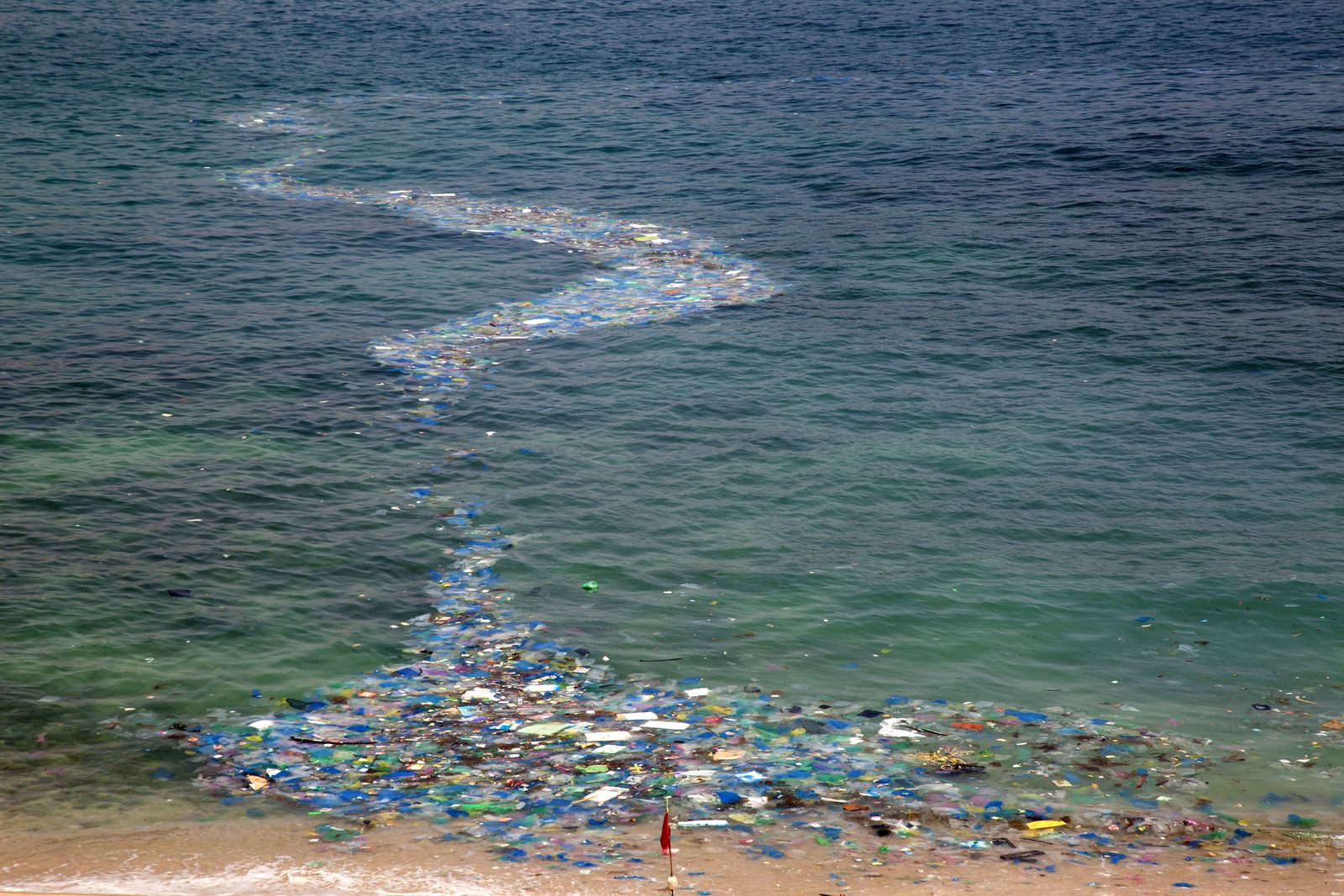
Satellite data suggests water in and around the huge area filled with human-made debris has become more blue-green over the past two decades. Computer simulations suggest microplastics are to blame, but researchers need samples to confirm their hypothesis November 9, 2026 11:36 a.m. Plastics become trapped in the Great Pacific Garbage Patch and eventually break down into microplastics. Dukas / Universal Images Group via Getty Images Out in the Pacific Ocean, halfway between California and Hawaii, lies a massive collection of human-made debris that spans an area roughly twice the size of Texas. Known as the Great Pacific Garbage Patch, its accumulation of microplastics has now grown so large that it seems to be changing the color of the ocean. Twenty years of satellite data suggests that the water in and around the trash pile has become more blue-green. Though the researchers couldn’t confirm microplastics are behind the color shift, computer simulations hint that that is likely the case. The findings, published in the journal Communications Earth & Environment on November 5, could help experts identify the most heavily polluted areas of the ocean to guide cleanup efforts. “It’s shocking and worrying,” says Aron Stubbins, a chemist and co-director of Northeastern University’s Plastics Center who wasn’t involved in the work, to Evan Bush at NBC News. “The fact that we can see plastics from space is concerning, as well as that there’s enough plastic out there that it’s changing the optical signal of the ocean, because that means it’s altering the light field in the ocean and potentially the way the ocean warms and cools.” The color of the ocean reflects whatever is in its upper layer. That’s why it’s usually blue; water absorbs longer, redder wavelengths of light and scatters shorter, bluer wavelengths. Other elements, like sediment and microscopic organisms called phytoplankton, can affect the ocean’s hue, since sunlight interacts with those objects differently. However, there was a “gap” in the research on the effect of microplastics, says study co-author Dan Koestner, an ocean optics scientist at the University of Bergen in Norway, to Laura Paddison at CNN.In previous lab experiments, Koestner had examined how lights and lasers scattered differently in ocean water that contained bits of plastic. Armed with that data, he and colleagues behind the new study examined three different sets of satellite data showing one of the places in the ocean with the most plastic pollution: the Great Pacific Garbage Patch. Ocean currents trap piles of trash in this area, where they eventually break down into microplastics. The team found that between 2002 and 2022, parts of the patch became 10 percent bluer and 2 to 4 percent greener, reports NBC News. The researchers then ran hundreds of computer simulations to find possible explanations for the change in color. When microplastics were excluded, only 3 percent of simulations produced the observed shift toward cyan. But including microplastics allowed 13 percent to mimic the real-world observations. To confirm that microplastics are responsible for the ocean’s altered appearance, however, the researchers need to collect samples from the garbage patch. “We’re still one step away from proving definitively that microplastics are causing the shift in color that we’re seeing,” says study co-author Shea Cheatham, also an ocean optics researcher at the University of Bergen, to Jackie Flynn Mogensen at Scientific American. “We just have to get in there [to the garbage patch] to verify.” Richard Thompson, a marine biologist at the University of Plymouth in England who wasn’t involved in the research, tells CNN that the findings are important because detecting ocean microplastics is challenging given their size and tendency to get mixed in with phytoplankton and natural debris. “If we can detect change remotely from satellites it will be faster and less costly than counting debris piece by piece,” he says. If the new study’s method can be verified, it can be used to identify other locations with microplastic accumulation, Koestner tells Scientific American. “That would mean that we have a target area for cleaning up.” You Might Also Like Get the latest stories in your inbox every weekday. More about: Chemistry Ecology Oceans Pacific Ocean Physics Plastic Pollution
The Great Pacific Garbage Patch Has Accumulated So Many Microplastics They Might Be Changing the Color of the Ocean
Full Article
Original Source
Read the full article at Smithsonianmag →KhanList aggregates and links to publicly available news content. We do not host full articles from third-party sources. Always verify important information with original sources.