
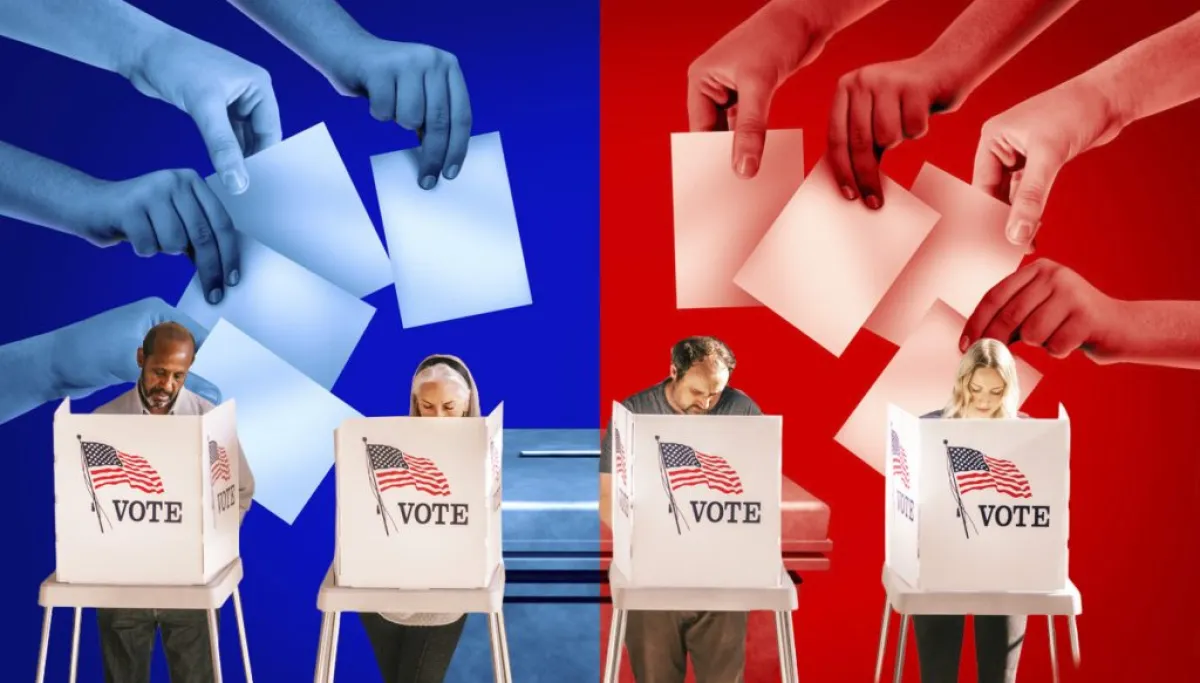
Voters may regret handing Congress, state legislatures, and statewide offices to radical Democrats. They are itching to destroy parental rights, throw out election integrity reforms, facilitate men stealing athletic competitions and college scholarships from women, and raise taxes (and spending) on all concerned.But all is not doom and gloom. There were some bright spots among the 145 ballot measures that voters in 39 states decided on Election Day.Voters in Nevada, North Carolina, and Ohio, for example, turned against the Republican Party but approved requiring voters to show identification in future elections. North Carolinians extended their existing voter ID requirement to cover mail-in ballots, an important improvement given the huge increase in mail balloting. Nevadans and Ohioans imposed voter ID for both in-person and mail-in voting. Those victories for election integrity were not even close. Nevada’s voter ID referendum passed with over 62% of the vote. In North Carolina it was 60% and in Ohio it was above 65%. These results amount to a wholesale rejection of the relentless propaganda from Democrats that voter ID is somehow “racist” — even while voters launched those same Democrats into office.Five states — Alaska, Arkansas, Kansas, South Dakota, and West Virginia — approved referenda requiring U.S. citizenship to vote in state and local elections (it is already unlawful for noncitizens to vote in federal elections).In Kansas, Democrats won their first U.S. Senate seat since 1932 and threw out the state’s Republican attorney general, Kris Kobach, a nationwide leader in trying to ensure that only citizens vote. Still, voters approved the Kansas citizenship requirement by an overwhelming 64% to 36%.Quite a contrast.Voters in four states rejected another priority for the Left, choosing instead to protect women’s and girls’ privacy in locker rooms and their ability to compete fairly and safely. Not surprisingly, the measure passed by a wide 68% margin in Nebraska, but 59% of Arizonans adopted this policy while, at the same time, voting for Democrats to flip control of the legislature. Democratic propaganda was no match for common sense.Voters in some states seem to suffer from ideological schizophrenia. In Colorado, voters put a supermajority of Democrats into both houses of their legislature but also approved protecting women in sports. This in a state whose legislature in 2025 passed the Kelly Loving Act, a law that can land you in jail if you refuse to call a him a her in, for example, an advertisement (C.R.S. §24-34-705). No, really.The Colorado legislature is famous for attempting to force its gender ideology onto its citizens. The Supreme Court has had to repeatedly tell Colorado that constitutional rights to free speech and religious practice bar such misbehavior.Even so, Coloradans voted to approve, by 52%, a referendum prohibiting healthcare professionals from performing transgender surgeries on minors. In other words, it stops surgical mutilation of children. The voters spoke, but it remains to be seen whether the legislators will listen or try to override the voters’ decision.They aren’t listening in Washington, perhaps the bluest of blue states, where voters approved the athletic referendum by 56%, an even larger margin than in Colorado. As soon as it passed, however, the state’s Democratic Party, whose candidates won overwhelmingly across the state, vowed to overturn the voters’ approval.On the issue of abortion, the picture was more mixed. Idaho voters turned down a referendum that would have created a statutory right to abortion with almost no restrictions. On the other hand, advocates of unrestricted abortion in Nevada and Virginia were successful in getting pro-abortion referenda approved. They prevented the repeal of Missouri’s have-an-abortion-any-time-you-like law that was passed in a prior referendum.Enshrining abortion in state constitutions, even in pro-life states, has been a priority for abortion advocates since the Supreme Court overruled Roe v. Wade in 2022. They frame the question in ways that obscure just how far-reaching the measures actually are.The conning of voters is evident in the Virginia ballot question, for example, which established a “right to reproductive freedom.” The real objective is unrestricted abortion, but that priority is cloaked in more benign-sounding language about “the ability to make and carry out decisions relating to one’s own prenatal care, childbirth, postpartum care, contraception, abortion care, miscarriage management, and fertility care.”Sounds reasonable, doesn’t it, for everything mentioned with the jarring exception of “abortion.” None of the other personal “decisions” mentioned involve killing another human being.WHY CONSERVATIVE TRANSGENDER BALLOT MEASURES PASSED AMID BLUE WAVEOverall, Virginia voters approved it by 62%, but the results showed a breakdown that occurs very often these days across the nation and in states such as Virginia: the densely populated, liberal urban areas versus the less populated, more conservative rural areas and small towns of the rest of the state.The bottom line? On issues, many voters remained committed to traditional American principles in their ballot decisions. But at the same time, they punished Republicans and more conservative candidates for everything from the state of the economy to perceptions of corruption in the governing class. These two actions by voters, made for different sets of reasons, may well collide when the election results are put in place and the candidates they elected start to govern.Hans von Spakovsky and Thomas Jipping are senior legal fellows in the Edwin Meese III Institute for the Rule of Law at Advancing American Freedom.
The good news out of the 2026 elections
Full Article
Original Source
Read the full article at Washingtonexaminer →KhanList aggregates and links to publicly available news content. We do not host full articles from third-party sources. Always verify important information with original sources.