
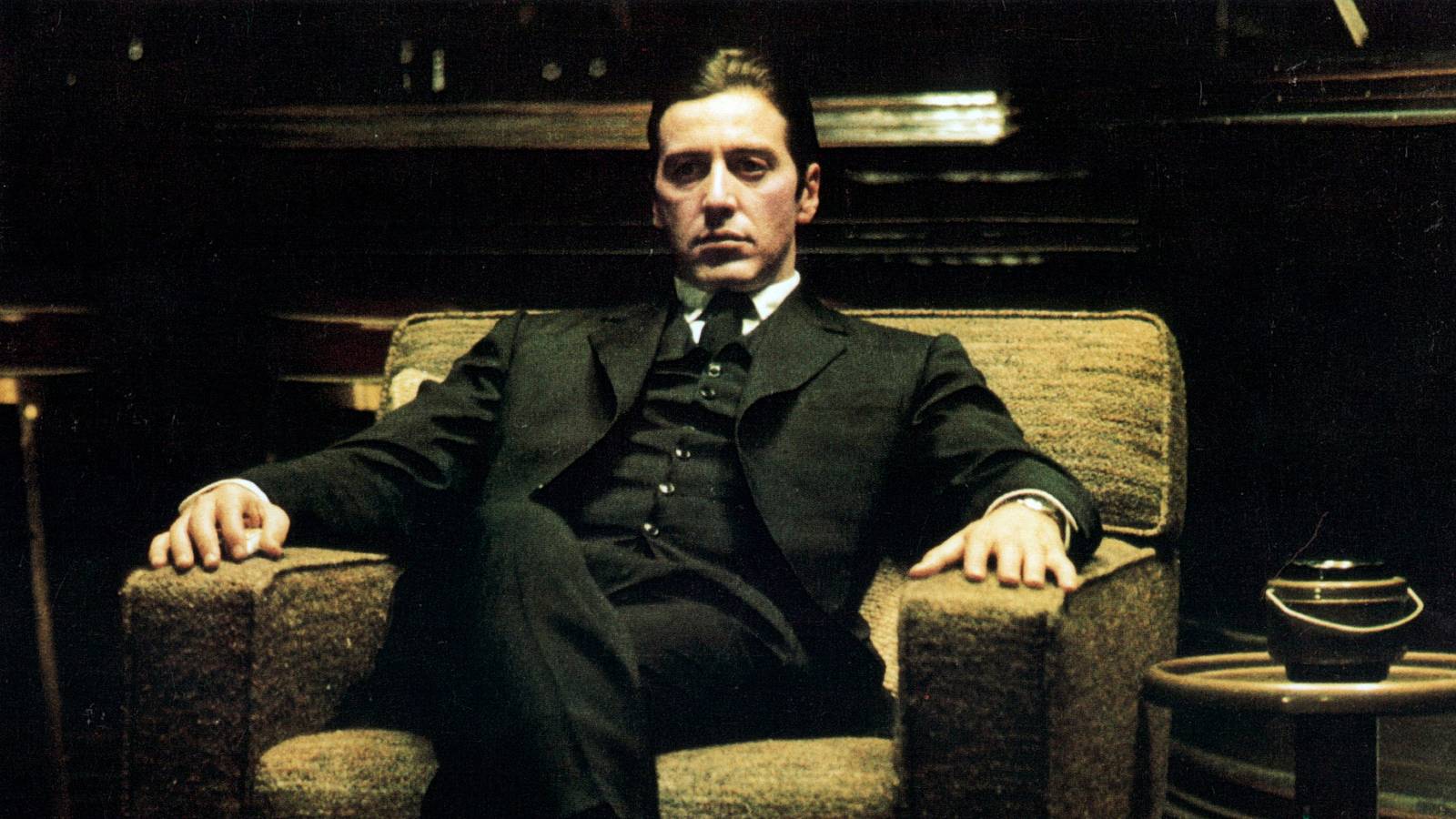
The story of The Godfather trilogy hinges around a range of powerful members of various crime families and the complicated alliances and rivalries that form between them over the course of many years - though some are notably more powerful than others. The very first scenes of The Godfather alone convey the power that the first Don Corleone and the crime families of New York possess, as the lavish wedding and somber meetings with the Corleone patriarch quickly display both the financial power of the family, and their sway over the social and political landscape of New York's underworld. Things only get more intense from there, of course, with it also becoming evident that Vito and every crime boss like him have an array of men willing to die or kill by their word, in order to protect their family and their interests. This landscape becomes more and more grand over time - as is evidenced by The Godfather III dealing with the Vatican, for example, and The Godfather II delving into dealings around Cuba. However, each film has its own different big players, who carry with them both their own personal strengths and weaknesses, and the power of the faction or family they come from. Accordingly, the matter of who is displayed as most powerful in The Godfather trilogy is an enjoyably complex one, as there's an expansive number of factors to consider overall. Sonny Corleone While the power Sonny wields when his father Vito is wounded and Sonny acts as stand-in head of the Corleone family is immense in The Godfather, it's arguable that Sonny himself wields it in a way that makes it far less powerful when utilized compared to either his brother Michael or Vito during their own times in the role. Sonny is often subject to the whim of his own emotions and fiery temper. This means he's unable to act strategically in the way many of his peers are, as well as giving him further enemies needlessly, as it puts him in the crosshairs of those who worry that his impulsive behavior and rash tendency to strike out at others without fully thinking things through will disrupt New York's crime scene on a wider scale. Ultimately, this also appears to be why Sonny's time as the head of the Corleone family is far shorter than his brother and father. Sonny is soon marked for death by Emilio Barzini, and easily manipulated by using his loyalty to his family against him to send him running to go take care of his sister Connie and deal with her abusive husband Carlo, leading to Sonny being shot down in his prime. Frank Pentangeli Frank Pentangeli is technically one of the weakest characters in this list in terms of his position within New York's Five Families, as Frank is a caporegime in the Corleone family, rather than being a don or a consigliere. This isn't a low-ranking role, but it is lower than the majority of The Godfather trilogy's other central characters, making Frank's importance all the more interesting for the story. Though Frank isn't the head of a family or a central advisor, he does become a decidedly powerful character in one key way that can't be understated, ending up being effectively the person in the trilogy who came closest to taking down Michael Corleone and likely the entire Corleone family alongside him. In The Godfather II, when Michael has to stand trial of orchestrating much of New York's organized crime, Frank is brought in by the FBI to serve as a surprise witness. If it weren't for Fredo pre-emptively warning his brother of this matter, it does seem Frank would have somewhat single-handedly brought Michael down, giving him a huge amount of narrative power and power over New York's underworld in this key way. It's also key to note that Frank is the one who makes the decision to back out of being an informant due to his own morals. Admittedly, this is very much because the Corleone's bring Frank's brother to the trial, to show him his family will be in danger if he goes through with his testimony. However, it's ultimately Frank's love for his family that makes him choose to retract his testimony and end his own life after Tom Hagen establishes his family will be cared for so long as Frank goes the way that insurrectionists against Roman Emperors did. Tom Hagen Once again, Tom Hagen is a character who's easy to underestimate the power of throughout The Godfather trilogy. He's quiet, and a character who many of the other central figures in the story command around, rather than him ever striking out for himself. But this is because Hagen has a different kind of power in the story of The Godfather, as a result of Vito Corleone adopting him and paying for his education so he could become the family's lawyer and a consigliere, serving as advisor to Vito, Sonny, and Michael throughout the course of the narrative. It's Hagen who plans and orchestrates many of the biggest moves for the Corleone family, and Hagen who keeps them out of prison and protects them from this kind of danger throughout the course of the story. Deeply loyal, Hagen's only true motivation throughout the trilogy is to build the best path forward for the family who made him, and their success over the years has his shrewd fingerprints all over it, especially because his long tenure as an advisor means he knows almost every major relevant crime figure decidedly well. Emilio Barzini The Godfather works as such a classic arguably because it crafts an antagonist who is as cunning and powerful as Emilio Barzini in its narrative, and ensures the Corleones are facing down an opponent who is more than capable of their own metaphorical chess moves. One of the heads of the other Five Families of New York, Barzini comes strikingly close to taking down the Corleone family by attempting to assassinate Vito Corleone. Even after this fails, he's still able to have Sonny assassinated, and then force Vito into agreeing to lend his legal and political protection to Barzini and the heads of the other families as they enter the drug trafficking scene, despite Vito's outspoken distaste and concern about this development. Barzini also comes close to being able to successfully assassinate Michael. Indeed, his clever machinations to take down the Corleone family further are only put to an end because Michael is smarter, has been advised on the matter by Vito, and because Barzini arguably underestimates Michael as a result of the young Corleone having led a civilian life most of his life, rather than being involved in the family business. It's not hard to see how Barzini's tactical planning could have worked out for him, especially because he played his cards very carefully, showing just how tactical the character is, and how much power he wielded up until Michael had him killed. Hyman Roth Hyman Roth ups the ante somewhat for the stakes and stage of The Godfather II, with his criminal empire that extends into Cuba and immense wealth being enough to give him a staggering amount of power overall, as is repeatedly demonstrated during his time in the story. Most of the present-day story of The Godfather II is either directly or indirectly orchestrated based on Roth's wishes, and his schemes effectively are only sabotaged because of the Cuban revolution, which cause all the plot's organized crime members in Cuba to be forced to flee the country. Roth is still able to plan a way to take down Michael in the wake of this, via using his immense sway to place Michael in the US Senate's targets, as Roth has the chief counsel of the Senate committee on his payroll. Though all of this still isn't enough to prevent Hyman Roth from being assassinated on Michael Corleone's orders at the end of The Godfather II, it does further highlight that Roth is involved in a staggering range of criminal enterprises, and that his money is able to take him a long way in the story, even if it doesn't deliver him away from the rage of Don Corleone. Michael Corleone As the central character of The Godfather trilogy - which is focused around Michael's rise to power and then the later years of his life - it's perhaps no surprise that Michael Corleone is one of the absolute most powerful characters in the movie series. This is due to a combination of factors, as Michael starts out the story with notable intelligence and the Corleone family resources at his disposal should he so want them, even if he's not willing to be part of the family business. After his father is wounded and Michael decides Vito needs his help, though, Michael's full mafia skillset develops. Michael's rage allows him to hone a sense of ruthlessness and cold determination that he uses throughout his time as the Don of the Corleone family, and when Vito becomes well enough to talk with him again, he also benefits from the guidance of his father in all matters regarding how to be the boss of a crime family, which he takes to heart. By the time of The Godfather III, Michael has a huge amount of power and a truly honed criminal skillset. Though this doesn't bring him lasting happiness - and Michael ends up a victim of his own success in many ways, especially after killing his brother Fredo - it makes him an immensely imposing figure in the world, and one who's arguable tragedy is the fact that he's a perfect fit for the role of Don Corleone. Vito Corleone Vito is the only character The Godfather trilogy goes out of its way to suggest is more powerful and capable of more in some ways than his son Michael. Michael is depicted as being better at the ruthless side of the business than his father to some degree, which makes sense for someone who got into the crime world to avenge and protect his father, but Michael also has much of the hard part of making his way in the underworld sorted for him, as the son of one of the most powerful crime bosses in New York. Vito, however, had to start from a very different position. Much of The Godfather II is committed to showing this story, wherein Vito goes from being an orphan boy who has to flee from Sicily to escape the Sicilian mafia, to being the founder and head of one of the biggest crime families in New York years later. This trajectory gives Vito one of the most prominent growths in power of just about anyone in The Godfather trilogy, and also explains and underlines why he's so good at balancing the various demands of the role of head of a crime family, since it's from practical experience. With that said, though, perhaps the most important faucet of Vito's power is that, by the height of his reign, he's said by fellow Don Tattaglia to have "all the judges and politicians in his pocket" regarding New York. This is very much suggested to be true - particularly by the fact Don Corleone doesn't deny it, nor do any of the other Dons in the meeting it's said in. While Michael arguably grows the Corleone family to new heights in The Godfather trilogy, he does so in a way that brings them seemingly more easily into conflicts with the other crime families and external factions too, limiting the actual power at his disposal in some ways. Comparatively, Vito's focus - and his work adding judges and politicians to his allies - ensured the family's power didn't need to face off other threats the same for many years, making it more secure, with only Vito's rejection of the drug trade eventually causing conflict and doing him in. The Godfather
The Godfather's 7 Most Powerful Characters, Ranked
Full Article
Original Source
Read the full article at Screenrant →KhanList aggregates and links to publicly available news content. We do not host full articles from third-party sources. Always verify important information with original sources.