
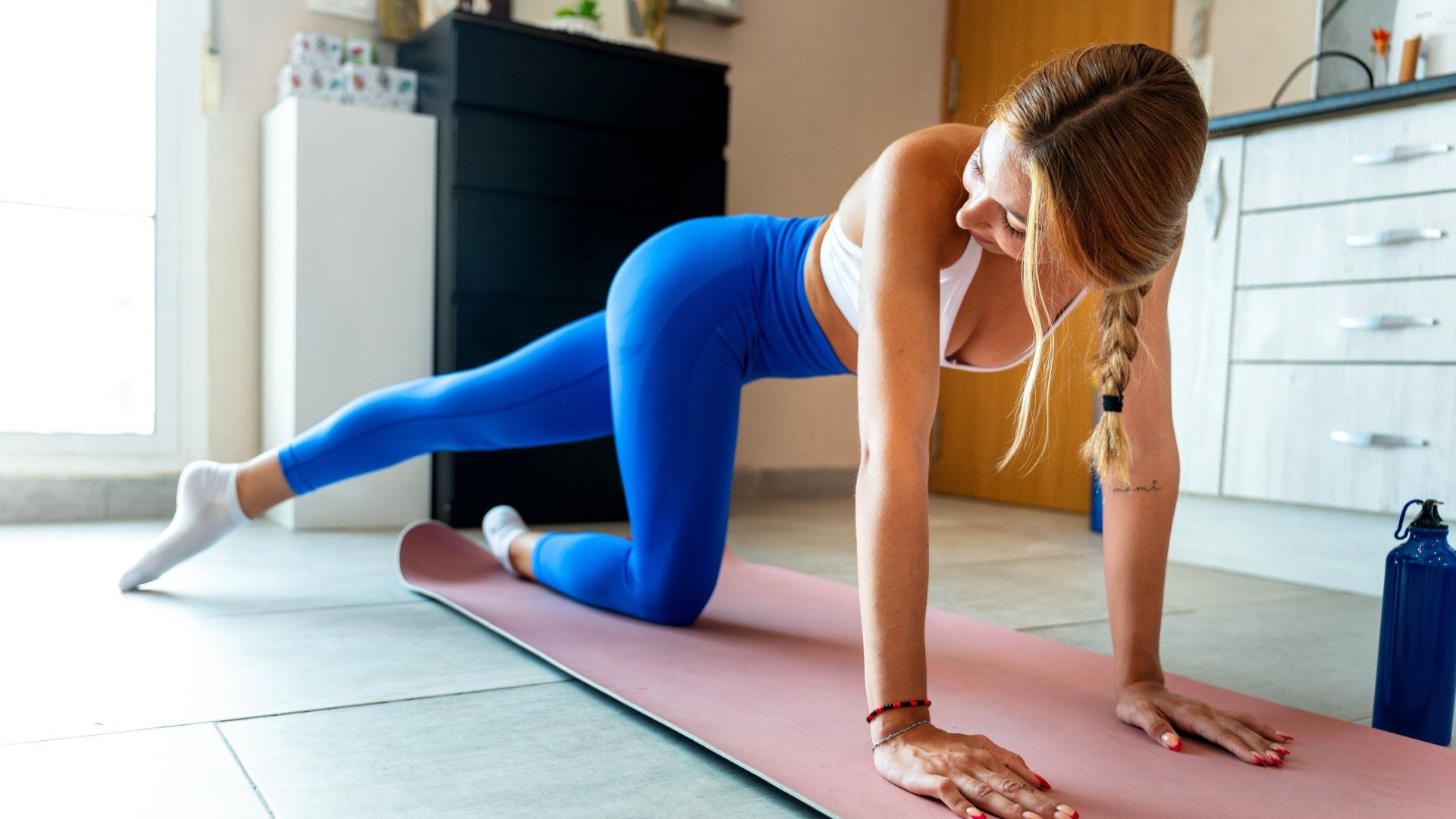
(Image credit: Shutterstock) At 35 (ahem, nearly 36), I've learned that building strong hips is a secret weapon for boosting mobility and keeping my body robust as I get older. Not only does it improve my ability to squat, deadlift and lunge safely, but it also helps me walk and run with more freedom, hike with less stiffness and feel generally more free and open.The best hip mobility exercises will focus on strength, range of motion, balance and stability. For that reason, I want to share three simple exercises I swear by; if you sit at a desk for long periods, these are a game-changer for waking up stiff hips and relieving tension.Check them out below, as well as some benefits.3 simple hip-awakening exercises to try at homeBeen at your desk a while? Here is your call to action. If you can, stand up, push your laptop aside and try these moves. 1. Single-leg hingeThis exercise opens your hips, rotates them and stretches the adductors, the muscles along the inner thighs.Think of this exercise as a joint lubricant: aim for slow, controlled movement and try to increase the range of motion available with every rep.Stand with a chair to your right side and extend your right leg to the side, resting the inner part of your foot on the chair, toes pointed forwardPlace your hands on your hips and stand tall through your spineBring a very soft bend to your left knee. Slowly hinge forward at your hips and push your butt back, lowering your chest to almost parallel to the ground in front of youPause when you feel a stretch through your inner thigh. Drive upward to stand, then turn your toes to point to the ceilingReturn to your starting position, complete your reps, then switch legsAim for 3 sets of 10 to 12 repetitions per side, twice per week.2. Lean back with hip liftLean backs are typically categorized as a core exercise, but this move also stretches and extends your hip flexors and works your quads. The aim is to keep both knees pressed down; if you need to, place a cushion or rolled-up mat beneath your knees for support. Tom's Guide: Direct to Your Inbox Get instant access to breaking news, the hottest reviews, great deals and helpful tips. Aim to keep your back straight and gaze forward, chin tucked.Kneel on a yoga mat or similar, toes tucked or untucked depending on your preferenceSit tall through your spine and brace your stomach, engaging your core while maintaining your breathExtend your arms in front of you or overhead, then slowly lean back as far as you can without lifting your knees or losing your straight spinePause. Place your hands just behind your hips, then press your hips upward toward the ceilingSlowly lower your butt to your feet, then return to your starting positionAim for 2 sets of 8-10 reps several times per week.3. Figure-4 squatThis is a test of balance, control and stability. If you need, have a stable surface nearby that you can use for support.It doesn't matter if you wobble or fall out of the posture, as this will improve as you build strength in your lower body over time. Figure-4 stretches your glutes, including the deep piriformis gluteal muscle, and also targets your groin and hips, works the small stabilizing muscles in your upper and lower legs, and strengthens your hips, knees and ankles.Stand tall with your feet hip-width apartPlace your right foot just above your left knee and gently draw your right hip open. Flex the foot to protect your kneeSend your hips back and lower into a single-leg squat, maintaining the figure-4 position while keeping your chest lifted and back straightPause at the bottom of the squat, then press through your left foot and leg to standAim for 2 sets of 6-8 reps per leg, several times per week.What are the benefits? (Image credit: Shutterstock)Where I can, I like to work the left and right sides independently, whether training myself or clients. It ensures you work without dominant muscle groups or sides taking over, and allows you to measure progress on both sides of your body, potentially improving imbalances or activating underfiring muscles.The glutes are notoriously tight, underactive and underused. Weak glutes contribute to back pain and can cause potential issues with running, sports, or even walking.Think about any tightness you might have in your spine or your lower body. Does it impact how you move? Does it cause pain or limitations? Think of this as a small, quick reset, creating more space around your pelvis and reducing tension in your spine.Think about any tightness you might have in your spine or your lower body. Does it impact how you move? Does it cause pain or limitations? Think of this as a small, quick reset.While these exercises are recommended, you should always listen to your body and stop if you feel sharp pain, numbness, or tingling. Working with a physical therapist, personal trainer, or similar professional will help you determine what exercises are suitable for your body based on your personal journey.That said, these three strengthening exercises will help build strength in the muscles surrounding the joints and improve stability, balance and weight-bearing.Follow Tom's Guide fitness on Instagram for more workouts, routines, tips, and tricks. Follow Tom's Guide on Google News and add us as a preferred source to get our up-to-date news, analysis, and reviews in your feeds. Alternatively, you can read our content on the Tom's Guide app available now for iOS and Android. Subscribe to Tom's Guide on YouTube and follow us on TikTok. More from Tom's GuideI teach people how to be more mobile: 3 low-impact back and shoulder moves that build stability and strength after 40I teach people how to be strong and mobile: this is the one exercise I regret ignoring for yearsI teach people over 50 to be mobile: 3 low-impact moves that build more stability than a 30-minute walk Sam Hopes is a level 3 qualified trainer, a level 2 Reiki practitioner and fitness editor at Tom's Guide. She is also currently undertaking her Yoga For Athletes training course. Sam has written for various fitness brands and websites over the years and has experience across brands at Future, such as Live Science, Fit&Well, Coach, and T3. Having coached at fitness studios like F45 and Virgin Active and taken on both 1:1 and group, Sam now primarily teaches outdoor bootcamps, bodyweight, and kettlebells. She also coaches mobility and flexibility classes several times a week. Sam has completed two mixed doubles Hyrox competitions in London and the Netherlands and finished her first doubles attempt in 1:11.
The 'glute amnesia' fix: 3 simple moves to wake up your hips after 8 hours of sitting
Full Article
Original Source
Read the full article at Tomsguide →KhanList aggregates and links to publicly available news content. We do not host full articles from third-party sources. Always verify important information with original sources.