
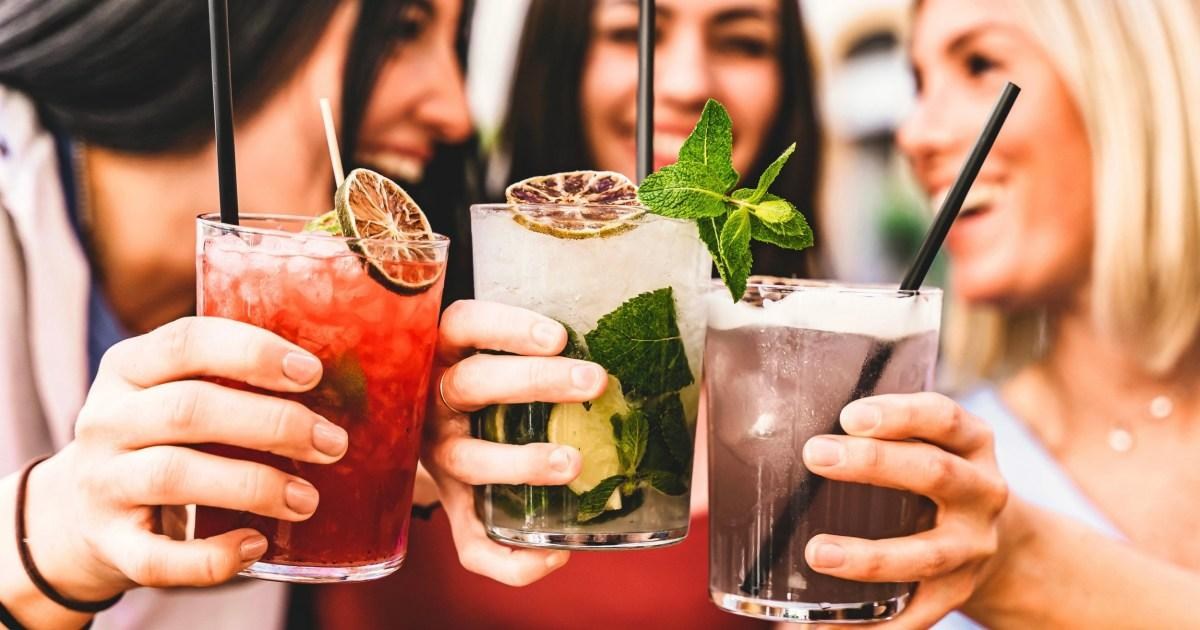
Some bartenders get p****d off when you order this beverage (Picture: Shutterstock / niksdope) Rewind to 1990s Britain, and there was one drink people were ordering like it was going out of fashion: the Mojito. The glorious cocktail was as popular as the modern-day Espresso Martini, before it had its wings clipped. Today, it’s the beverage we intend to drink, but don’t get round to – the booze equivalent of aiming to go to the gym three times a week, or downloading a language app and forgetting the password. And some bartenders have stopped serving it altogether. Why? Because it’s a big old faff to prepare. The Mojito was oh so popular in the 90s (Picture: Getty Images/iStockphoto) Nathan Price, the co-owner and bar manager of Bar Glue in Liverpool, describes it as ‘a bit of a b*****d’. Imagine you’re making three Mojitos a week: you’re buying in however many bunches of fresh mint, which is just getting spoiled within a day or two, and if you haven’t got crushed ice, ‘it’s easier for us just to say we can’t do it’. Nathan can offer something a bit similar, using crème de menthe to replace the fresh mint, but ‘it’s not going to be enough like a Mojito, so we let people know that’. Not everyone is prepared to whip up something similar, though. Mari Chierchia at Daddy Marmalades in Glasgow is resolute that there are certain drinks they just can’t make. Not because they don’t know how, but because they’ve chosen not to stock the ingredients. Ask Metro Use AI to go deeper into the stories you care about – powered by Metro and trusted publications. For example, no fresh passion fruit means no Pornstar Martinis. No fresh mint means no Mojitos. It’s a conscious decision, because she believes that ‘our bar isn’t about being everything to everyone.’ Which is especially brave in a city where vodka and lemonade is still considered a cocktail by some. You need plenty of fresh mint to make it(Picture: Shutterstock) At the more extreme end, Chelsie Bailey of the Stonegate Group, who heads up the national drinks programme at Be At One and Slug & Lettuce, claims a lot of bartenders get actively p****d off if people order Mojitos. And who wouldn’t, especially when it comes to all the spin-off versions. There was even a Victorian-style Mojito at one point. Among the excuses given to avoid the pain of making a Mojito, which Punch magazine called ‘one of the most reviled cocktails in bartending’, is ‘It’s not cool any more; are you sure you want one? How about a Gin & Tonic instead?’ Matthew Dakers owns 11th & Social bar in Norwich and painfully recalls the Victorian-style Mojito: ‘Swapping the rum for gin and suddenly you’re in Americano territory’. Not only that, but there were pink versions, raspberry versions, and according to poor old Matthew, ‘all were a pain in the a**e to make’. People loved them, of course, but it required regular deliveries of fresh mint, berries, and ingredients that were highly perishable and a nightmare to get hold of. Many bartenders prefer a Daiquiri to a Mojito (Picture: Getty Images/iStockphoto) Curiously, a disproportionate number of bartenders across the country pledge allegiance to the Daiquiri, while casting a disdainful eye in the direction of the Mojito. Which is odd, because when you strip them back to their bones, they’re practically cousins: rum, lime, sugar, ice. End of story. Or so you’d think. ‘A Daiquiri can be made quickly,’ explains UK rum ambassador Ian Burrell. Ryan Chetiyawardana agrees, and adds that the Daiquiri is the purer expression of a cocktail. It’s short, sharp and unpadded, without soda, muddled lime debris or leafy peak-a-boo moments. ‘There’s nothing to hide behind,’ he says, which means it puts a bartender’s technique squarely under the spotlight. That, and the fact that Mojitos are an absolute nightmare to make when the bar is three-deep, and you’d rather hand-crochet a sign that reads ‘If you order a Mojito, you’re barred’ than muddle limes. Gergő Muráth, a cocktail consultant, puts it even more succinctly: ‘The Mojito is basically a lengthened Daiquiri.’ He’s not wrong. Tom Finnon, who runs a live music venue and a ‘frankly banging’ cocktail bar in Leeds, agrees. ‘A Mojito is effectively just a Daiquiri with mint, served on crushed ice, with a little splash of soda,’ he says, which makes the rivalry feel a bit pedantic. Given they’re not wildly different drinks, preference often comes down to the way they’re made, rather than flavour. And in that context, the Daiquiri usually edges it. Gergő attributes the superiority of the Daiquiri to agitation – more specifically, what shaking does to lime juice. It creates a textural shift that simply makes the drink nicer to consume. It’s all in the technique. While Daiquiris are shaken, Mojitos are churned with a bar spoon. You can’t achieve the same level of agitation with a Mojito, whereas a Daiquiri lives or dies by the shake. More than almost any other cocktail, apparently. As Gergő bluntly puts it, ‘If you don’t know how to shake well, you’re going to make a bad Daiquiri. You can read more about the Mojito in A Measure of Britain (Picture: Sphere Books/Little Brown Book Group) Chelise, however, isn’t buying the industry obsession. ‘Bartenders go mental for Daiquiris,’ she says, ‘but I just think a Mojito is a far superior drink.’ She respects the Daiquiri, but it’s unreliable; too many people get it wrong. Like Martinis or Old Fashioneds, it’s deceptively simple and vengefully unforgiving if there’s a misstep. By contrast, with a Mojito, Margarita or Negroni, even an average version still tastes pretty good. Ryan’s experience backs this up. The average British cocktail drinker overwhelmingly prefers the Mojito. It’s longer, more refreshing and, crucially, they feel they’re getting more for their money. This last point frustrates bartenders, who argue that a cocktail’s value lies in its quality, not how much liquid you’re getting in your glass. Over in Leeds, Tom Finnon sells more Daiquiris than Mojitos, mostly because Mojitos aren’t on the menu. Which makes sense. ‘If more bars listed Mojitos, they’d absolutely sell,’ he says. ‘If I saw one, I’d probably order it. They’re delicious.’ He acknowledges that Mojitos have made a lot of people very happy, and a lot of people a lot of money. And he’s not wrong. It’s a hugely appealing drink, to the point where it actually has a recognised phenomenon named after it. It’s called ‘the Mojito effect’, or the ‘sizzle effect’ – when people clock a Mojito going out on a tray, everyone follows suit and orders one. It’s the cocktail that triggers a landslide of orders based on its visual appeal and refreshing nature. This is why Chelsie feels strongly that ‘bartenders need to pay more attention to the Mojito’. Elliot Ball, owner of iconic bars in London and Bristol, agrees, pointing out that while Negronis and Martinis are cocktails you learn to drink, you just can’t help liking the Mojito from the get-go. From his experience at the sharp end, Elliot says: ‘A Mojito is something you could hand to almost any British twenty-five-year-old and guarantee enjoyment.’ Although, according to Nathan, it’s usually ‘fellas in their fifties’ who tend to want Mojitos, which is interesting. They probably think they’re Che Guevara as they’re sipping them, or James Bond in Die Another Day. Well, it’s easily done in my experience… How I make the perfect Mojito: Ingredients 8–10 fresh mint leaves 15ml demerara syrup 30ml freshly squeezed lime juice 60ml Bacardi Carta Blanca 20ml chilled soda water crushed ice fresh mint sprig Method Drop your mint leaves into a highball glass. Instead of pulverising them into a bitter leafy mulch, give them a gentle press with a muddler to wake up the aromatic oils. Add your sugar syrup and lime juice (while some muddle whole lime wedges for ‘consistency’, using pre-squeezed juice means that you’re not at the mercy of a dry lime). Pour in your rum and a tiny splash of soda – just enough to lift the flavours, not so you veer off into Collins territory. Now, fill the glass up to the absolute hilt with crushed ice. You want the ‘snow cone effect’ where the ice is densely packed to the rim. Use a long spoon to ‘churn’ the ingredients together, pulling the mint up through the ice. Crown the glass with even more crushed ice, spank a fresh mint sprig against the back of your hand to release the aroma. Tuck it right next to the straw so the mint aroma hits the nose with every sip. This extract was taken from A Measure of Britain by Robertson Buckhaven (Sphere Books, £16.99). The book is available to pre-order now and will be available online and in stores from November 5, 2026. Do you have a story you’d like to share? Get in touch by emailing MetroLifestyleTeam@metro.co.uk Deals of the Day The wellbeing brand behind everyone's favourite candles has launched its biggest sale yet Oodie's £1 sale returns with wearable blankets, dressing gowns and throws up for grabs See London's Christmas lights from an open-top double-decker bus this winter The skincare formula that finally took the guesswork out of my routine Families can save up to 20% on summer 2027 holidays in Club Med's four-day sale Arrow MORE: Sorry Rice Krispies fans, Kellogg’s has ‘ruined’ your favourite cereal Arrow MORE: The Greggs where you can order a beer with your sausage roll Arrow MORE: We catered our engagement party – we knew a restaurant was the next step The Slice Your free newsletter guide to the best London has on offer, from drinks deals to restaurant reviews.
The ‘glorious’ drink bartenders desperately wish you’d stop ordering
Full Article
Original Source
Read the full article at Metro →KhanList aggregates and links to publicly available news content. We do not host full articles from third-party sources. Always verify important information with original sources.