
The country should create a political system that elevates competent individuals and holds them accountable, argues VICTOR IKEM Nigeria’s greatest political tragedy may not be the absence of competent leaders, but the inability of its citizens to look beyond ethnic identity, religious affiliation and regional sentiments when choosing those who govern them. For decades, our political consciousness has been shaped by the assumption that having a president or governor from our ethnic group guarantees collective prosperity. We have become so emotionally invested in the geography of political power that we often overlook the competence, character and capacity of those who exercise it. Every election season, Nigerians are mobilized around familiar narratives: it is our turn, our region has been marginalized, or our tribe must produce the next president. These arguments frequently dominate political conversations, pushing more important questions about economic management, employment, education, healthcare and national development into the background. Yet, after decades of rotating political power among regions, one fundamental question remains: How much has the ethnic identity of our leaders improved the living conditions of ordinary Nigerians? There is a psychological satisfaction that comes with seeing someone from one’s ethnic group occupy political office. It creates a feeling of inclusion, recognition and collective accomplishment. But psychological satisfaction is not economic development. The fact that a president speaks your language does not automatically provide employment for your children, electricity for your business, affordable healthcare or food for your family. A president from your village may offer a sense of political belonging while presiding over policies that impoverish your community. Conversely, a competent president from another ethnic group may implement policies that improve your livelihood and expand economic opportunities. Which would you rather have? This is the fundamental question Nigerians must begin to ask themselves. Ethnic inclusion remains important in a diverse federation like Nigeria. However, there is a significant difference between promoting equitable representation and sacrificing competence to satisfy ethnic entitlement. Representation without competence is merely symbolic. Representation without accountability is politically convenient but developmentally meaningless. Democracy is fundamentally a contest of ideas, policies, leadership capabilities and competing visions of society. Unfortunately, Nigeria’s democratic practice has increasingly become a negotiation among regional interests and powerful political elites. Rather than prioritise the most competent candidates, political parties frequently devote considerable attention to zoning arrangements, ethnic balancing and the distribution of political offices. Consequently, the question is often not who possesses the best ideas for transforming Nigeria, but whose turn it is to occupy political office. While zoning arrangements emerged partly to address legitimate concerns about exclusion, they should not become permanent substitutes for merit, accountability and democratic competition. A democracy that prioritises the distribution of offices over the delivery of public value risks becoming an expensive mechanism for managing elite interests rather than improving citizens’ lives. Another troubling feature of Nigeria’s democracy is the assumption that elected political leaders are entitled to remain in office for eight years. Although the Constitution permits eligible presidents and governors to serve two four-year terms, a second term is not an automatic entitlement. It must be earned through performance and renewed public confidence. Unfortunately, many politicians spend considerable time consolidating political structures, rewarding loyalists and positioning successors rather than delivering meaningful development. What would happen if Nigerian voters developed the courage to change their political leadership every four years whenever performance fell below expectations? Imagine politicians knowing that their continued stay in office depended strictly on measurable results rather than ethnic loyalty, political propaganda or entrenched party machinery. They would face greater pressure to deliver improvements in infrastructure, employment, education and healthcare. This is not an argument for removing every leader after four years regardless of performance. Rather, it is a call to establish a political culture in which re-election is earned, not presumed. No politician should feel entitled to eight years in office simply because the Constitution permits it. Nigeria’s leadership crisis is also a crisis of political consciousness. We cannot continuously reward incompetence with ethnic loyalty and expect good governance. We cannot defend poor leadership because the president belongs to our tribe while condemning similar failures when someone from another region occupies the office. Such selective standards weaken democratic accountability and encourage political godfatherism. Nigerians must become courageous enough to reject underperforming leaders, irrespective of their ethnic origins or political affiliations. Our electoral decisions must be guided by competence, integrity, policy proposals, administrative experience and measurable achievements. The most important political identity any Nigerian should possess is citizenship. Nigeria possesses extraordinary human potential, entrepreneurial energy and economic opportunities. Our challenge is creating a political system that consistently elevates competent individuals and holds them accountable. The leader capable of transforming Nigeria may not speak your language, practise your religion or come from your geopolitical zone. But if that individual possesses the competence, integrity and vision to strengthen institutions, grow the economy and improve citizens’ lives, that is the leader deserving of your vote. We must stop asking whether the next president will come from the North or South, East or West. We must start asking whether that person has the knowledge, character and capacity to govern Nigeria effectively. The leader who will rescue Nigeria may not come from your tribe. Until we accept that possibility, we may continue sacrificing our collective future for ethnic victories that deliver little more than psychological satisfaction. Nigeria must become greater than our tribes, and our loyalty to the nation must become stronger than our loyalty to those seeking political power. Dr. Ikem is a public policy analyst, development communication scholar and media consultant.
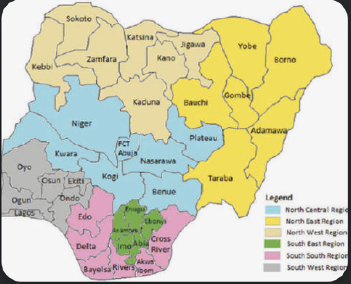
THE GEOGRAPHY OF POWER
Full Article
Original Source
Read the full article at Thisdaylive →KhanList aggregates and links to publicly available news content. We do not host full articles from third-party sources. Always verify important information with original sources.