
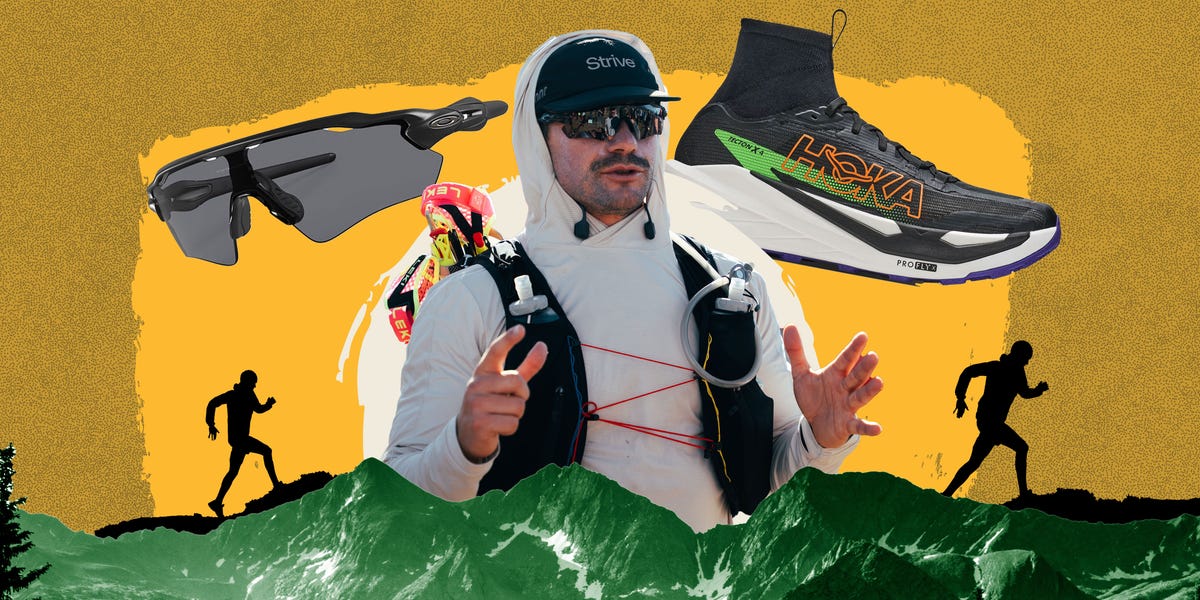
8 min readWelcome to Trail Tested, a monthly column from entrepreneur and athlete Jack Espy as he trains for the grueling Leadville 100 ultramarathon. Trail Tested will follow Jack along his journey to do his first 100-miler to see what his body is capable of and what his mind can endure. Throughout his training, he’ll be giving us a rundown of gear he’s been putting to the limit.WHEN I LINED up at the start line in Leadville, Colorado, on Saturday, August 22, I had more than 100 miles, two trips over Hope Pass, and a full day and night in the Colorado mountains ahead of me. Twenty-eight hours and 26 minutes later, I crossed the finish line of the Leadville 100.Simply put: It was gnarly. It tested me physically and mentally in ways I expected—and plenty I didn't. But it was also one of the most incredible experiences of my life. Somewhere over those 100-plus miles, you learn that your body is capable of far more than your mind wants you to believe. There were lots of moments when things hurt and I was exhausted, but I kept moving forward. That's probably the biggest thing I'll carry with me from Leadville: When things get hard, you can almost always take another step.Of course, making it through a race like Leadville also requires the right gear. Over 28 hours, you're dealing with heat, sun, river crossings, mud, huge temperature swings, darkness, and more than 14,500 feet of climbing. What worked at mile 10 wasn't necessarily going to work at mile 60.My strategy was to build my gear around different sections of the course and make changes at key aid stations. I had backup options everywhere, but one huge lesson was that when something is working, don't change it just because you had planned to.Here's what I wore—and how it changed over the course of completing the Leadville 100.Start Line to Mile 26Tim Ferrar and Kyle JohnsonThe Hoka Tecton X 4 was a surprise mainstay.I started from the ground up with the Hoka Tecton X 4. These were new shoes for me, and they ended up being one of the MVPs of my entire race.Underneath, I wore SweetFeet V2 Performance Socks. I didn't tape my toes. Instead, I lubed them thoroughly before putting my socks on and trusted that setup.For shorts, I wore a new pair of Bandit Vento 5”. I actually had other pairs staged later in the race because I assumed I'd eventually want to change. But I never did.Up top, I wore a Strive Soda Lululemon EasySet Training Sleeveless Shirt, along with Path Projects Moab Arm Sleeves. I had a Strive x Rnnr Wordmark Hat and a pair of Oakley Radar EV Path sunglasses for the morning sun.For hydration, I started with the Salomon ADV Skin 10 Hydration Vest carrying a HydraPak 2-liter Reservoir and two Salomon 500-milliliter Soft Flasks. My primary fuel throughout the race was Precision Fuel PF90 Energy Gels and UnTapped Maple Syrup, supplemented by whole foods at aid stations and countless Strive Sodas.One thing I intentionally didn't start with was trekking poles. The opening section is relatively runnable, so I wanted to stay light and save the poles for when the climbing really began.Mile 26 to Twin Lakes Mile 40Tim Ferrar and Kyle JohnsonTrekking poles now in tow.At mile 26, I made my first significant gear change. I kept the Tecton X 4s, SweetFeet socks, and Bandit Shorts because everything was working. But I switched to a Salomon ADV Skin 12 Hydration Vest. The larger vest gave me room for additional fuel, my trekking poles, and a jacket in case the weather turned.I also traded the running hat for a Ciele Bucket Hat for additional sun protection and put on the Path Projects Wadi LS Tee 2.0. Spending an entire day exposed at altitude can beat you up, so keeping the sun off my skin became increasingly important.This was also where I picked up my Leki Ultratrail FX.One Trekking Poles, which would stay with me for the rest of the race. The goal for this section was simple: stay protected, keep fueling, and get to Twin Lakes ready for the biggest challenge of the day.Twin Lakes OutboundTwin Lakes was the major transition point. From here, I was heading toward Hope Pass getting up to 12,500 feet+, down to Winfield, and then turning around and doing the whole thing again. It's roughly 20 miles of some of the toughest terrain on the course, including river crossings, mud, and the race's biggest climbing.I switched out of the Tecton and into Hoka Speedgoat 7. I also added gaiters to keep mud, rocks, and debris out of my shoes during the river crossings and rougher terrain.I also changed into Creepers Toe Socks. After 40 miles, having a fresh pair of socks felt incredible, and the individual toe design gave me some added protection against rubbing as my feet started taking more abuse.The Bandit Shorts stayed on but I changed into a fresh Path Projects Wadi LS Tee 2.0 because the first one was soaked in sweat, sunscreen, and dirt. With Hope Pass ahead, starting that section in a clean, dry layer was worth it.I kept the Salomon 12-liter vest, bucket hat, sunglasses, and Leki poles and totally re-upped my nutrition. I also ate a couple of sandwiches at Twin Lakes. At that point in a 100-miler, real food starts to become incredibly valuable. Then it was time for Hope Pass.Winfield Mile 52Tim Ferrar and Kyle JohnsonRefueling and powering up at Twin Lakes aid station.Winfield is the turnaround, but there isn't much time to celebrate reaching halfway because you know you have to turn around and climb straight back over Hope Pass.This stop was less about changing what was already working and more about preparing for what was coming. I added extra cold-weather and rain protection to my vest, including an Arc’teryx Norvan Windshell Hoody and Arc’teryx Bird Head Toque Beanie. Weather in the mountains can change on a dime, and I didn't want to find myself exposed above tree line.I also picked up my Black Diamond Storm 450 Headlamp. I knew darkness was coming, and sure enough, it was dark by the time I crested Hope Pass on the return trip.One additional piece I added at Winfield was a pair of Flytex Knee Compression Sleeves. At that point, my legs and knees had already absorbed more than 50 miles of pounding, so I wanted the additional compression and support heading into the second half. Then I turned around and started climbing again.Twin Lakes Inbound Mile 64Tim Ferrar and Kyle JohnsonPushing through.Getting back to Twin Lakes felt like a major milestone. Hope Pass was behind me, my pacer could join me, and now it was time to set myself up for the final 40 miles. This was probably my most important gear decision of the race.My original plan was to change into a fresh pair of Speedgoat 7s for the final stretch, which were the shoes I had done a large amount of my training in. Instead, I went back to the Tecton X 4s. They had felt so good during the first 40 miles that I trusted what my feet were telling me, even though it was a shoe I hadn’t spent as much time in. Running an ultramarathon, you don't change something that's working simply because the spreadsheet says you're supposed to. So I put on another fresh pair of SweetFeet socks and went back into the Tectons.Once again, I kept the same Bandit Shorts. I had multiple fresh pairs available, but the pair I'd started in still felt great after 64 miles. No chafing issues, so no reason to change.For the nighttime miles, I changed into the Arc'teryx Cormac Crew Neck LS and kept the Arc'teryx windbreaker in my vest. I switched back into another Strive running hat and continued with the Salomon 12-liter vest, Leki poles, and Black Diamond headlamp. From there, I was basically locked in for the finish.Mile 75 to the FinishTim Ferrar and Kyle JohnsonCrossing the finish line with my crew.When I reached Outward Bound around mile 75, I didn't make another major gear change. This stop was about the engine rather than the equipment: eat, drink, make sure my body was still functioning, and get moving again.As temperatures dropped overnight, I pulled on the Arc'teryx beanie and windbreaker I'd been carrying. Otherwise, I trusted the setup I already had.And that's essentially what I wore for the final 40 miles. The Tecton X 4s stayed on. The SweetFeet socks stayed on. Somehow, the same Bandit Shorts I'd put on more than 20 hours earlier stayed on. The Salomon vest, Leki poles, headlamp, long sleeve, beanie, and windbreaker carried me through the Colorado night.Eventually, the sun came back up, and 28 hours and 26 minutes after starting, the finish line came. After more than 100 miles, I was still able to open my stride and sprint across the line at roughly a 16:30-per-mile pace. My body felt remarkably good considering what I'd just put it through.What 100 Miles Taught Me About GearMy crew deserves some huge props for everything they did.Going into Leadville, I had an incredibly detailed plan. I had backup shoes, backup shorts, fresh shirts, extra layers, different socks, and gear staged across the course.But 100 miles teaches you to adapt. My biggest takeaway was simple: If something is working, don't mess with it.I planned on changing shorts. I didn't. I planned on wearing different shoes for the final 40 miles. I didn't. Instead, I listened to my body and made decisions based on how I actually felt rather than what I'd written down before the race.The best gear in an ultramarathon is the gear you stop thinking about (and that can be said for the best running gear in general). When you've been moving for 20-plus hours, you don't want to notice your shorts, your socks, your pack, or your shoes. You want them to disappear so you can focus on the only thing that really matters: continuing forward.Leadville tested just about everything I had. There were brutal climbs, river crossings, darkness, cold, exhaustion, and moments when 100 miles felt exactly as ridiculous as it sounds.But I kept moving. And after 28 hours and 26 minutes, I learned something much bigger than which shoes or shorts worked best. I learned that when things get really hard, there's usually still another step in you. And then another.My Leadville 100 Race Day GearHoka Tecton X 4Credit: RetailerSweetFeet V2 Performance SocksBandit Running Vento 5" Run ShortPath Projects Moab Arm SleevesStrive x RNNR Word MarkOakley Radar EV PathCredit: RetailerLululemon EasySet Training Sleeveless TeeCredit: RetailerSalomon ADV Skin 12 Hydration VestCredit: RetailerHydraPak Velocity Hydration Reservoir (2L)Salomon Soft Flask 500mLCredit: RetailerPrecision Fuel PF90 Energy GelsUntapped Maple Syrup Packets (Box of 20)Ciele GOBucket CompStrive Hydration SodaPath Projects Wadi LS Hooded Tee 2.0Leki Ultratrail FX.One Trekking PolesHoka Speedgoat 7Creepers Anti-Blister Merino Wool Toe SocksArc’teryx Norvan Windshell HoodyCredit: RetailerArc'teryx Bird Head Toque BeanieCredit: RetailerBlack Diamond Storm 450 HeadlampFlytex Knee Compression SleevesArc'teryx Cormac Crew Neck Shirt LSCredit: RetailerAbout the AuthorJack Espy is the founder of Strive Soda and Spirited Hive. He worked on a 50-week training regimen with coach Duncan Callahan (two time Leadville 100 winner) to prep for the ultramarathon. His weekly mileage topped out at 90 miles (typically including one speed day, two recovery runs, one threshold session, and one long run) and his strength training (four days a week) focused on full body movements to hit every muscle group. Nine months ago he could barely run five miles. Now his mile pace is 8:49 while he’s finished races like the Dead Horse 30k, the San Diego Trail Marathon, the Black Canyon 50k, and the Leadville 100. His current favorite road shoe is the Saucony Endorphin 5 Speed and his current favorite trail shoe is the Hoka Speedgoat 7.
The Gear That Got Me Through a 100-Mile Trail Race
Full Article
Original Source
Read the full article at Menshealth →KhanList aggregates and links to publicly available news content. We do not host full articles from third-party sources. Always verify important information with original sources.