
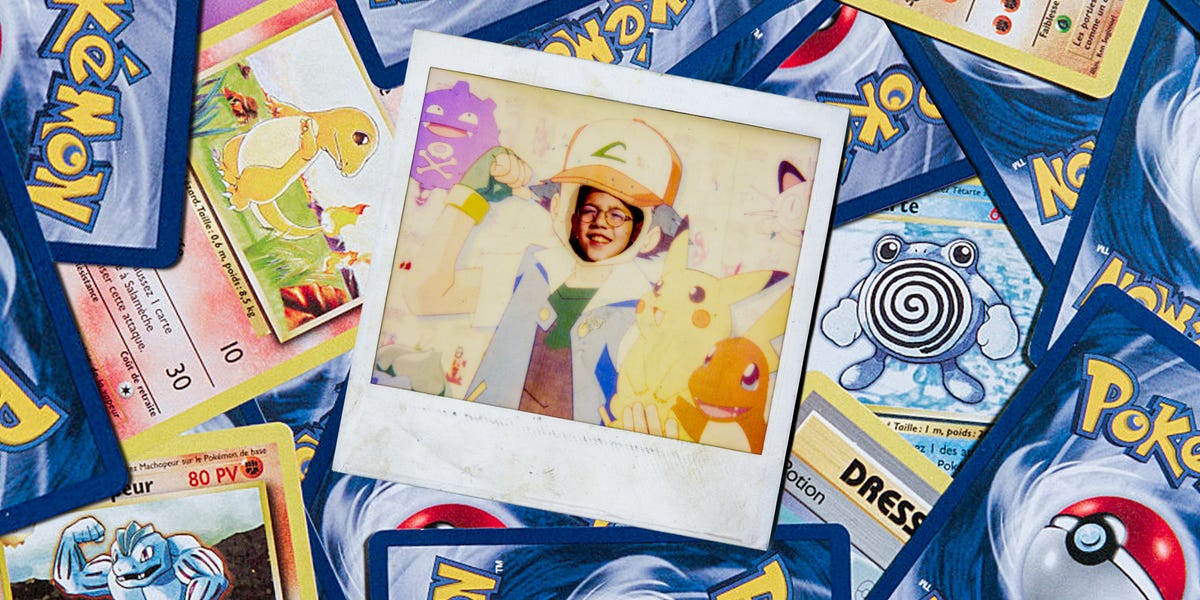
11 min readMy dad delivered life lessons in a thick New York accent, with a lit cigarette permanently welded to his lower lip. Every sentence punctuated with a curse word and flying ash. He was tall and lanky, with a purposeful stride and darting brown eyes that missed very little.“Never buy a cookbook,” he’d tell me with blunt-force honesty through a haze of Marlboro smoke that trailed him everywhere. “Give it three months, somebody on Park Avenue’ll toss it, one recipe marked, and a $200 grocery receipt still inside.” Then he’d follow it with “The secret to surviving in New York is to live like poor people until some rich prick throws out the stuff you need.” And then there was always “You can’t bullshit a bullshitter.” Perhaps my favorite.My dad was a garbageman from Queens, hauling other people’s trash by day and flipping it online at night. By contrast, I’m a magazine editor, rolling up to a Manhattan skyscraper every day, where curation and items “priced upon request” are the coin of the realm. My dad bought his shoes at Payless; I’m writing this in Thom Browne oxfords in a stylish midtown loft I share with my fashion designer husband. We moved very differently through life.AuthorThe author and his dad in their home circa 1992. Dad is wearing his sanitation uniform.I came out to my dad when I was 16, years before it was the status quo for high schoolers to come out at all. I was in my bedroom, cutting up a mix of Abercrombie & Fitch and Hollister shopping bags and taping them to my closet doors—plastering the room with aspirational sepia-toned photographs of sculpted male bodies. I was mid-decoupage when he stopped at the doorway and asked, without ceremony: “Are you gay?”“Yup,” I blurted. I think I may have even laughed, gesturing vaguely at my room, as if to say, “Duh.”I could tell my response didn’t surprise him. But after five hard-earned years of sobriety, it did give him an excuse to reach for a bottle of vodka that night.A few hours later, it was my turn to stand in the doorway of his bedroom. “You can drink if you want to drink, but you don’t get to use my being gay as the reason. You’re not putting that on me.”He looked at my mom. Then he looked at me. And he apologized.In the days that followed, our household entered a strangely affectionate period of late nights at the dinner table spent revisiting my childhood like a cold case file.“Remember my purple suede construction boots?” my sister Carly yelled through laughter. She’d known for years that I was gay and was thrilled not to have to keep this secret any longer.“Oh, he loved those boots,” my mom added, and then to me: “You were so jealous—you tried to squeeze into them constantly.”My dad nodded. “Those boots were definitely a tell.”AuthorThe author circa 1993.“The boots were a tell?” I said. “Not my obsession with Barbies? The fairy paintings? The way I vanished into thin air any time sports came on TV?”We all laughed—turning what once felt like a tolerated ambiguity into something coherent and shared.He could be a hotheaded loudmouth, but my dad never asked me to be anyone but who I was—to become harder or simpler or more practical. Just as I never asked him to be more emotionally legible. We understood that our versions of masculinity didn’t have to look the same to be real to us.When we got our first family computer in 1997—a beige Microsoft clunker that made heinous dial-up noises and took ages to power on—my dad became an early adopter of eBay. For him, selling other people’s trash on the Internet became a wildly profitable side hustle.His garbage-collecting routes sometimes included Manhattan’s Upper East Side, which allowed him to turn cast-offs into gold. He once sold a water-damaged oil painting with a hole punched straight through the canvas for $20k. Our family bought a new car that month all because someone on Fifth Avenue had had a tantrum, and my dad—a lifelong hustler with a more-is-more mindset—recognized its value where everyone else saw junk.AuthorThe author in 1992 in Teenage Mutant Ninja Turtles slippers. A few years later they would’ve been Pokémon instead.It very quickly became a family business, of sorts. He recruited us as professional flippers, which meant long hours in the basement under flickering fluorescent lights, cataloging items of questionable origin and photographing them against a white bedsheet stapled to the wall. My mom took measurements. My sister took pictures. And I wrote listing descriptions with more creative flair than any antique bedpan or jar of marbles ever deserved.None of it was fun. My dad was a control freak, and whenever he’d take over typing something, it was at a maddeningly glacial pace—punching each key hard, as if they had somehow wronged him personally. He’d always double-check my mom’s measurements, mark the photos my sister would have to retake, and edit my descriptions. It was agonizing. But despite our issues with his managerial style, it worked. It wasn’t just some quirky hobby. Our collective efforts brought in real money for the family. The kind that actually moved the needle. And he paid me and Carly handsomely, which was no small matter for the only kids we knew who grew up without a regular allowance.“I want you to sell this.”Last April, when my dad was 67, he was diagnosed with stage 4 lung cancer. His oncologist didn’t sugarcoat it: The cancer was aggressive.“I want you to sell this,” he said to me again and again about nearly everything in his home, refusing to die until I promised to auction off his entire life’s work—a basement full of stuff he’d acquired on the job.When I was 13, my parents moved us from New York to Virginia. And my dad brought all of his precious garbage with him. But as my sister and I grew up and became old enough to get jobs of our own, our interest in the family business waned. I, of course, moved back to New York as soon as I could afford to. And he never liked doing it alone, so the stuff just sat there.But shortly after his diagnosis, I spent most of May back in Virginia helping him and my mom with what some people refer to as “Swedish death cleaning”—a practical, if morbid, attempt to lessen the burden on the people left behind when a person passes. In short: We got rid of a lot of his shit. Things like the cat tower we built together when I was in high school, which he held on to regardless of his no longer having pet cats. Or the giant Rubbermaid bin filled with every pair of jeans my sister and I ever grew out of because “denim can be recycled!” And then there was “the crate full of fuck flicks,” as he called them. Tucked behind some vintage records were metal cases overflowing with 1920s pornography, all on heavy rolls of 35mm film. I lifted the crate carefully and couldn’t help but softly chuckle as I set it down next to an antique machete and a preserved sawfish nose, among other items that required at least a Google search to confirm they were even legal to own.Instead of donating these debatable treasures, we revived the family business, per our father’s wishes, and got back to selling. My mom was still working at the time, and my sister was busy raising a two-year-old, so I took the lead—spending my days listing his old silver jewelry, a handful of Civil War–era tintypes, random memorabilia from the 1964 World’s Fair…But never the Pokémon cards.I collected them as a kid. Hardcore. I was all in from 1997 to 2002 and continued to dabble well into my teens. My dad collected them too, as a way to connect with me. And yet I refused to ever actually play. I didn’t care about the game’s mechanics or the battle strategies. I just liked the characters and the art. The fanciful design of it all. To me, the cards weren’t for combat—they were tiny museum pieces.I kept them in pristine binders. Never bent, never traded, never played. Same with him: Because I never played with mine, he never played with his either. They stayed in their own binder, untouched. A sister set to my own. I know the whole thing confused him; he thought it was “off,” too precious, too … faggy. But he met me where I was.“We should sell these,” he said to me, pulling his Pokémon binder out of thin air. “Unless you want to buy them off of me?”I nodded solemnly and said something vague like “I’ll get to them,” completely uninterested in paying my dying father a nominal fee for a binder of Pokémon cards I knew I could just take for free upon his death. My mom wouldn’t charge me—because she’s a reasonable human adult and also because she has bigger things to worry about than the fair market value of a 1999 holographic Hitmonchan.“Let’s focus on the bigger stuff first,” I told him, slipping the binder back onto a shelf. “We’re trying to declutter. These are already neatly contained and not exactly taking up space. There’s plenty of other things to prioritize.”He sighed, like he knew I was right but also that I was sidestepping the mission.“Okay, then let’s prioritize the fuck flicks. Do any of your magazine friends have a contact at the Museum of Sex who might be interested in buying the lot?”AuthorAll of the furniture was rescued from the sidewalks of New York City along the author’s dad’s garbage route.By the middle of summer, things were bad. I arrived back in Virginia on Sunday, August 24, and by Monday afternoon I already had the distinct privilege of cleaning up after one of his failed enemas.“Look at my little pecker!” he joked after we’d made our slow journey from the hospital bed in the living room to the guest bathroom at the front of the house. His attempt to make light of a dark situation.“What if I got on all fours with my ass in the air?” he wheezed between labored breaths. “Could you help get it in there?”What a question to be asked before noon.Not knowing I’d be assisting with the rectal insertion of a digestive aid, I gently explained that this was an activity better suited for his circumstances five minutes prior to me helping guide his walker down the hall and how it would’ve been easier to do that while he was in bed, on his side.“Well, it’s not like I do this every day,” he snapped.“And you think because I’m gay I’m up in New York administering daily enemas just for fun?” I shot back.We both laughed at that. Because what else can you do.He tried to insert it himself. Failed. And within minutes handed me a shit-covered bottle with half the saline still inside. “Save it for later,” he said. (I did not.)I then watched him change his own diaper. Helped him back into bed after collapsing from the exhausting journey. And later that night, emptied his portable urinal of the darkest, most dehydrated piss I’d ever had the displeasure of smelling.A week after that douche debacle, he was gone. There was no funeral, no obituary, and definitely no inheritance to dole out. Just us and his stuff.My job gave me a month of bereavement, and I promised my mom to use that time to help her clear out even more of his shit. But after a few days of moving through the grief like fog, I still couldn't bring myself to unpack the boxes he’d so carefully organized for us to sell. It was too much. Too final. But the Pokémon cards—those were ours. Those felt different. Those felt possible.I asked my mom if I could start small.“I’m just happy you’re here,” she said, retrieving them from the shelf where he had set them aside weeks prior and handing them to me without question.Yves ForestierA collection of Pokémon cards.I still remembered the characters—at least the original 151. I knew which ones were rare back then, so they had to be even rarer now, right?As I started flipping through his binder, something strange happened. All that “useless” knowledge I had previously discarded came rushing back—like I was downloading it straight from some invisible childhood cloud.There were shadowless cards. Lots of them. Which meant they were from the original base set, before the franchise reached peak saturation. There were first editions. Holographics. Duplicates. And yes—the Big Three: Charizard, Blastoise, and Venusaur. All present and accounted for. And most important? As close to mint as it gets for a binder collection. As though they’d been waiting to be auctioned off this whole time.I carefully selected 50 cards from his binder and bought brand-new sleeves for them—penny sleeves and top loaders for extra protection—and spent an afternoon slipping each collectible into its new holder, one by one. From there, roles that used to be filled by my mom and sister were now mine alone. I cataloged. I staged. I photographed. Then, as we always did, I turned to eBay. Search, filter, scroll.I toggled the settings to show me “sold listings”—verified comps only, nothing speculative. I wanted real data when deciding what to start the bidding at. And as the results flashed across the screen, I realized—quickly and unequivocally—that my dad had been sitting on a goddamn gold mine.I scheduled all 50 listings to start that Sunday at 8:00 p.m. Seven-day auctions, set to end the following Sunday—just like he taught us. Sunday nights, he always said, were the sweet spot. People got paid on Fridays. And by Sunday night, they were at home, bracing for the workweek, eager for a self-soothing treat. Perfect conditions for impulsive bidding. And he wasn’t wrong! Within minutes of the auctions going live, they were off to the races. Bids started rolling in from all over the Internet.schnyds009A 2002 Reverse Holo Legendary Collection Charizard card. The author sold his for nearly $2,000.I updated my mom and sister along the way: “The Japanese Rocket’s Mewtwo is up to $70!” I’d call out from the guest room. “Someone messaged me offering $100 for the shadowless first-edition base-set Bulbasaur,” I’d share over dinner. “There’s a bidding war on Misty’s Golduck,” I’d text in our new group chat that no longer included him.Each update landed like a win and a gut punch at the same time. It was so hard not having him there to hear about it, knowing how much joy he would’ve gotten from the frenzy his cards were creating. In just one week, those fifty cards brought in north of $6k—not a single card went unsold. The next week, I listed another hundred, less rare this time, some grouped into mixed lots, and brought in another $5k.During my extended bereavement, selling my dad’s Pokémon cards became its own kind of ritual—a methodical act of healing. There was something oddly soothing about assigning value to each piece of cardboard, as if by doing so I was restoring order to a system I didn’t create but somehow inherited—one full of contradictions and unmatched hustle. And transferring my mom the money each week helped me metabolize the grief. Not all of it, but enough. Enough to feel proud of the patience I’d summoned to finally play this card game with my father. The only way we knew how.When I got back to New York, I dived into my own collection, finally okay with letting them go. The first card I listed—an ungraded 2002 Reverse Holo Legendary Collection Charizard—went for a whopping $1.8k. I cried hard when I packed that card and shipped it.
The Garbage Man, the Gay Son, and Their Pokémon Cards, Forever and Ever, Amen
Full Article
Original Source
Read the full article at Esquire →KhanList aggregates and links to publicly available news content. We do not host full articles from third-party sources. Always verify important information with original sources.