
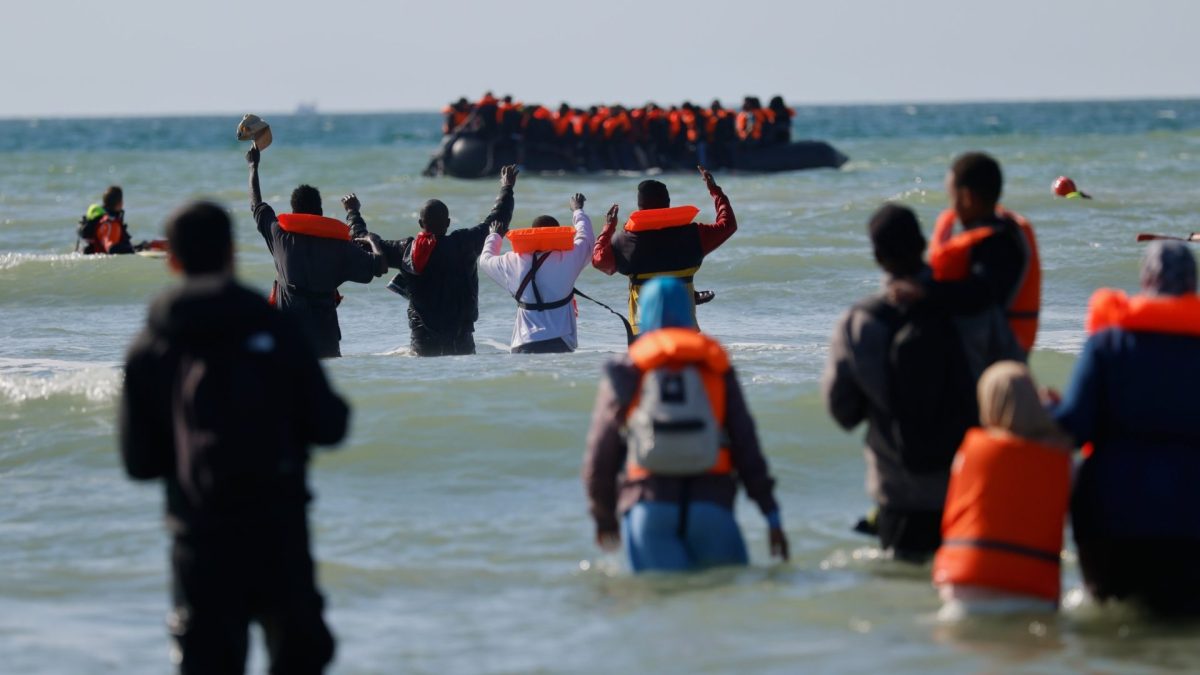
Worrying “gaps” in the monitoring of UK and French coastlines are allowing small boat migrants to cross undetected, experts have told The i Paper. Two small boats managed to reach the Kent coast undetected this week, prompting Home Secretary Shabana Mahmood to call it “not acceptable”. Only one other “uncontrolled landing” – a small boat turning up without UK patrol boats escorting – had been recorded since records began in 2023. Experts say Border Force does not have enough resources to “plug the gaps”, as smuggling gangs try to cross further west along England’s South Coast. Shorts There are also concerns that the Government may have to pay France more money to expand its patrols further along its coastline, as the traffickers shift away from the traditional Calais to Dover route. Shabana Mahmood ordered Border Security Command to carry out an urgent review on the failure to detect two small boats arrivals in Kent earlier this week. The boat on Monday landed undetected at The Warren near Folkestone, with five passengers then detained. The second, on Tuesday, reached Samphire Hoe, west of Dover. A group of 21 migrants were detained. More undetected crossings ‘highly likely’ Lucy Moreton, spokesperson for the Immigration Service Union representing the Home Office’s Border Force staff, suggested that the Home Office record of undetected crossings is an undercount – and that they could happen again. It is “highly likely” there have been more undetected crossings “for some time” that the agency was unaware of, she told The i Paper. People smugglers “are not confining their activities to that narrow Calais-to-Dover stretch” that French and UK authorities traditionally focus on, Moreton said. While some smugglers have been using large “mega dinghies” that can carry around 200 people at once, Moreton said others had gone back to using smaller boats of around 20 people – therefore evading detection. The resources of Border Security Command – part of Border Force – have been largely focused on Calais-on-Dover crossings, a union spokesperson said. “We don’t have the resources to be everywhere. We can’t be 100 per cent secure in detecting everything. We can’t always plug every gap. Every effort to plug a gap, the smugglers will try to move to a different gap.” Questions for the French authorities Tony Smith, former director general of Border Force, told The i Paper the undetected crossings near Dover and Folkstone were a “surprise” and a “worry” given the Government’s investment “on drones, radar and other monitoring of vessels” on the Kent coastline. French patrol boats tracking dinghies do regularly communicate with their British counterparts, said Smith. “It means we’re usually ready to pick them up when they come into our waters.” Migrants, near Gravelines, France, prepare to sail into the English Channel Mahmood “will want to know from the French what happened at their end” and if there was any communication breakdown, said Smith. “My assumption is that these boats were able to evade detection by the French authorities. So there will be questions about how that may have been able to happen.” Smuggling gangs moving west The undetected boats could also have left France much further west or east of the Calais area, said the former Border Force chief. A dinghy carrying 140 migrants was brought in at Portsmouth earlier this month. It is believed to have crossed from Cherbourg in Normandy – the westernmost Channel crossing seen in the history of small boats crossings. A former military sea fort called Fort Blockhouse, in Gosport near Portsmouth, could be turned into a temporary processing site for small boat arrivals, The i Paper revealed earlier this week. Under the £662m, three-year security deal between the UK and France, French police have been given money to disrupt migrants’ attempts to leave – investing in more officers, surveillance drones and intelligence. But the resources “have been focused on the traditional routes near Calais and Dunkirk”, said Smith. The Home Office will need to “collaborate as closely as possible” with their French counterparts to close any gaps further west, he added. More money needed to expand French patrols? There is no need to “rip up” the £66m deal and try to start again, but operations could be improved, Smith said. “We do give the French a lot of money already. We can ask them where the resources are going. The French do have some capabilities along their coastline.” Moreton suggested it may require further money, if there was a desire for the French to expand their operations. “We’re effectively only paying for the Pas-de-Calais stretch of coastline – that’s where their policing resources are, and they have been needed there,” she said. “It could be a lot more money for additional resources all the way along the coastline, further west, including Normandy, to try to close the gaps.” UK ‘knowledge gap’ from staff cuts? Small boat arrivals have declined since Labour took office, according to a recent report by the Migration Observatory. Around 27,900 people arrived by small boats in the year ending 9 September 2026 – the lowest level since 2021. Professor Thom Brooks, an immigration policy expert, said the Labour Government had made “good progress” on reducing the small boat crossings – particularly on the Calais-to-Dover stretch – thanks to the £662m deal with France. But there are concerns that plans to reduce headcount at the Home Office’s Border Force agency could contribute to more holes in the system. A report by the chief inspector of borders and immigration recently raised concerns over a plan to cut 563 staff – warning that there could be “skills and knowledge gaps”. “We’re losing people across the board – including [Border Force] intelligence staff,” Moreton added. “The Home Office doesn’t have the budget to maintain current staffing levels.” Both the Conservatives and Reform UK claimed the undetected crossings showed that Labour had “lost control of our borders”. Labour’s deputy leader Lucy Powell said the Government “can’t stop everything all of the time”. A spokesperson for the Préfecture Maritime, the authority responsible for French waters, said it tried to monitor “every vessel departing from France”. However, they added that the “gradual shift of departure points further and further south of Pas-de-Calais is forcing us to rethink the system”. A Government spokesperson said progress tackling small boats was “indisputable”, adding: “But this week’s events show that while the peaks we are seeing are far below those of previous years, we need to push further and harder in order to eradicate this vile trade.”
The ‘gaps’ in border security that allowed two dinghies to land in Kent undetected
Full Article
Original Source
Read the full article at Inews →KhanList aggregates and links to publicly available news content. We do not host full articles from third-party sources. Always verify important information with original sources.