
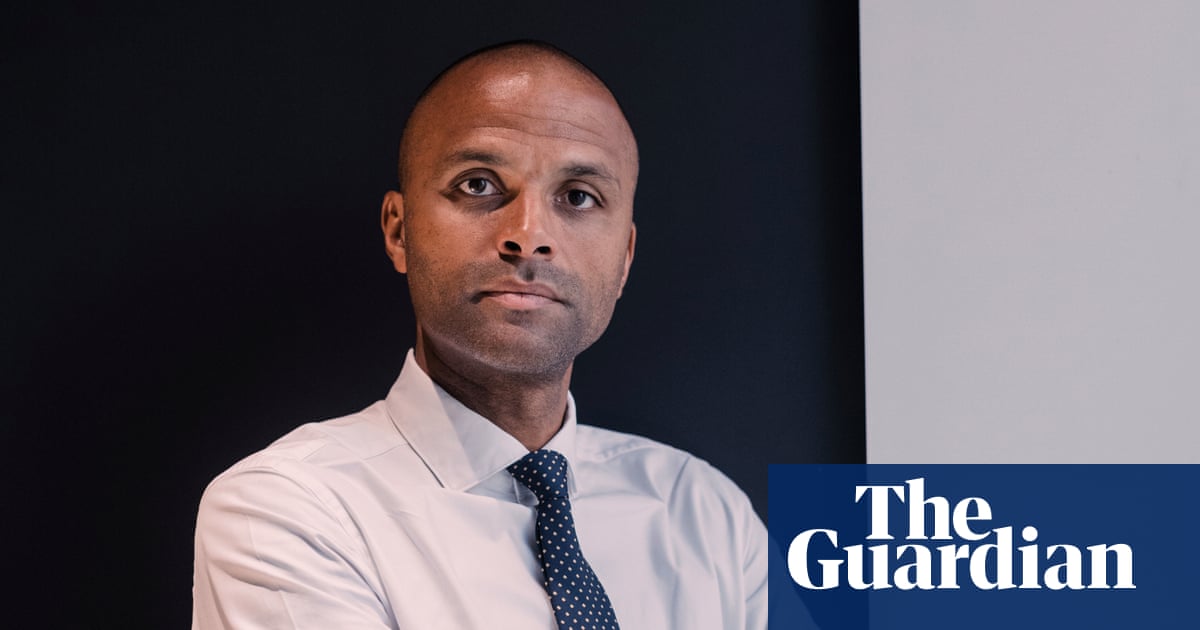
After five years in charge of the Professional Footballers’ Association, what has Maheta Molango learned? “The game is in danger,” the 43-year-old says. “I’ve learned that the game I loved and led me to first play and then advise and then lead a club and today to lead the PFA, is in danger because it is being forgotten.”In 2026, with football ubiquitous on all platforms, with a World Cup that generated $15bn (£11.4m) in revenue, and with attendances across the English pyramid growing year on year, it may seem hard to imagine forgetting about the game. But Molango’s unique perspective as head of the English players’ union observes a different picture; one where the future of the sport is being determined not by what will maintain its popularity, but what will make the most money.“What I’ve seen over the last few years is that I attend meetings where we talk about everything except for the game,” Molango says. “And I think we’ve allowed people to enter the game that did not enter it for the right reasons. They did not enter the game to make it better. They did not enter the game because they loved it. They entered the game because they saw money in the game and because they saw influence in the game. And I’m very concerned about that because, ultimately, if you don’t have a good game, if you don’t have a good product, you don’t have an industry.”Molango is speaking at a potentially critical juncture for the future of football. Wednesday is the deadline for candidates for the role of Fifa president to put their name forward for March’s election. Gianni Infantino appears likely to win an unprecedented fourth term despite the cascade of scandal that has dogged much of his decade in charge. Infantino’s tenure has also brought about enormous changes of which Molango, whose union had 345 members playing at this year’s World Cup, 27.6% of the total, is highly critical.The expansion of the World Cup is one central issue; where 32 teams became 48 at the men’s tournament this past summer and perhaps 64 in 2030. The changes, which players’ unions say were made without consulting players, have led to knock-on effects on the calendar that mean the PFA is pursuing Fifa through the European courts to ensure “the legal rights of players to take guaranteed and protected breaks”. But they have also damaged, in Molango’s mind, what should be the sport’s most precious event and for spurious reasons.“Can anyone who really believes in the concept of the World Cup think that having a 64-team tournament makes sense?” he says. “We may as well call it a summer friendly tournament. And I cannot buy the narrative that says: ‘Oh, it’s about making football truly global.’ That’s just not true. I think it’s disrespectful to think that people in the Congo want to be gifted access to the World Cup. We don’t need favours, we just need opportunities. We want to deserve to be at the World Cup, we don’t need it to be gifted to us, thank you very much. Don’t treat us as if we need to thank you for giving us something.”Maheta Molango: ‘Governing bodies must protect the integrity of the game and not just that, the perception of integrity as well.’ Photograph: Sarah Lee/The GuardianThen there is the question of integrity. Last summer’s World Cup brought an incident which, for many in the game, crossed a red line: the overturning of the suspension awarded to the USA’s Folarin Balogun, after an intervention by Donald Trump. “What happened with Balogun is scandalous,” Molango says. “Because my son can say to me: ‘Football is corrupt.’ It’s unacceptable that you’ve allowed a situation where people can think that. Governing bodies must protect the integrity of the game and not just that, the perception of integrity as well.”Molango was born in Switzerland to a Congolese father and an Italian mother. He is an Italian national and began his career as a professional footballer in Spain, at Atlético Madrid. He made no appearances for the club, however, before moving to Brighton (a club that was a different proposition in 2005: “We were playing at the Withdean and I was washing my own kit at home”). From there he moved across and down the English football pyramid before finishing in Spain. After retirement he retrained in Spain as a lawyer, establishing the country’s first sports law practice, before he became the chief executive of Mallorca. He took the club to the depths of the third tier, then back to La Liga in consecutive seasons before taking charge at the PFA, replacing the longtime leader Gordon Taylor at a time of tumult for the organisation.To visit the PFA’s smart, new offices in London’s Liverpool Street, bedecked in replica kits and with a timeline of players’ developing rights in the entrance hall, is to see an organisation that has come out the other end of an intensive period of reform. An independent review into the PFA’s governance was launched in 2018 after concerns over the use of funds. The outcome led not only to Molango’s appointment but also to the introduction of a players’ board – now led by the impressive Omar Beckles alongside Ben Davies of Tottenham and Chelsea’s Lucy Bronze among others – as well as non-executive directors and a committee focusing on the ethics of the organisation.skip past newsletter promotionafter newsletter promotion“The PFA had a credibility issue,” Molango says. “We called an independent expert. They came in, they assessed, and they changed the governance. So I think we led the way. We demonstrated that sometimes you don’t need to be rotten to be wanting to change, you just need to acknowledge that things move on.”Ten years after the reforms that followed the Sepp Blatter era, Molango believes that Fifa must change again. “It’s a sick system,” he says, “and for me we shouldn’t be talking about individuals, we should be talking about governance. The system as currently constructed is a system that will always foster the wrong behaviour. Because inevitably the decision taken will not be for what’s good for the game. It will be for what’s good for the next election.”If change doesn’t occur, there is no guarantee in Molango’s mind that football’s status as the world’s favourite sport, and a cultural unifier, will continue. “I think we live in a world where there’s tough competition for entertainment and what I think will happen is that people will lose interest and move on. They move on to other sports, to other sources of entertainment and in the end we’ll kill the industry. We’ll kill it because we’re no longer the only players in the playground. There’s a lot of people and a lot of people who have a good product. I think we need to go back to focusing on the quality of our product. Because football has a real problem.”
‘The game is in danger’: PFA head Maheta Molango on Fifa, Infantino and football’s future
Full Article
Original Source
Read the full article at Theguardian →KhanList aggregates and links to publicly available news content. We do not host full articles from third-party sources. Always verify important information with original sources.