
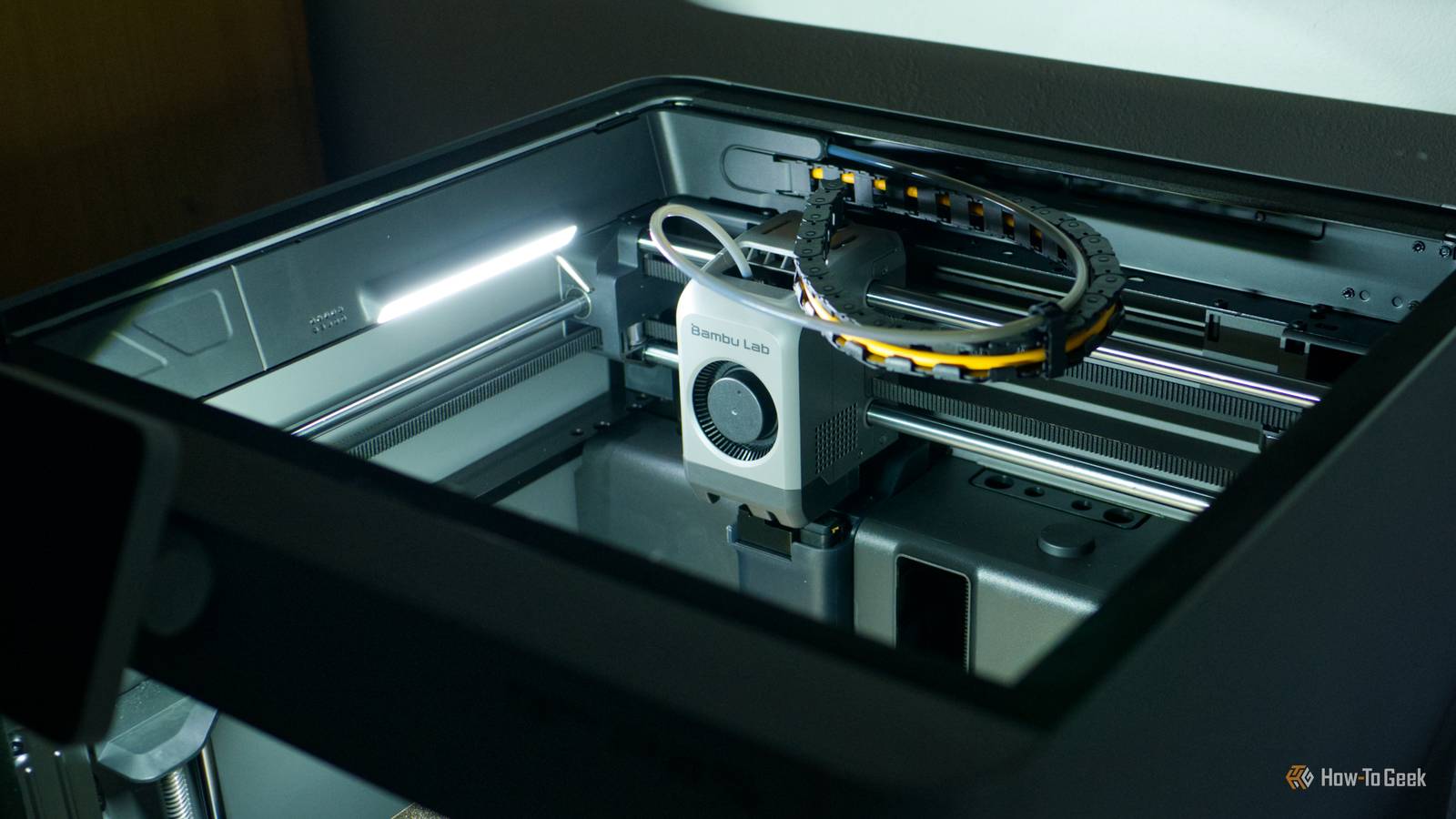
Published Nov 29, 2026, 12:00 PM EST Sydney Butler is a technology writer with over 20 years of experience as a freelance PC technician and system builder and over a decade as a professional writer. He's worked for more than a decade in user education. On How-To Geek, he writes commerce content, guides, opinions, and specializes in editing hardware and cutting edge technology articles. Sydney started working as a freelance computer technician around the age of 13, before which he was in charge of running the computer center for his school. (He also ran LAN gaming tournaments when the teachers weren't looking!) His interests include VR, PC, Mac, gaming, 3D printing, consumer electronics, the web, and privacy. He holds a Master of Arts degree in Research Psychology with a minor in media and technology studies. His masters dissertation examined the potential for social media to spread misinformation. Outside of How-To Geek, he hosted the Online Tech Tips YouTube Channel, and wrote for Online Tech Tips, Switching to Mac, and Helpdesk Geek. Sydney also wrote for Expert Reviews UK. He also has bylines at 9to5Mac, 9to5Google, 9to5Toys, Tom's Hardware, MakeTechEasier, and Laptop Mag. It's been a little over a decade since I started fooling around with 3D printers, and it's just been incredible to see how quickly this technology has advanced. My first taste of a proper mainstream 3D printer was the Creality K1 Max, but almost three years later it seems primitive compared to the current generation of printers. But what about printing technology that's just on the horizon of mainstream 3D printer adoption? These are all cutting-edge features that might just become a common sight in mainstream printers in the medium term. Where's your head at? Multi-material 3D printers are finally affordable for everyone, and I was really impressed with the Elegoo Centauri Carbon 2 Combo, which offers a truly budget entry into printing objects made from multiple filament types. The end result is fantastic, but the level of waste is insane. Every time a traditional multi-material printer changes filaments, it has to purge the old filament from the hot end first. That's where all those little "poops" come from, and often the weight of the wasted filament ends up exceeding that of the actual model itself. To get rid of this "purge waste", next-generation printers like the Bambu Lab P3C work by swapping out the entire nozzle. With a nozzle dedicated to each loaded filament, there's little to no need for purging. The downside is that these systems are mechanically complex, and the industry hasn't settled on the optimal design yet. However, I think it's inevitable that they'll settle on a central solution and then refine it to be more reliable and less expensive sooner rather than later. Color blending like a 2D printer I'm ready to get all mixed up, are you? Credit: Bambu Lab You're probably familiar with how a paper printer works when creating all the colors it needs for photos or illustrations. There are just a few primary pigments, and it mixes these in precise quantities so that you perceive a specific color. While desktop FDM printers aren't quite there yet, advanced printers like the aforementioned P3C have special color-blending abilities. Here you can use the software to create color mixes from the filaments you have. By mixing colors in precise ratios, you can have far more than the five colors the five spools of filament promise. This is effectively a by-product of having a tool-changing system, since this sort of mixing would create truly untenable levels of waste in a traditional multi-material system. So, as tool-changing printers become more common, I expect color-mixing software features will also become common, and creating FDM prints that closely match your virtual paint job will become easier to achieve. Mixed-nozzle printing You could call it aperture science Right now, if you want to print fine detail using an FDM machine, you need to switch nozzles. Usually going down from the common 0.4mm to 0.2mm. This lets you print far smaller features, but increases print time significantly. Likewise, if you don't need much detail, but just want speed, move up to a 0.8mm nozzle. The thing is, in reality, a single model can benefit from having parts printed with different nozzles, letting you use the right level of detail where needed and speed where you don't. Again, it's tool-changing technology that enables this; it's a side benefit, and printers like the P3C can already do it. The printer will know when to open its own vents Breathe in, breathe out Credit: Prusa Research All of my printers are enclosed models, which is great for noise and fumes, but since I mostly print in PLA, it means I have the tops off 99% of the time, negating those benefits. Some new printers, such as the Prusa CORE One+ (Gen 2) shown above, have advanced chamber temperature controls and automated vents that can open or close depending on your filament. Since the printer knows what type of filament is loaded (assuming you remembered to tell it), there's no need to manually manage this issue at all. I can tell you that I've walked away from a PLA or ABS print only to run back and either open or close the chamber, depending on the specific screw-up I just made. It's just another step towards making 3D printing foolproof. AI will get better too While it's not a specific feature or improvement, one area I think we'll see subtle yet powerful changes is local AI in 3D printers. Even basic printers with built-in cameras have some sort of "AI" feature that tries to detect when something's going wrong. However, in my experience so far, this causes more false positives than actually preventing wastage or damage. Likewise, some of my printers tend to detect filament jams or extruder issues where there are none. New, higher-end printers like the Bambu Lab H2D can detect spaghetti, material pileup, clumping, and air printing. Better error detection and smarter printing overall is something I expect to arrive more rapidly than complex mechanical upgrades, and maybe it will have the most profound impact too.
The future of 3D printing: 4 features your next printer will have
Full Article
Original Source
Read the full article at Howtogeek →KhanList aggregates and links to publicly available news content. We do not host full articles from third-party sources. Always verify important information with original sources.