
From cyber attacks to exploding packages, Russian disruption campaigns against Nato countries including the UK are rising, officials have confirmed. Western officials told The i Paper there was a “very clear” appetite from Russia to carry out sub-threshold or hybrid operations against Nato – attacks designed to disrupt or divide, but fall below the threshold for all-out war. “There is evidence that Moscow is stepping up its campaign of sub-threshold attacks, which are designed to deter and disrupt European support to Ukraine,” they said. Shorts Russia was blamed for an arson attack on an east London industrial estate, interfering with critical undersea cables, and most recently, an attack on a Polish factory and drone attacks on an airport in eastern Germany. Analysts believe the Kremlin wants to avoid direct confrontation with the alliance, and although the level of threat to the UK has not changed, lower level attacks are expected to continue or grow. These subthreshold attacks are effective precisely because they can wreak havoc on Nato without triggering a military response, said Melanie Garson, an international security professor at UCL. But without declaring war with Russia, what can the UK do to respond? UK ‘must find ways to hit Russia’ Ed Arnold, a senior associate fellow at defence think-tank RUSI and a former British Army officer, said the UK needed to “find subthreshold ways of punishing Russia” for its covert activities in Europe, suggesting the European response, often via economic sanctions, had not currently gone far enough. Summoning ambassadors is not going to surprise Russia or change its behaviour, Arnold said, and Russia has weathered the multiple rounds of sanctions Europe has already imposed on it. Instead, the UK must find creative new ways to play Russia at its own game, he said. Tackle the shadow fleet Russia’s shadow fleet is a secretive network of ships that operate outside of maritime laws and convention, flying other countries’ flags, spoofing tracking signals, and falsifying documents to conceal their activities. The vessels are key to funding the invasion of Ukraine, covertly delivering up to 70 per cent of lucrative Russian oil exports, and stand accused of cutting undersea cables heading for Europe. Researchers Anna Matilde Bassoli and Emma Isabella Sage, in a paper for RUSI, described them as a “classic greyzone threat – below the threshold of armed conflict, yet beyond the effective reach of law enforcement”. A British Commando conducts maritime interdiction operations on the CMR Smyrtos, sailing under a false Cameroonian flag in the English Channel in June. (Photo: Ministry of Defence AFP via Getty Images) The ships are difficult to find, hard to tackle when spotted – the EU has no integrated coast guard and Nato has no legal authority to board commercial vessels – and tricky to prosecute legally. To kneecap shadow fleet activities, Bassoli and Sage suggested that Europe crack down on its own companies providing insurance or tankers for shadow fleets, and launch a “global effort to interdict shadow ships” rather than “isolated seizures”. Europe has also had some success in seizing vessels. Earlier this year, Sweden seized a shadow fleet vessel in the Baltic Sea that was suspected of illegally transporting grain from Russian-occupied territory, and is now working to hand the ship to Ukraine. In a first, the UK seized a tanker in the English Channel using Royal Marine commandoes to intercept and board the vessel. If regular and coordinated, such moves could help limit the effectiveness of the shadow fleet and combat this branch of greyzone threat. But Alex Petric, lead Russia and Ukraine analyst at intelligence company Janes, said that the Russian government has been planning their response for cases of seizures of vessels – and could take Western ships in return. In the first UK-led operation of its kind, the Smyrtos was boarded by Royal Marine Commandos on 14 June (Photo: Ministry of Defence) “We can observe that Russia has planned, and has now publicly declared, that they monitor Western ships in its EEZ [exclusive economic zone], in Russia’s Far-East, and have the capacity for seizures,” he said. “Russian Pacific Fleet Admiral Viktor Liina stated the Pacific Fleet has the capability and is ready to detain vessels of unfriendly states and of their ‘shadow fleet’.” Janes assesses that Russia will “almost certainly adopt a symmetric counter-seizures policy against European seizures of Russia-linked vessels”, and that the Russian Navy will “very likely retaliate with counter-seizures of European-linked vessels within Russia-controlled waters – Russia’s Far Eastern EEZ or other waters – in the next year.” Cyber attack Russia Russia has long been accused of being behind cyber attacks on the UK and European countries – including a cyber attack on Jaguar Land Rover, which cost the British economy nearly £2bn. The UK does have the ability to launch counter-cyber attacks on Russia, Arnold said, and could target key infrastructure like its banking system. However, the UK’s hackers may want to keep their powder dry. “The issue is you don’t necessarily want the Russians to know that you can do that,” he said. “Then they patch it up, and if you go to war with them in a year’s time, you can’t use that. There are lots of other things that we could potentially do, that we don’t want to use too early because if you use it, you lose it.” Release frozen Russian assets to Ukraine But Europe may have the most direct impact on Russia by doubling down on support to the nation already fighting it – Ukraine – according to Scott Lucas, Professor of International Politics at the Clinton Institute, University College Dublin. More military and financial aid would allow Ukrainian forces to push harder against the invasion and expand recent counter attacks that have hit deep inside Russian cities. UK banks are believed to hold around £26bn out of £250bn of Russian asset frozen globally since Moscow launched its full-scale invasion of Ukraine almost two years ago (Photo: Clodagh Kilcoyne/Reuters) “Of course, part of why the Russians are stepping up the hybrid warfare is they’re worried about the UK and European countries providing that support for Ukraine,” he said. Arnold agreed. “I think it’s more giving Ukraine more permissions and capabilities and support because they’re actually in the fight and they’re able to do it versus us.” However, it is easier said than done. Many of Ukraine’s allies are struggling financially and concerned about their own military stockpile. There are global shortages of the interceptors Ukraine needs to take out missiles in its airspace after frequent use in the Middle East during the war between the US and Iran, so allies have few to spare. Arnold thinks the answer could lie in the Russian assets that have been frozen by Europe since the invasion of Ukraine, totalling £228bn. The UK’s sanctions minister previously told The i Paper that London was exploring “every possible way” to use the money to support Ukraine, but the process has been bogged down by legal concerns and fears of Russian retaliation by some European countries. A police officer looking at a burning residential building following a Russian strike in Kyiv. (Photo: State Emergency Service of Ukraine / AFP via Getty Images) “I think that is one of the only real things that could be a threat,” Arnold said. “For instance, you put it all in an account, and every time the Kremlin does something, you release £10bn to Ukraine, who are facing sort of a black hole in defence expenditure because of the cuts from the US. “I think doing something like that, big and bold, and explicitly linking it to Russian activity is what the Europeans should do, rather than this incremental approach of ‘what do we do now’.” Increase presence in at-risk spots Russian subthreshold attacks are widely feared to be a precursor to a land grab. In a bid to deter Russia from attempting to seize Nato territory, the alliance may also step up its presence in areas considered vulnerable to attack. There are several possible sites, including Norway’s Svalbard archipelago, Finland’s Åland islands, and Sweden’s Gotland island, but many analysts deem the most likely target to be Lithuania, as part of an attempt to build a land corridor between Russia and Kaliningrad. There are currently around 5,000 Nato troops stationed in Lithuania, including a permanent German Army tank brigade. Nato frequently launches new missions in response to changing threats, launching Eastern and Baltic Sentry air defence patrols in response to Russian drone incursions, and may decide to bolster the presence in Lithuania. This may, they hope, be enough to stop greyzone attacks crossing the threshold into all-out war.
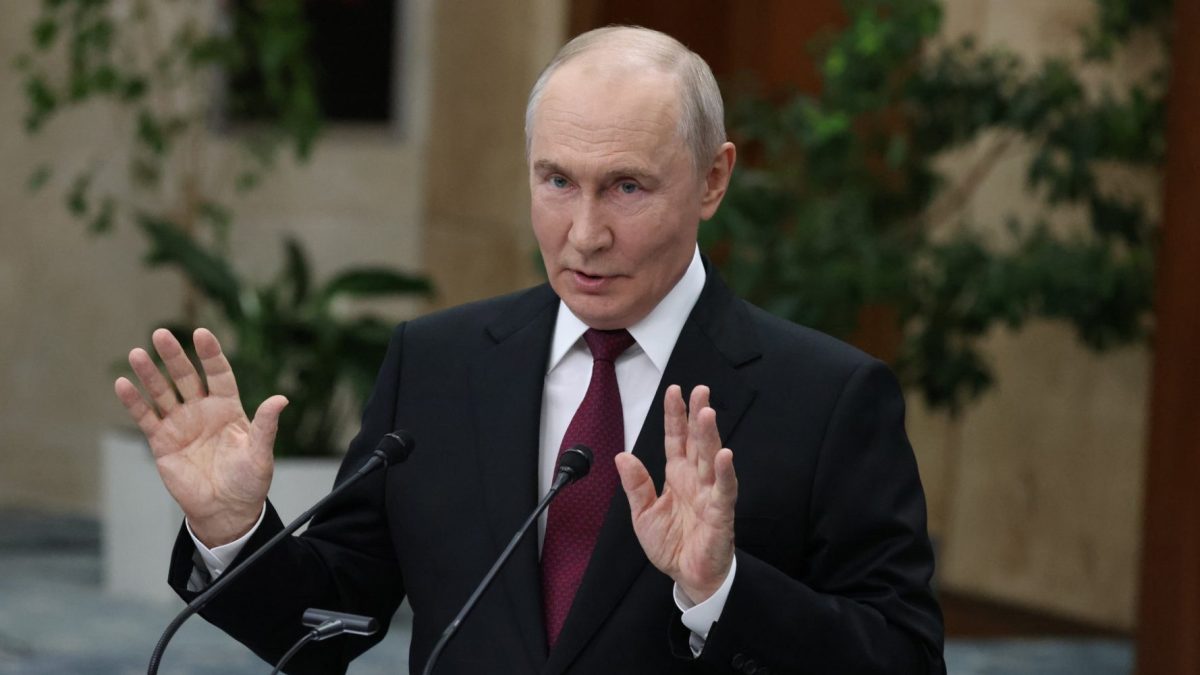
The four ways the UK could respond to Putin’s grey war
Full Article
Original Source
Read the full article at Inews →KhanList aggregates and links to publicly available news content. We do not host full articles from third-party sources. Always verify important information with original sources.