
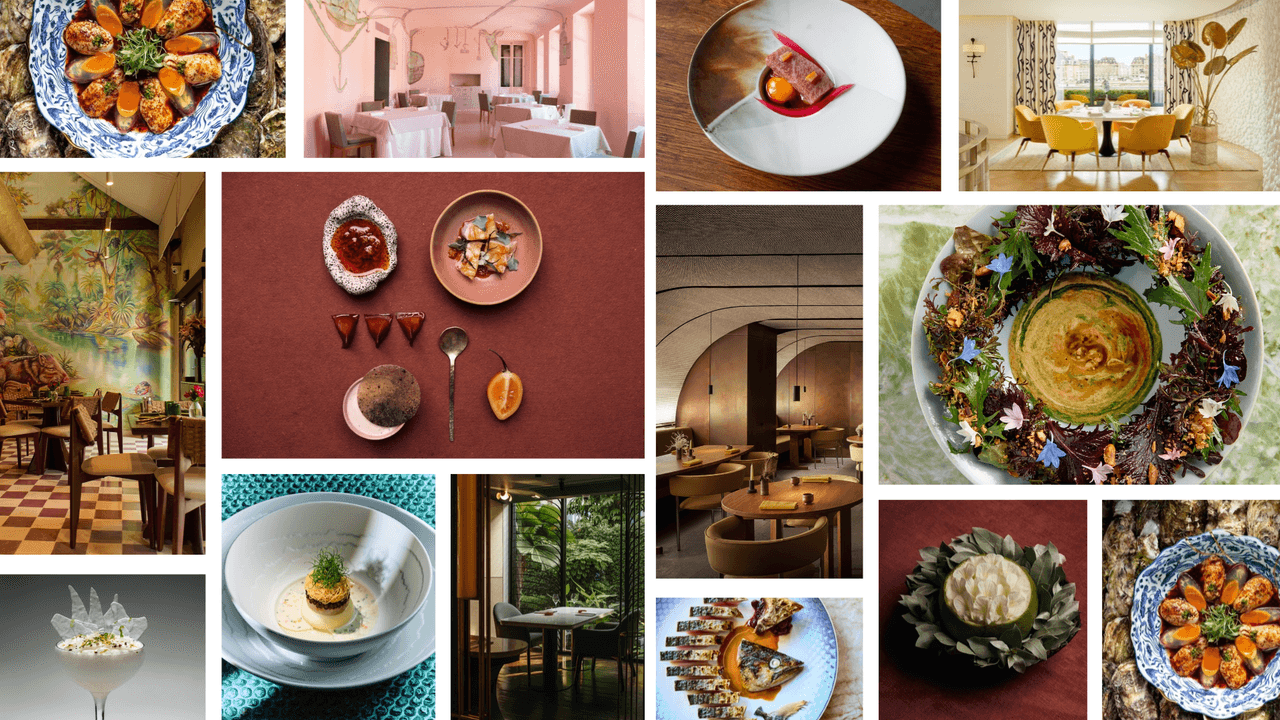
On November 4, Lima, Peru, was a playground for global palates. Star chefs from across the world flocked to the culinary hotspot for the 50 Best Restaurants 2026, a prestigious awards ceremony that crowns the top restaurants around the globe based on anonymous nominations from over a thousand industry experts. Restaurant Asador Etxebarri, which is located in Spain's Basque Country, won top billing as the World’s Best Restaurant 2026 at the event held at the ornate Teatro Municipal de Lima. And before the winners took the stage, we were on the ground as Lima and its top restaurants buzzed with excitement all week.In addition to knowing which spots came out on top, we also wanted to understand what these results signaled about dining in the year ahead—so we asked chefs for their hot takes. After the plates, tastings, and pisco sours (so many pisco sours), these the top dining trends and places to look for in 2027, according to the world's best chefs.Read the full list of the 50 Best Restaurants in 2026 here.Lobster from Kjolle in Lima, which was just named No.7 on the World's 50 Best Restaurants list. Camila NovoaTraceability will be more essential than everChef-owner Pía León of Kjolle in Lima—a fine-dining wonder that showcases the megadiversity of the host nation with startlingly beautiful tasting odysseys—snagged the number seven spot this year, making it the top restaurant in the host country. With the global spotlight on her, León looks to the growing importance of knowing specifically where your food comes from, beyond just a vague sense of ‘local.’ “To me, traceability means understanding where each ingredient comes from, who produces it, and the knowledge behind it,” she told Condé Nast Traveler. “Many of the products we work with come from local producers and communities who have kept their techniques alive for many years. As cooks, we have a responsibility to recognize their work and the value of what they grow.”It’s a feeling that chef and co-owner Josh Niland of Sydney's Saint Peter (which also appeared on our 2025 Hot List of the best new restaurants in the world) emphasizes even further. The restaurant, founded by chef-owner Niland and his wife Julie Niland, focuses on whole-fish cookery and placed at number 50 this year, also earning the title of Best Restaurant in Oceania. “I think it [will be] ridiculous,” he says, if, in 10 years, restaurants are not telling us exactly on paper where things are from. “Like I think it's non-negotiable,” he said. “If you're writing a menu right now, let alone 10 years from now, I want to know why I'm paying $60, $70 for this chicken. Where is it from? That's how I feel about it. You know, we've got QR codes on the menu that you can scan and watch a fisherman pull a fish out of the water. Like, that's probably a very drastic leap, but I feel like that's where, to a degree, the premium end of dining needs to be. We need to be incredibly transparent about our labor, how we're paying people, like where things are from, all that.”Saint Peter in Sydney came in at No. 50 on the list, and was named the Best Restaurant in Oceania. Courtesy Saint PeterExpect menus to change more often as the climate doesAt New Nordic gem Kadeau in Copenhagen—number eight on the list and also recently awarded three Michelin stars this past June—head chef and co-owner Nicolai Nørregaard plays with time, drawing on both seasonal, hyper-local fresh produce, and preserved beauties from seasons past. Kadeau—where the team includes chef Francisco “Pancho” Cardenas supervising the kitchen, and Kyumin Hahn serving as partner—also won the Highest Climber award for jumping from number 41 in 2025 to its placement this year.So what, exactly, does “seasonality” mean when the seasons seem so different lately? Condé Nast Traveler asked Nørregaard just how climate change is impacting the menu, and what adjustments the team is making: “Some meals are shit,” Nørregaard said, “or some ingredients that we are relying on [are], so we need to change plans. But then maybe something else is in abundance, and then we just switch to that direction.” During Kadeau’s growing season, when it relies on produce from its garden on the Danish island of Bornholm and from what can be foraged nearby, adding more nutrients and water to the soil allows them to step in and give Mother Nature a helping hand, ensuring a better product. During the preservation season, in the colder months, the team showcases products like preserved onion that have been stored since spring and summer—but even that process is changing. Take the pine cone: A dry year might produce very few of the beauties, while a wet year will see abundance. “We sometimes need to think ahead and plan two years in advance,” he continued. “So we have to preserve something for more than one season because it might not come the next season.”Around the globe, more nimble menus—shifting ingredients, planning well ahead of time—are on the way to account for increasingly unpredictable weather. This is a further expression of adaptations already underway, including a reduced focus on meat, due to its environmental impacts, and broadened waste-reduction efforts. For diners, this means that no two tasting menus, even at the same restaurant, may be exactly the same; that talked-about dish may be swapped out for something else when the seasons or weather requires. But this commitment to the best, and the possibility for newness on menus, presents an arguably more interesting fine dining experience. Each menu, and dish, may represent a singular moment in time.The Sardine Pie at New Nordic gem Kadeau in Copenhagen, which placed number eight on the list. Soren ReedKadeau was also recently awarded three Michelin stars this past June. Soren ReedSimplicity is the new luxurySprawling menus as an indicator of abundance; dozens of items on a single plate—foams, sauces, sprigs of herbs placed with tweezers; narrative-driven tasting menus that span six or seven hours. These used to scream luxury. Now? Simplicity speaks louder. It’s a trend noted by executive chef James Gaag of La Colombe in the Constantia Valley near Cape Town, owned by chef-proprietor Scot Kirton. La Colombe landed at number 35 and also took home the title of Best Restaurant in Africa.La Colombe in South Africa placed No. 35 on the list. Courtesy La ColombeAt La Colombe and elsewhere, Gaag is energized by “less courses, fresher courses, lighter courses, less time at the table.” His innovative menus might be inspired by both his German upbringing and world travels, but that doesn’t mean trying to fit the entire globe in one menu. “We used to put 100 ingredients on each plate, and I think the longer I run the restaurant, the more confident I am in putting less on the plate,” he continued.Stripping away the stuffiness from fine diningChef Jeremy Chan, who owns Michelin-starred Ikoyi in London with co-founder Iré Hassan-Odukale, continues to rise. Ikoyi landed at number 48 this year, owing to its contemporary global menu that is inspired by both British microseasonality and meticulously sourced global spices. For Chan, though, fine dining doesn’t mean frigid. “Fine dining is about creating a refined experience, rather than a sense of preciousness or formality,” he told Condé Nast Traveler. “For me, it is about the refinement and technique of the craft, alongside the responsibility and precision in what we do to make people feel special.”Odette, the Singapore restaurant founded by chef Julien Royer, placed at number 15 this year—one of the many high-ranking spots across Asia, including Gaggan in Bangkok (number 2, and also the Best Restaurant in Asia), Wing in Hong Kong (number 5), and the Chairman (number 6), also in Hong Kong. Condé Nast Traveler asked Chef de Cuisine Sheng Xiong—who blends his Asian heritage with French training for Odette’s menus—if there’s a fine dining trend he’d be happy to see vanish. “You mean we’re going to lose our jobs?” He joked. After his laughter subsided, the chef at the Three Michelin-starred restaurant echoed Chan’s sentiments: “I think moving forward, maybe the white-glove service [will go], because in our restaurant we treat everyone coming in like [they are] coming back home as a family member. It can be a bit too casual sometimes, and at the same time, it makes them feel comfortable. Guests are happy. At the start, Singaporeans, the older generation couldn't understand what we are doing, but as time goes by, they actually prefer that to a very stiff kind of environment.”A Bluefin Tuna Rhubarb dish at London's Ikoyi, which landed at No. 48 on the list this year. Haejo NamDestination dining is an increasing drawChef Niko Romito of the lauded, three Michelin-starred Reale—which placed at number 27 this year—is seeing a difference in the way travelers experience his restaurant. Reale, which he co-owns with his sister Cristiana Romito, sits within a 16th-century monastery nestled in a remote medieval town in Abruzzo, Italy. As Niko Romito explained to Condé Nast Traveler, because of Reale’s remote location, tourists would often get there at the tail-end of a food tour of Italy—a tough situation to be in, when perhaps a meal at the end of a trip might feel less memorable after a string of stellar meals. “Today, it’s the exact opposite,” Romito said. “The location—tucked away in the provinces—was once a major limitation. Yet, this very constraint pushed me to create a style of cooking that transcends the distance, making the journey—the hours spent in the car—fully justified. I could say that the region where I live, Abruzzo, is beginning to emerge as a top destination for tourists. A territory rich in nature, parks, and hidden gems.”At Singapore's Odette, number 15 on the list, Kampot Pepper Crusted Pigeon is served. Courtesy OdetteInside Odette, the Singapore restaurant founded by chef Julien Roye Courtesy OdetteMany restaurants within this year’s list support the growing trend that rurally set tasting menus are sometimes more interesting than their big-city counterparts, luring an increasing number of diners. This year’s number one restaurant and also the Best Restaurant in Europe is Asador Etxebarri, which calls Atxondo, a village of less than 1,500 inhabitants in Spain’s Basque Country, home. Vyn, the number 23 restaurant, is located within a pastoral fishing village of about 7,000 people in southern Sweden. While Naar, number 50 and also the winner for this year’s Sustainable Restaurant Award, sees diners traveling deep into the foothills of the Himalayas for its open-flame-cooked dishes. As food tourism continues to boom, expect even more meteoric restaurants to shine from beyond bustling metropolitan areas.Read the full list of the 50 Best Restaurants 2026 here.
The Food Trends We’ll See in 2027, According to the World’s 50 Best Chefs
Full Article
Original Source
Read the full article at Cntraveler →KhanList aggregates and links to publicly available news content. We do not host full articles from third-party sources. Always verify important information with original sources.