
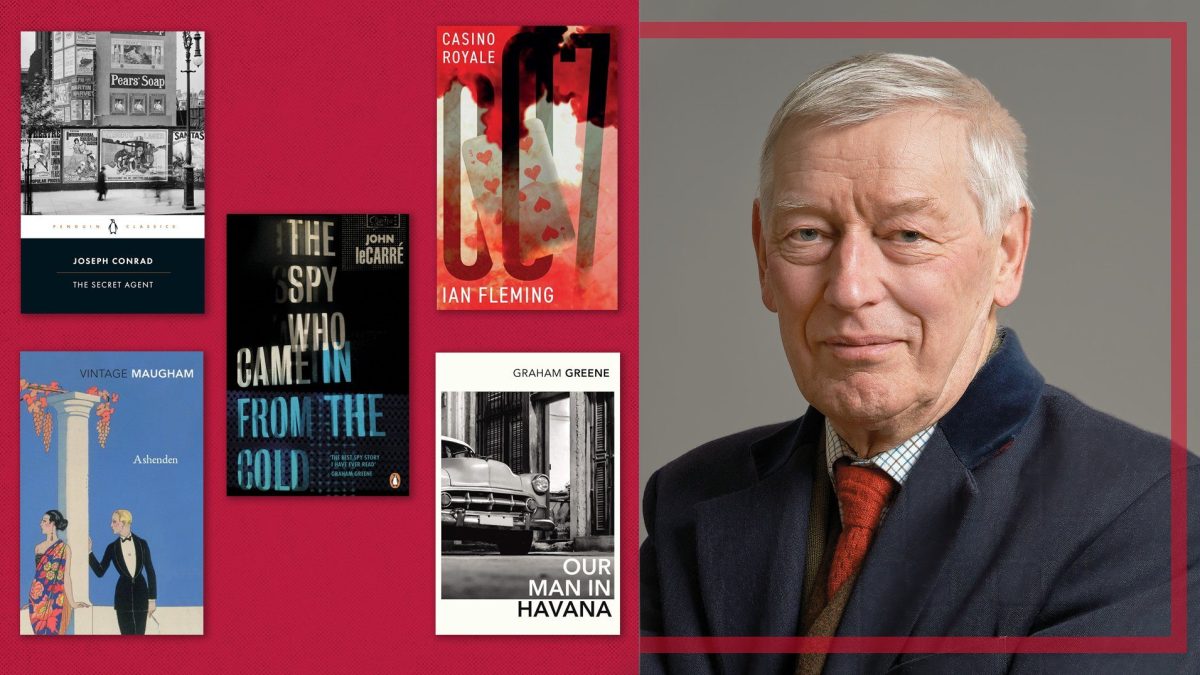
Born in 1946, Alan Judd served in the Army and worked in the Foreign Office before becoming a writer full-time. He draws on his military and diplomatic experience for his work, which includes the Charles Thoroughgood series of spy novels, following the protagonist through his experiences in the Army and the Cold War era intelligence service. Judd is also a biographer, with his subjects including MI6 founder Mansfield Cumming. His latest novel, No 1 St James’s Park, is the second in his new Emily Grey series, centring on a Cambridge graduate recruited by a fledgling MI6 during the First World War. So which are the spy novels Judd holds in greatest esteem? Here, he shares the five classic spy stories that have shaped the genre – and his own reading – the most. The Secret Agent by Joseph Conrad “Inspired by an 1894 anarchist bombing, Joseph Conrad’s novel endows the early spy genre with the introspection and moral equivocation found in more mainstream literary novels. “Adolf Verloc, shabby shopkeeper and pornographer, is an agent provocateur who penetrates an anarchist cell on behalf of the Russian embassy. Tasked with provoking the anarchists into blowing up the Greenwich Observatory, he initiates a train of fatal unintended consequences. “A wonderfully dark and perceptive book.” Ashenden: Or the British Agent by W Somerset Maugham “Based on his First World War experience of working for British intelligence in Switzerland and Russia, Somerset Maugham’s stories accurately portray much of spying as the attempt to get people to betray secrets or to do what you want. “In one case, Maugham has his character Ashenden befriending a British married couple based in neutral Switzerland. The man is a German agent and Ashenden’s task is to persuade him to cross the border into France where he can be arrested and shot. By focussing on the relationship between case officer and agent, or target, Maugham creates the most realistic early spy fiction.” Casino Royale by Ian Fleming “Fleming’s James Bond novels were arguably the pinnacle of the heroic adventure tradition in spy writing. “In this, the first, with its glamorous background and detailing that became his trademark, Bond is sent to bankrupt the Russian agent Le Chiffre at the gaming tables. He succeeds but the consequences were not what he or his controller, M, expected. “Throughout the novels Bond, an MI6 officer, in fact does very little spying; he is a hit-man or assassin whose activities draw more on Fleming’s wartime intelligence background than is often appreciated.” Our Man in Havana by Graham Greene “Graham Greene’s satire on spying and the credulity of Whitehall’s MI6 mandarins introduces an all-too-rare element of humour into spy fiction. A hard-up British vacuum cleaner salesman in Havana is recruited by MI6 to report on Cuba. Having nothing serious to report, he ends up hoodwinking his new employers by inventing a network of supposed sub-agents and secret weapons. “In fact, Greene’s scenario is based on a highly successful MI6 deception operation run in Second World War Lisbon against the Germans, which Greene knew of through having worked on MI6’s Lisbon desk. He finds fictional fun in turning the operation against his old employer.” The Spy Who Came in from the Cold by John le Carré “John le Carré’s third novel is arguably the best-known Cold War spy novel of the later 20th century. “Its MI6 protagonist, Alec Leamas, pretends to go to seed in order to be recruited by East German Intelligence with the aim of persuading them that their head is a British spy. But Leamas is as much pawn as actor in what becomes a complicated game. “The novel also launches Leamas’s controller, George Smiley, on the road to becoming one of the most famous spies in fiction.” ‘No 1 St James’s Park’ by Alan Judd is published by Simon and Schuster, £20
The five best spy thrillers of all time, according to Alan Judd
Full Article
Original Source
Read the full article at Inews →KhanList aggregates and links to publicly available news content. We do not host full articles from third-party sources. Always verify important information with original sources.