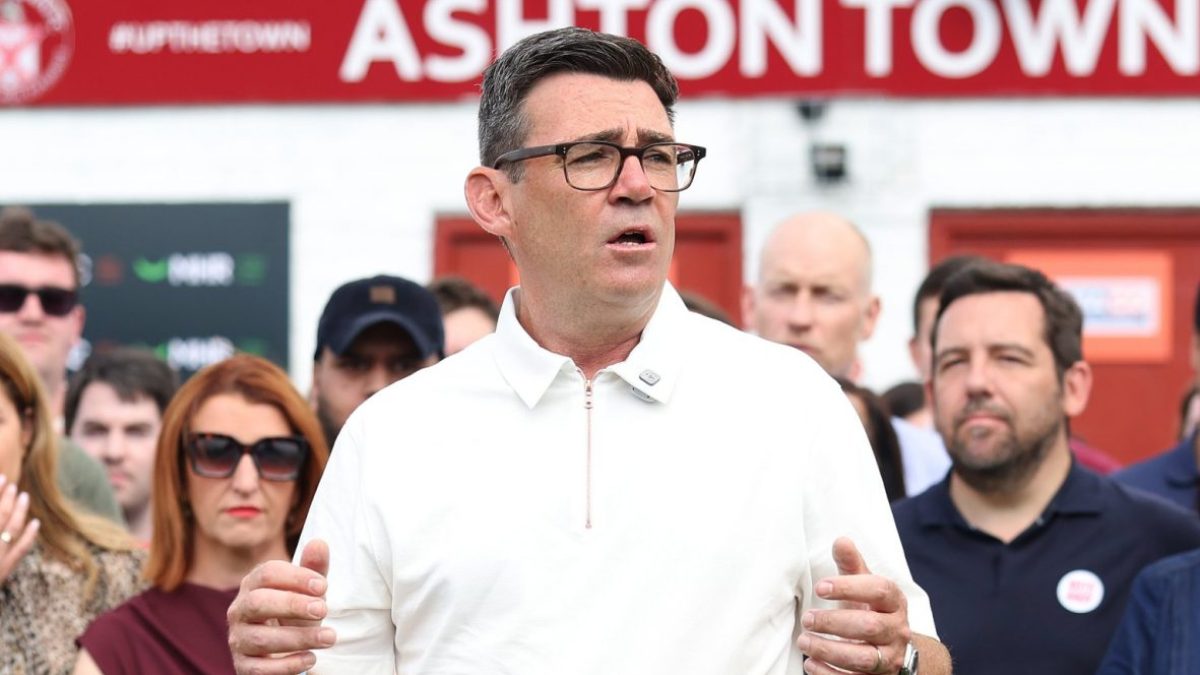
What bliss it is for Labour to have a “hopey-changey” new start. That accusation of vibes-based politics was first hurled at former US president Barack Obama by his right-wing opponent, Sarah Palin, in the 2008 presidential election race. Obama nonetheless adopted the phrase, announcing that he was proud to be a forward-looking leader – and went on to win and serve two terms. Andy Burnham also wants to restore hopey-changey positivity to Labour after a period of “drear Keir” that felt like a governing slog, with erratic priorities and a dearth of clear leadership. For all of the upbeat music and smiles, however, more backwards-looking parts of Burnham’s coronation speech on Friday leaned into ancestor worship (Neil Kinnock, David Blunkett, Margaret Beckett), which twanged Labour’s sentimentality chords. Evoking a “forty years of neo-liberalism” hellscape also dissed the electoral and modernising successes of the Blair years. But as the Burnham era begins in earnest on the steps of No 10 tomorrow, a dramatic cabinet reshuffle will herald the start of a period Sir Keir Starmer squandered and Burnham knows he needs to use more effectively – his first defining steps in government. Besides his calling card of devolution of powers outside London, the man moving his pots and pans into Downing Street this weekend is looking for quick wins which the electorate can grasp and identify with. So out goes the ill-fated digital ID cards scheme – bizarrely, the centrepiece of Starmer’s speech to his conference less than a year ago. The “Brit card” – digital proof of identity – was a poorly prepared and even less well explained idea, hastily announced and subsequently downgraded. Given that the plan was going nowhere fast and had succeeded in mobilising opinion against it before any benefits were clear, Burnham’s junking of it is sensible. What is interesting is the way he explains his logic – that the resources will instead flow to tackling cost of living pressures. A pedant might point out that there is no clear saving from a rollout which was not really close to happening anyway. The Burnham team are also looking for a series of moves that will “keep bills down”. Plans to give children from age 11 to 16 free bus travel are also being explored. The difficulty of these announcements, however, is that they feel like sticking plasters rather than cures for many fundamental ills. Some of them are already coming into conflict with other major driving ideas of “Burnhamism”. Take the pledge to keep household bills down – something hard-pressed parts of the electorate will enjoy hearing. But as one of the rare Labour senior policy figures with a deep background in business says, “A lot of what drives cost-of-living headaches is not in our control”. A worsening of the crisis in the Straits of Hormuz, the drag anchor of Donald Trump’s tariff wars and tensions with China, may materially affect how much money the Government has to spend on alleviating rising costs in utility bills. Hang on, Burnham will say – we have a plan for that – and one which will land well as he pledged on Friday to “fix the big things that politics has neglected”. Taking water companies into various forms of public ownership will be his demarcation point, as he sees it, against a dithering predecessor and opponents in the Tories and Reform whose plans to address the “big things” wrong in national life are diluted by trivial turf battles and culture wars. Starting with the disastrous Thames Water – and the plan to push it into administration – rather than wait to see if the company can reach a new deal with its multiple creditors and stave off reform. That lands the Government with a bill of over £2bn to keep the essential services running until the end of next year. Seeing as no one can see a private-sector solution for a company that is already massively over-leveraged, the idea is that in return for this injection, Labour gets more say in how our water industry is run. Neither is Thames Water an outlier. I understand that policy work is advancing to push more water companies into various forms of public ownership. But how far does it answer the question it sets out to resolve? Privatisation of water companies failed because they could not fund investment from bills capped by the regulator. That problem is going to be handed back to the Government and the cost of upgrading a faulty water supply is going to fall directly on the taxpayer. Ultimately, bills will need to rise to pay for cleaner rivers and beaches, create new reservoirs and generally upgrade a critical area of woeful infrastructure – to the tune of tens of billions over five years. In the Burnham way of thinking about this, public ownership brings more accountability to evasive CEOs of water companies and means their pay can be controlled to avoid bonuses being paid, while they often provide an inadequate service of spewing sewage into seas and rivers. Spinning the Thames Water case into a pretext for a full-scale retreat from privatisation is more questionable – as would be taking over listed water companies which are doing a lot better than private-equity backed, debt-laden ones. The Government’s own water industry reviewer, Sir John Cunliffe, said so in his report last year: “We didn’t think the problems the sector was facing could just be laid at the door of privatisation and profit. We pushed very hard for evidence that shows that other ownership structures are systemically better… we didn’t have results that conclusively showed any system was better than any other.” This reminds us of the sort of choices that Burnham will need to make on how far his approach to the public-private mix is pragmatic – and how much reflects the raw desire for state control. Those “four decades of neoliberalism” being a disaster – they did, after all, deliver London a lucrative financial centre which is an important part of the tax base. The UK needs to be attractive to international investors and public-private partnerships to spur growth. It needs national champions: in technology, AI, defence and infrastructure improvements – and the support of an enabling state to be competitive, but not to live in fear of de facto nationalisations. Taking things “back” into control is always tempting for politicians on the left. There is, however, often a lot less of it in practice than they think. Agility and allowing the conditions for growth to prosper also matter in how you aim to “fix” the big things. That might turn out to be the more daunting set of choices for the new tenant at No 10 when he needs to deliver the change – as well as the hope.
The first pitfall of Burnham’s premiership is already in sight
Full Article
📰 Original Source
Read full article at Inews →KhanList aggregates and links to publicly available news content. We do not host full articles from third-party sources. Always verify important information with original sources.