
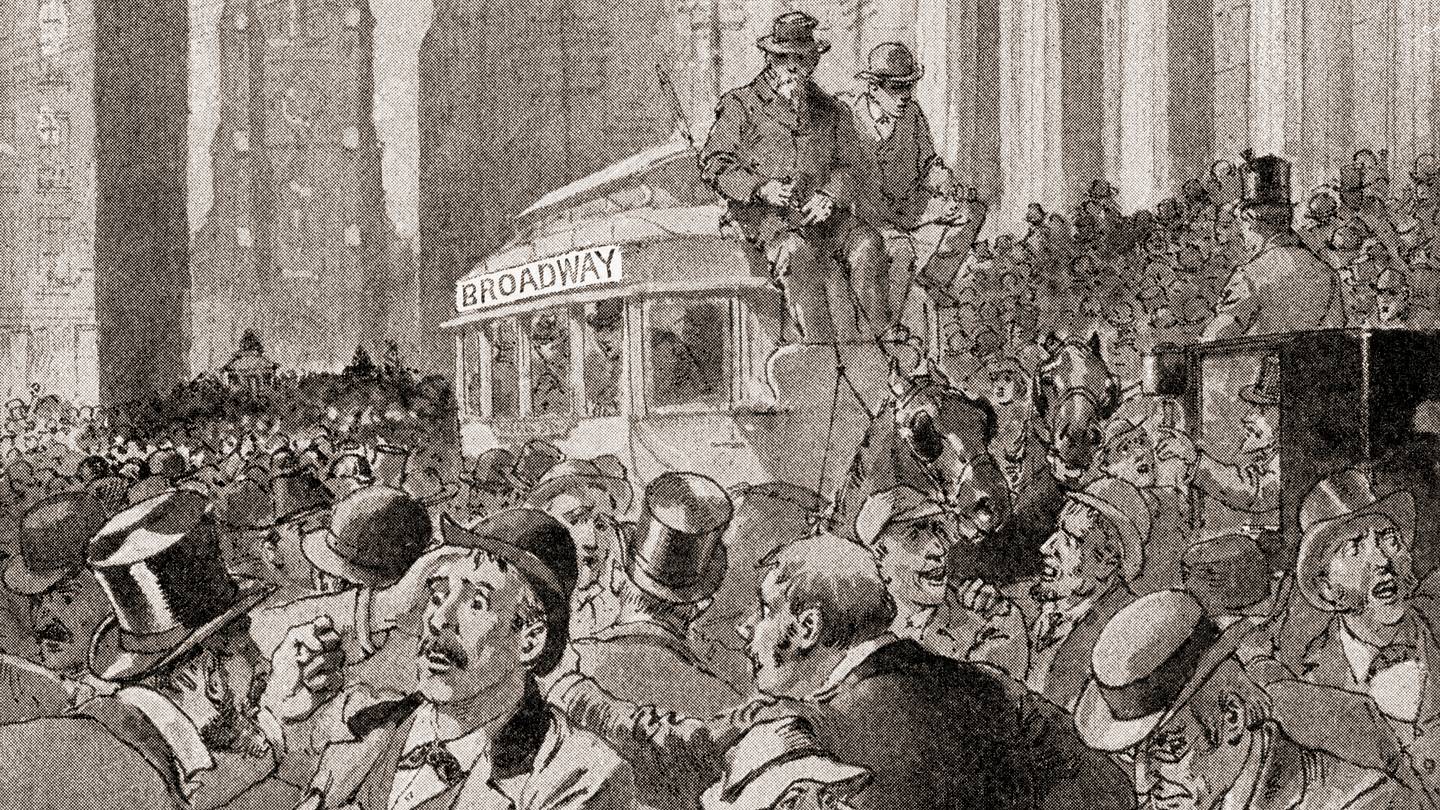
Black Friday hasn’t always been about filling shopping bags to the brim and taking advantage of online deals.According to History, the first Black Friday had nothing to do with clothing discounts or shoppers fighting over the latest retail items. The date wasn’t even close to Thanksgiving.So, what really happened on the first “Black Friday,” and how did it evolve into a shopping holiday that spurs Americans to camp outside stores and relentlessly add to their online shopping carts? Let’s flip back a page or two in American history and see what we can find! THE FIRST BLACK FRIDAYBlack Friday September 24 1869 | Ivy Close Images/GettyImagesThe first Black Friday was on September 24, 1869, otherwise known as the crash of the U.S. gold market. Two devious Wall Street financiers, Jay Gould and Jim Fisk, let greed consume them and decided to buy as much gold as they could get their hands on, drive up its price, and sell it for a greater profit. This wasn’t the first time the deceitful pair had resorted to such schemes. According to PBS, one year earlier, they “used stock fraud and bribery to keep Cornelius Vanderbilt from taking control of the Erie Railroad.”Connected to President Ulysses S. Grant through his brother-in-law, Abel Rathbone Corbin, Gould and Fisk put a bug in the Commander-in-Chief’s ear, persuading him not to sell more gold so its value would rise. With Corbin’s approval, General Daniel Butterfield became assistant treasurer of the United States and promised to keep Gould and Fisk privy to the government's gold transactions. When Grant discovered what Corbin, and therefore Butterfield, was doing behind the scenes, he “ordered the sale of $4,000,000 in government gold.” This decreased the price of gold from $160 to $133 and sent the stock market tumbling down. Investors immediately panicked, brokerage houses went bankrupt, and the market fell 20 percent, according to the Federal Reserve Bank of New York.Investors who had borrowed money to buy gold at the higher price suddenly couldn’t repay their loans, and Corbin was among them. Gould, however, was savvy enough to sell his gold before the collapse. He ended up controlling the Union Pacific Railroad, Western Union Telegraph Company, and the Manhattan Elevated Railroad. His partner, whom he hadn’t told of his sales, wasn’t so lucky.Three years after the first Black Friday, Fisk was shot and killed by financier Edward Stokes, ironically, during a dispute that involved money. Neither Gould nor Fisk ever served time behind bars for the scandal that caused the first Black Friday.BLACK FRIDAY REIMAGINED1950s ARMY NAVY GAME. | DreamMedia/GettyImagesThe term was reborn in the 1950s, when tourists traveled to Philadelphia in droves on the Friday after Thanksgiving for the annual Army–Navy football game. Police officers worked extra shifts to manage the crowds, according to History. Shoplifters contributed to the chaos by stealing from stores, demanding more attention from law enforcement.From then on, Philadelphia referred to the day as “Black Friday.” In 1961, local officials tried to rename it “Big Friday,” but it didn’t catch on. Then, in the 1980s, retailers reinterpreted Black Friday as a day when stores moved from red (operating at a loss) to black (making a profit) through extensive holiday discounts. Though we've held on to this version of Black Friday for decades, its story began with the U.S. gold market crash of 1869 and Philadelphia’s hectic Army–Navy weekend in the ’50s. Today, the beloved shopping holiday isn’t even contained to a single day. It now spans online and in-store sales that begin weeks in advance and continue for days afterward. In 2026, we can be thankful that Black Friday has nothing to do with stock market crashes and lawless shopping chaos. Happy shopping! Read More:
The First Black Friday Was Nothing Like the Shopping Frenzy We Know Today
Full Article
Original Source
Read the full article at Mentalfloss →KhanList aggregates and links to publicly available news content. We do not host full articles from third-party sources. Always verify important information with original sources.