
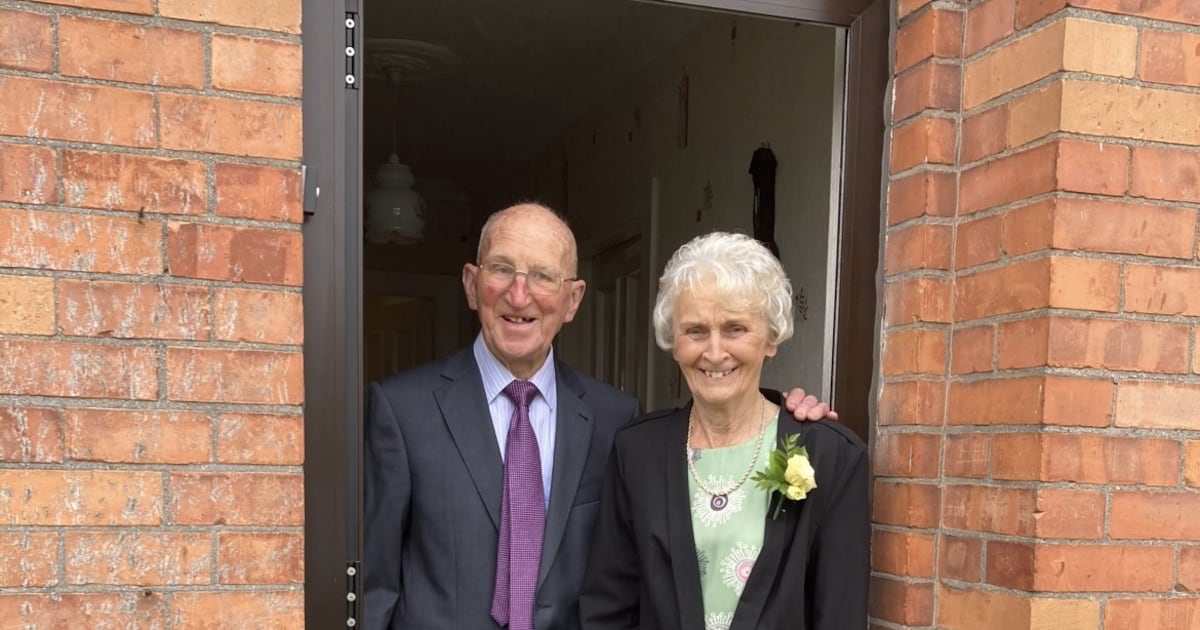
Local man who saved some neighbourhood history remembered as a cornerstone of the communityNoel and Kay Clarke lived in Dublin's Liberties from the 1960s until Noel's death last year In Dublin’s Liberties, there lies a small but powerful footnote that tells the story of one man and his fight to protect his neighbourhood’s heritage. While the granite kerb stones across the road from Noel Clarke’s house on Sweeney’s Terrace are something that may only be grazed by shoe soles, they embody the soul of a resilient community. Clarke moved to the area in the 1960s and lived there with his wife Kay until his death last year. His daughter Gráinne describes her father as a man who loved the Liberties and “was a law unto himself”. She remembers when construction work began across the road from her father’s house in the late 2010s. Noel decided to stand on the path to block the removal of the granite kerb stones that had been in the neighbourhood for so long. READ MOREGráinne recalls how he inspired neighbours to follow suit, and they protested for about three days, saving the kerb stones. Granite kerb stones in Sweeney's Terrace across from Noel Clarke's home “He was a union man ... anything that’s going on, he was in the middle of it all, and he was sorting it all out,” she says. The kerb stones remain across the road from Noel Clarke’s house, a legacy to him and the resilience of the Liberties. On Tuesday, local historian James Madigan will lead a Community Resistance Against Gentrification walking tour through the Liberties. Along the way, he will share stories, like Clarke’s, about historic locations and the people they mean so much to. Madigan says the large amount of development in the area has left locals feeling their community is endangered and “that’s a constant everyday battle in the Liberties”. He believes changes to the area in recent years have left some spaces feeling disjointed. “It is just a horrible mishmash of big individual developments, and we’re left with really odd spaces,” he says. He references a small vacant site on the corner of St Luke’s Avenue and Brabazon Place. As a result of a disagreement, this “dead space” consists largely of cement and is surrounded by a fence. “This is a community resource ... it’s just one example of the space we need.” Local Historian James Madigan Vacant site on the corner of St Luke's Avenue and Brabazon Place. Photograph: Ellen Clusker People walking around the Liberties will see many closed large steel gates. Madigan says this is a problem, with many in the community feeling excluded from spaces. The closure of Warrenmount Adult Education Centre last June represented the loss of “a vital resource for a lot of the community”, he says. “We might have lost that simple way that 10 people can come together and go yapping, without it being a pub, without there being religion.” The Donore Avenue Community Centre was a hub in the area but is under reconstruction following a 2021 fire. Madigan describes the area as aching for resources and asks how a community can “mobilise” if locals have not got a room to meet in.Paul Green (70), a retired postman, has lived in the Tenters area of the Liberties for his entire life. His family were among the original occupants of the houses in Fairbrother’s Fields, as the area is officially known. His grandfather moved into the house in 1924, with generations of the family living there since. Paul Green outside his house on Clarence Mangan Road. Photograph: Ellen Clusker Green says the community in the Liberties means everything to him. “But it’s all changing, it’s all new people coming in. You don’t know the neighbours.” He speaks fondly of the camaraderie that was so strong in the area, reminiscing about residents minding each other’s children and games of football in the street being interrupted by requests from neighbours to fetch milk from the shop. “I think it’s sadly dying, fading away,” Green says of his concern for the area’s future. “What’s the next generation going to be after us? Are they going to be as passionate?” Madigan says a good amount of the development work in the area – student accommodation and luxury hotels – “doesn’t help our kids”. “It’s the next generation [that] are being priced out of the area,” he says. The walking tour takes place as part of National Heritage Week, with “Heritage at Risk” being the theme for this year. Madigan hopes to commemorate stories of community resistance and capture some of the spirit of the Liberties. He plans to stop outside Throwing Shapes, a ceramics studio. The owner, Siofra Murdock, says the studio is somewhere people can go to meet and chat “that isn’t home and isn’t work”. “People who come here are from their 20s to their 70s, and there’s just a natural conversation there because you already have something in common even being in the space together.” The tour will begin at 5.30pm in Newmarket, across from the Premier Inn, and take participants to Ward’s Hill, Mill Street and Sweeney’s Terrace before finishing on Ardee Street. The route will feature a stop in the Aloft hotel’s rooftop bar to view the Dublin skyline. Madigan accepts there is a nuance to the range of issues facing the area and that there is no “silver bullet” solution. He welcomes employment being brought to the Liberties and new people arriving who appreciate the area.The Tenters stone sign in the Liberties. Photograph: Ellen Clusker Recently, Dublin City Council decided to advance plans to designate the Tenters as an architectural conservation area to preserve its character. This followed a campaign from residents. Madigan hopes for “a more enlightened, holistic and properly empowering” approach to the planning of the area in the future, with “more community involvement” in the process. IN THIS SECTION
The fight to save Dublin’s Liberties: ‘It’s sadly dying, fading away’
Full Article
Original Source
Read the full article at Irishtimes →KhanList aggregates and links to publicly available news content. We do not host full articles from third-party sources. Always verify important information with original sources.