
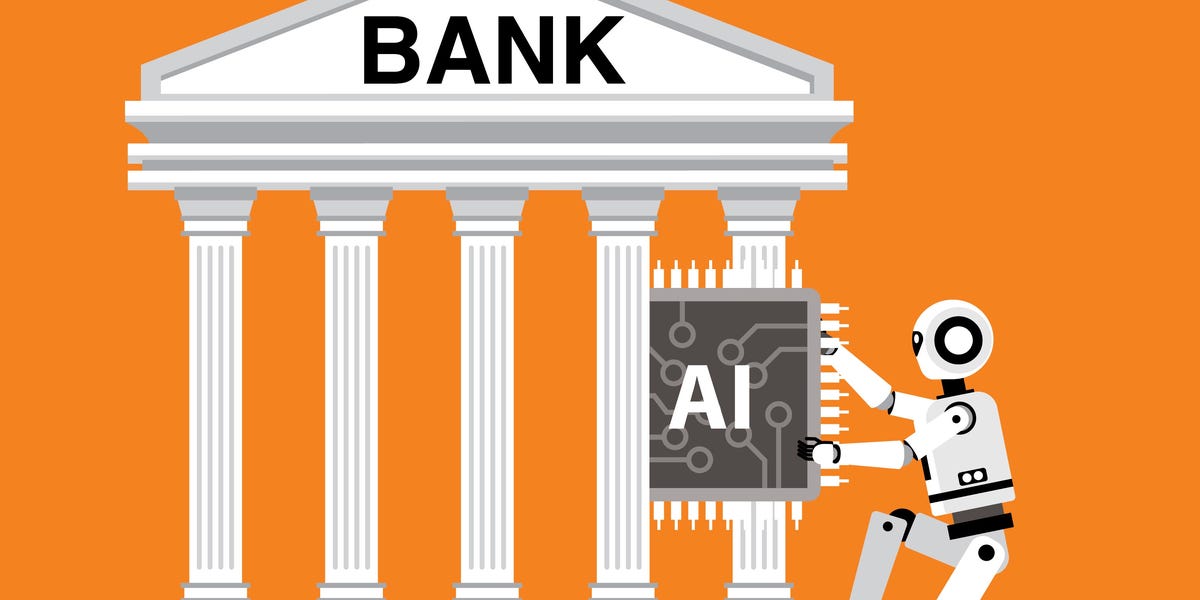
3 min readThe arrival of AI can be summed up in one word: instability. Since ChatGPT brought large language models (LLMs) into the mainstream in late 2022, instability in the job market has been a given. As the technology has required more and more resources, instability in utilities’ ability to supply power also became painfully clear. And as AI companies’ valuations skyrocketed in recent years, worries of an AI bubble have highlighted the instability of millions of retirement plans.Now there’s another worry to add to the list: bank runs. In a speech in Milan last week, Federal Reserve governor Michael Barr warned that AI’s ability to react to a financial crisis at unprecedented speed could make future runs far more devastating.“AI agents may accelerate deposit outflows during stress periods,” Barr said in his speech. “Where customers once needed to execute transfers, AI agents could instantaneously detect yield differentials or stability signals and autonomously move funds at high speed, potentially accelerating runs that unfold in minutes, overwhelming traditional liquidity management and regulatory intervention timelines.”Bank runs have been a fixture of U.S. financial crises since the Panic of 1792, when the newly independent country’s government was a whopping three years old. Banks don’t keep enough cash on hand to cover every deposit, but instead use that cash for loans and investments. But if the job or stock market takes a turn for the worse, customers might attempt to withdraw funds all at once, forcing banks to sell off investments at a loss, pushing them toward insolvency. After widespread bank failures during the Great Depression, the U.S. government created the Federal Deposit Insurance Corporation (FDIC) to protect depositors. The Federal Reserve, meanwhile, serves as lender of last resort, providing emergency loans to banks experiencing runs.These failsafes have typically operated at the speed of a human. But in a world where AI can pour gasoline on a financial panic by accelerating withdrawals upon detecting telltale instability in markets, bank runs could unfold in mere minutes.And that isn’t the only concern AI presents to the banking world. Bank executives told Axios in late October that banks are struggling to distinguish between AI bots and human users, prompting them to restrict third-party AI access to their platforms. Major banks such as JPMorgan Chase, Citi, and Bank of America have already done so.“We strongly believe there should be a human in the loop to authorize money moving out of your account,” Bank of America CEO Brian Moynihan told CNBC last month. “We’re working with the agentic agent providers to say, ‘Hey, you really don’t want consumers coming back and say money moved over from my account and I don’t know why and I don’t know where it went and the agent did it.’”The swift efficiency of AI agents, tasked with squeezing every possible cent from a customer’s money, means they could also move money from non-interest-bearing deposits (such as a checking account) into high-yield accounts paying upwards of 5 percent. The problem is that banks rely on low-interest accounts to fund loans, so a sudden exodus would inject unwanted volatility into the financial system.Or, in a word: instability.Darren lives in Portland, has a cat, and writes/edits about sci-fi and how our world works. You can find his previous stuff at Gizmodo and Paste if you look hard enough.
The Fed Just Warned That AI Could Trigger a Bank Run Faster Than Any Human Could Possibly Stop It
Full Article
Original Source
Read the full article at Popularmechanics →KhanList aggregates and links to publicly available news content. We do not host full articles from third-party sources. Always verify important information with original sources.