
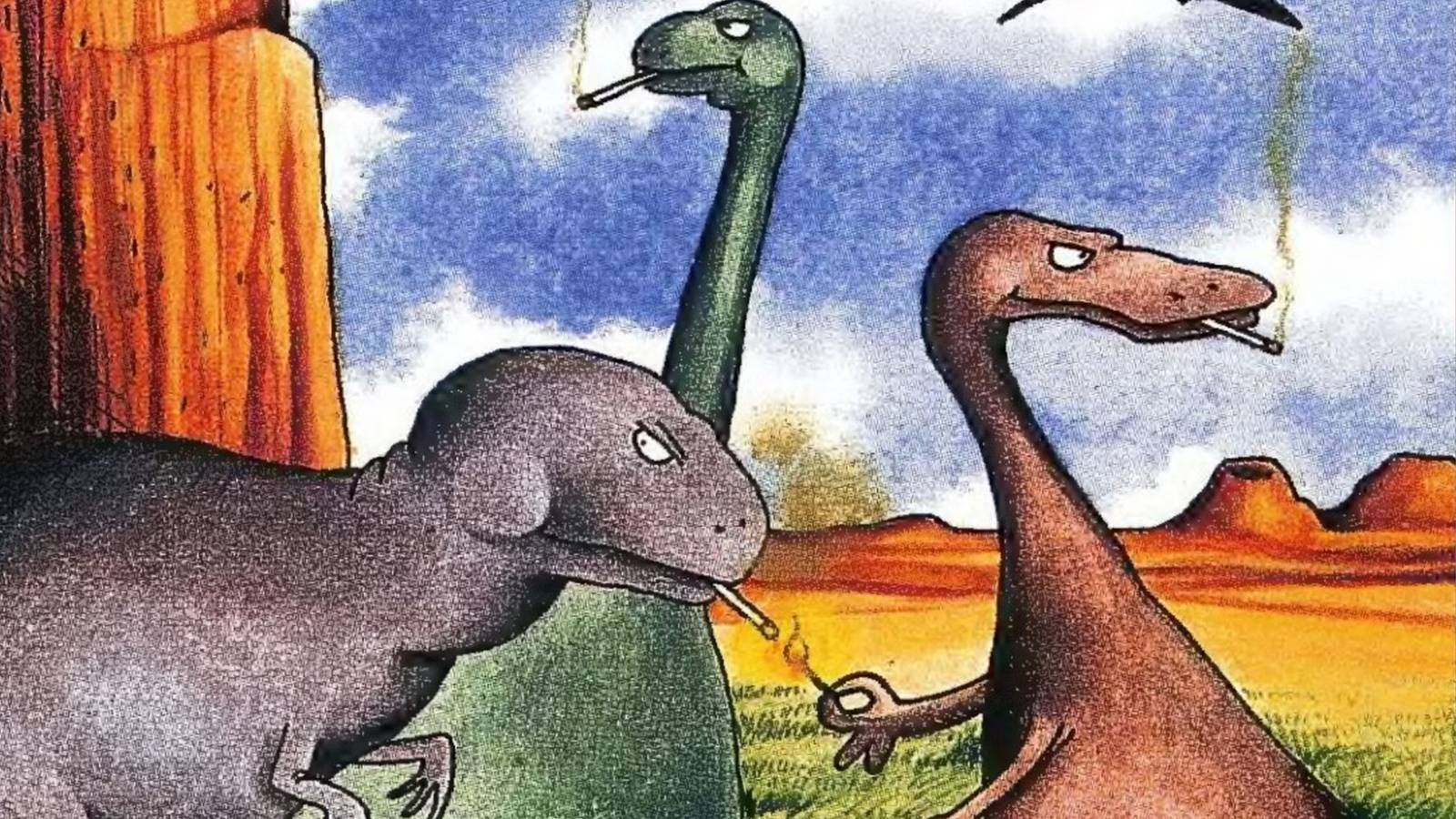
Published Sep 13, 2026, 8:02 PM EDT Shawn Van Horn is a Senior Author for Collider. He's watched way too many slasher movies over the decades, which makes him an aficionado on all things Halloween and Friday the 13th. Don't ask him to choose between Michael Myers and Jason Voorhees because he can't do it. He grew up in the 90s, when Seinfeld, Everybody Loves Raymond, and TGIF were his life, and still watches them religiously to this day. Larry David is his spirit animal. His love for entertainment spreads to the written word as well. He has written two novels and is neck deep in the querying trenches. He is also a short story maker upper and poet with a dozen publishing credits to his name. He lives in small town Ohio, where he likes to watch professional wrestling and movies. Sign in to your Collider account In the 1980s and 1990s, newspaper comic strips reached their peak as The Far Side and Calvin and Hobbes became just as popular, if not more so, than classics such as Peanuts. What Gary Larson created with The Far Side was quite different. Rather than trying to tell a short story with the same characters in a few panels, he used just one panel for both the setup and punchline to a clever joke. Larson had several recurring themes he returned to, whether it be goofball scientists or talking animals. Then there's what he did with dinosaurs, using creatures long extinct for surrealist satire about modern society. There are so many great examples of this, but these five Far Side comics in particular are so hilariously over-the-top. 5 'Smoking Kills Dinosaurs' (1987) Most kids grow up fascinated by dinosaurs (and continue on to enjoy thrilling dinosaur movies as adults). They seem unreal, and it's unfathomable that such creatures could exist on the same planet we now inhabit. With the immense size of some species, how could animals so intimidating, who ruled the Earth through so many eras, disappear? It's eerie to know that an asteroid swiftly destroyed life as it was. It's part of the reason why our fascination with dinosaurs hasn't died with them. In today's era, smoking is what is killing so many humans. By the 1980s, when Larson drew this comic, everyone knew the dangers of cigarette smoking, which now kills millions across the globe annually. It's our own little slow-burn meteor of sorts. That's dark. Showing the absurdity, however, of dinosaurs sneaking off for a cigarette break is silly and lessens the impact while simultaneously driving the point home. 4 'Caveman Bubblegum' (1980) Although popular in over-the-top movies and cartoons, dinosaurs and cavemen didn't exist at the same time. The asteroid that wiped out the dinos crashed into Earth around 180 million years ago. Neanderthals, the first humans, didn't evolve until 40,000 years ago. That's just a wee bit of a time gap. But if dinosaurs and humans shared the same world at the same time, we wouldn't rule. People would easily be prey for creatures that towered over us. Larson's comic shows how we'd be easy picking for dinosaurs. Poor Neanderthals wouldn't have a chance. We'd be nothing more than a fun, unserious hobby, with T-Rexes playing with their food and treating us like a game. If humans existed in their era, we would have been extinct long before an asteroid. 3 'The Thagomizer' (1982) Dinosaurs have such strange names. Get past the popular ones, like the Tyrannosaurus Rex and Velociraptor, and it quickly becomes a confusing list of species. There's Alosaurus, Brachiosaurus, and all kinds of saurus you've never heard of and would likely have a hard time pronouncing. Then there's the Stegosaurus. The Stegosaurus is a popular dinosaur because of its fascinating shape. Although an herbivore, it's not one to mess with due to the plates that run down its back and the sharp spikes at the end of its tail. If a predator got hit with one of those spikes, they would be in trouble. But just what the heck do you call it? In this comic, which makes fun of the strange names given to all things dinosaurs, a Neanderthal calls it a Thagomizer, with Thag Simmons presumably meeting his end by one. What's amazing is that, while this isn't the official name (there isn't one), paleontologists now call the Stegosaurus' tail spikes a thagomizer out of respect for the iconic Far Side comic. Collider Exclusive · TV Medicine Quiz Which Fictional Hospital Would You Work Best In? The Pitt · ER · Grey's Anatomy · House · Scrubs Five hospitals. Five completely different ways medicine goes sideways on television — brutal, chaotic, romantic, brilliant, and ridiculous. Only one of them is the ward your instincts were built for. Eight questions will figure out exactly where you belong. 🚨The Pitt 🏥ER 💉Grey's 🔬House 🩺Scrubs FIND YOUR HOSPITAL → 01 A critical patient comes through the door. What's your first instinct? Medicine under pressure reveals who you actually are. AStay completely present — block everything else out and work through it step by step, right now. BTriage fast and delegate — get the right people on the right problems immediately. CTrust my gut and move — I work best when I stop overthinking and just act. DAsk the question everyone else is ignoring — what's the thing that doesn't fit? ETake a breath, make a joke to cut the tension, and then get to work — panic helps no one. NEXT QUESTION → 02 Why did you go into medicine in the first place? The honest answer says more about you than the one you'd give in an interview. ABecause I wanted to be where it matters most — right at the edge, when someone's life is actually on the line. BBecause I wanted to help people — genuinely, one patient at a time, in a system that makes it hard. CBecause I was drawn to the intensity of it — the stakes, the drama, the feeling of being fully alive. DBecause medicine is the most interesting puzzle there is — and I needed a problem worth solving. EBecause I wanted to make a difference — and also, honestly, I didn't know what else to do with my life. NEXT QUESTION → 03 What do you actually want from the people you work with? Who you want beside you under pressure is who you are. ACompetence and calm — I need people who don't fall apart when things get bad. BTrust and reliability — I want to know that when I pass something off, it's handled. CConnection — I want colleagues who become family, even if that gets complicated. DIntelligence and the willingness to be challenged — I have no interest in people who just agree with me. EFriendship — people I actually like spending twelve hours a day with, because those hours are going to happen either way. NEXT QUESTION → 04 You lose a patient you fought hard to save. How do you carry it? Every doctor who's worked a long shift has had to answer this question. AI carry it. All of it. I don't look for ways to put it down — that weight is part of doing this work honestly. BI process it and move — you have to, or the next patient suffers for the one you just lost. CI feel it deeply and lean on the people around me — I don't think you're supposed to handle that alone. DI go back over every decision — not to punish myself, but because I need to understand what I missed. EI grieve it genuinely, find some way to laugh about something unrelated, and try to be kind to myself — imperfectly. NEXT QUESTION → 05 How would your colleagues describe the way you work? Your reputation on the floor is usually more accurate than your self-image. AIntense and completely present — no small talk during a shift, but exactly who you want there. BSteady and dependable — not the flashiest in the room but never the one who drops something. CPassionate and occasionally chaotic — brilliant on the hard cases, prone to drama everywhere else. DBrilliant and difficult — right more often than anyone else, and everyone knows it, including me. EWarm and self-deprecating — not the most intimidating presence, but genuinely good at this and easy to like. NEXT QUESTION → 06 How do you feel about hospital protocol and procedure? Every institution has rules. What you do with them is a choice. AProtocol is the floor, not the ceiling — I follow it until the patient needs something it can't provide. BI respect it — the system is broken in places, but the structure is there for a reason and I work within it. CI follow it until my instincts tell me not to — and my instincts are usually right, even when they cause problems. DRules are for people who haven't thought hard enough about when to break them. EI try to follow it and mostly do — with a few memorable exceptions that still come up in meetings. NEXT QUESTION → 07 What does this job cost you personally? Nobody works in medicine without paying a price. What's yours? AEverything outside these walls — I've given this job my full attention and the rest of my life has gone around it. BMy idealism, mostly — I came in believing the system could be fixed and I've made a complicated peace with that. CStability — my personal life has been as chaotic as the OR, and that's not entirely a coincidence. DMy relationships — I am not easy to know, and the people who've tried to would probably agree. EMy sense of gravity — I use humour as a coping mechanism, which not everyone appreciates in a hospital. NEXT QUESTION → 08 At the end of a long shift, what keeps you coming back? The answer to this question is the most honest thing about you. AThe fact that it's real — that nothing else I could be doing would matter this much, right now, today. BThe patients — individual human beings who needed something and got it because I was there. CThe people I work with — I have walked through impossible things with these people and I'd do it again. DThe next unsolved case — there's always another puzzle, and I'm not done yet. EBecause despite everything — the exhaustion, the loss, the absurdity — I actually love this job. REVEAL MY HOSPITAL → Your Assignment Has Been Made You Belong In…Your answers have pointed to one fictional hospital above all others. This is the ward your instincts, your temperament, and your particular brand of dysfunction were built for. The PittYou are built for the most unsparing version of emergency medicine television has ever shown — one that puts you inside a single fifteen-hour shift and doesn't let you look away. You need your work to be real, not romanticised — meaning over drama, honesty over aesthetics. You find purpose inside the work itself, not in the chaos surrounding it. You've made peace with the fact that this job takes from you constantly, and gives back in ways that are harder to name. Pittsburgh Trauma Medical Center demands exactly that kind of person — and you would not want to be anywhere else. ERYou are the person who keeps the whole floor running — not the most brilliant in the room, but possibly the most essential. You show up, do the work, absorb the losses, and come back the next day without needing the job to be anything other than what it is. You care about patients as individual human beings, not as cases to solve or dramas to live through. You believe in the system even when it fails you — and you understand that emergency medicine is about holding the line just long enough. ER is television about endurance. You have it. Grey's AnatomyYou came to medicine with your whole self — your ambition, your emotions, your relationships, your history — and you have never quite managed to leave any of it at the door. You feel things fully and form deep attachments to the people you work with. Your personal and professional lives are permanently, chaotically entangled — and that entanglement drives both your greatest disasters and your most remarkable saves. You understand that extraordinary medicine often happens at the intersection of clinical skill and profound human connection. It's messy at Grey Sloan. You would not have it any other way. HouseYou are drawn to the problem above everything else — the symptom that doesn't fit, the diagnosis hiding underneath the obvious one. You're not primarily motivated by the patient as a person — though you are capable of caring, even if you'd deny it. You work best when the stakes are highest and the standard answer is wrong. Princeton-Plainsboro exists to house one extraordinary, impossible mind — and everyone around that mind is there because they're smart enough to keep up. The only way forward here is to think harder than everyone else in the room. That is exactly what you do. ScrubsYou understand that medicine is tragic and absurd in almost equal measure — and that the only sane response is to hold both of those things at the same time. You are warm, self-aware, and funnier than most people in your field. You use humour to get through terrible moments — and at Sacred Heart, that's not a flaw, it's a survival strategy. You lean on the people around you and let them lean back. The laughter and the grief are genuinely inseparable here. Scrubs is a show about learning to become someone worthy of the job. You are still very much in the middle of that process — which is exactly right. ↻ RETAKE THE QUIZ 2 'Taunting Mammals at the Worst Time' (1980) Many times, Gary Larson's Far Side comics didn't even need words to say so much. Take this one, for example, which shows a trio of dinosaurs encountering a small, weird-looking, furry mammal. As two of them point and laugh, a third is distracted, watching these odd, little white balls of solid water fall to the ground. After the asteroid hit Earth all those millions of years ago, not all dinosaurs immediately died. The destruction it caused lasted for millions more years, changing the Earth's temperature and ushering in the ice age. As dinosaurs froze to death, those small, funny-looking mammals, covered in fur, found a way to survive. Soon enough, with dinosaurs out of the picture, they would thrive and evolve. That's no laughing matter if you're a confused T-Rex. 1 'Meaties' (1981) If you're of a certain age, your childhood mornings revolved around the cereal box. Walking into the kitchen clad in pajamas, showing off our favorite cartoons, we'd get out our favorite sugary cereal and eat at the table while reading the back of the box and shaking out the toy included at the bottom. What a way to begin the day! In Larson's Far Side comic, it's the same type of life for dinosaurs, who live in houses, eat at the table, and get scolded by their mothers. Just like our mothers did, this guy's mom wants him to put his toy down and focus on eating his breakfast. It's what he's eating that drives the joke home with some dark subject matter. Forget Wheaties — this dinosaur is eating Meaties, presumably made up of chunks of Neanderthals and other animals. And instead of some cheap, plastic toy, the dino kid is getting an entire dead child to play with. What fun! It's absurd, disgusting, and, as always with Gary Larson's The Far Side, oh so funny.
'The Far Side's 5 Most Unhinged Dinosaur Comics
Full Article
Original Source
Read the full article at Collider →KhanList aggregates and links to publicly available news content. We do not host full articles from third-party sources. Always verify important information with original sources.