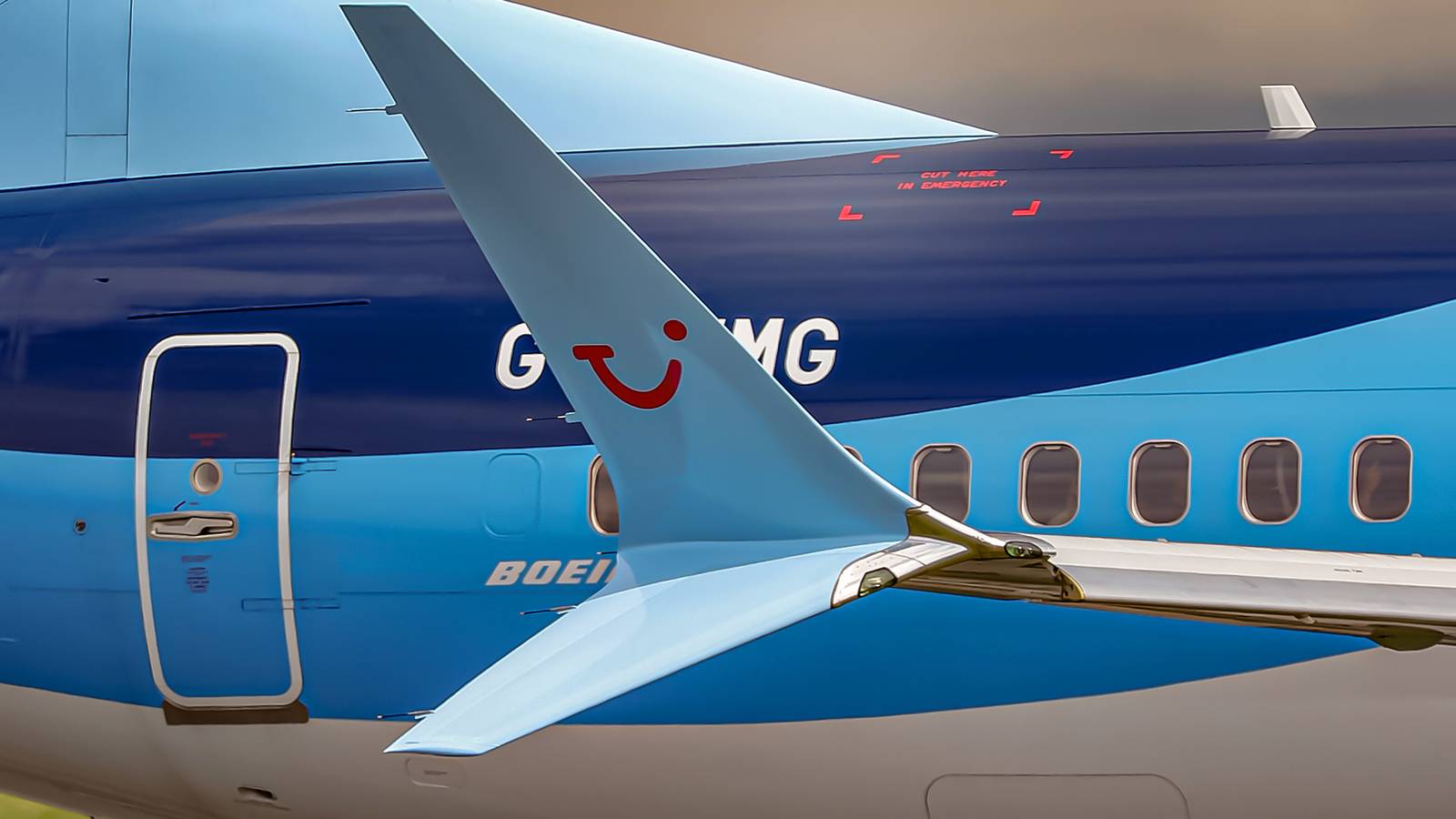
Published Jul 30, 2026, 10:00 AM EDT Based in the UK, Josh is a keen writer with a degree in Military History. Having worked previously as a financial journalist, he has covered the aviation industry extensively, reporting on airlines' results and monthly passenger statistics in the aftermath of the pandemic, alongside the likes of regulation around sustainable fuels, and the prospects for hydrogen-powered commercial flight. He joins Simple Flying with a lifelong love of all things aviation. Winglets are among the aviation industry’s most obvious fuel-saving features. Whether flying short-haul around Europe on a Ryanair Boeing 737, or venturing far further on a Qantas Airbus A350, such extensions at the end of the wings will be quietly working to cut the costs of operating the flight. Indeed, so effective are winglets at reducing fuel-burn and saving operators money that they are a common feature on both narrow and widebodies. But the use of winglets does come with costs that can complicate the benefits. Despite most notably offering a means for cutting induced drag, trade-offs have to be made around additional wetted area and structural loads. All in all, winglets offer benefits, but these are not as clear-cut as they might seem. What Do Winglets Do? Winglets have their roots in NASA research conducted back in the 1970s. In response to the 1973 oil crisis, the space agency’s Aircraft Energy Efficiency program sought ways to conserve energy during flights. Among theories tested was aeronautical engineer Richard Whitcomb’s idea that wingtip vortices could be weakened with the addition of an extension on the end of an aircraft’s wing. These vortices create what is known as induced drag. Unlike parasite drag, which is generated by an aircraft simply moving through the air, induced drag is the byproduct of an aircraft generating lift. Where high pressure accumulates under wings, this causes air to flow up over the wingtips and off in a vortex. Without something to disrupt this airflow, induced drag eats into an aircraft’s performance. Whitcomb’s theory was ultimately proven following a test program that began in 1977. NASA passed on a design for winglets to Boeing, and these were fitted to a US Air Force KC-135 for in-flight analysis. This showed the addition of the 9-foot (2.7-meter) winglets led to a 7% increase in lift-to-drag ratio, cutting induced drag by 20%. As well as this, and perhaps most importantly, the new parts did not have an adverse impact on the Air Force plane’s handling. Winglets were soon being adopted on smaller aircraft as a result, with commercial airliners then starting to include the technology from the late eighties. Most Modern Commercial Aircraft Have Winglets Credit: Shutterstock Cut forward almost half a century, and winglets are part and parcel with modern commercial aircraft. There are some exceptions, but the vast majority of airliners flying around today have winglets in some form or another. These themselves come in various shapes and sizes. Blended winglets are the most common found in service today, for instance, featuring widely on the 737, but also the likes of the older Boeing 757 and Boeing 767. Newer Airbus A320 and Airbus A320neo family jets house sharklets in the meantime. Both appear as a continuation of the wing structure, seamlessly blending into and protruding upwards from the tips. Fuel saving comparison of different winglet types, from PlaneFYI: Winglet type Aircraft example Fuel saving Annual saving Blended winglet Boeing 737-800 3.5–5% ~$500,000 Scimitar winglet Boeing 737-800 5–6.5% ~$700,000 Sharklet Airbus A320neo 3.5–4% ~$450,000 Wingtip fence Airbus A380 2.5–3% ~$400,000 Raked wingtip Boeing 777-300ER 0.3–0.5% ~$80,000 GE9X wing Boeing 777-9 10%+ ~$1.5 million Based on 3,000 annual flight hours and $2.50 per liter fuel cost for a typical medium-haul operation. Split scimitar, canted, and raked winglets are among other designs with differing appearances. Despite this, all share the common goal of reducing drag and improving performance, having become an increasingly regular feature on airliners since the launch of the Boeing 747-400 in 1988. Winglets Risk Other Forms Of Drag And Stress Credit: Shutterstock Installing winglets onto an aircraft is somewhat complicated, however, and comes with some caveats. Namely, winglets work to reduce induced drag, but cause increases in other types of drag in doing so. They also increase structural loads and so can even impact an aircraft’s safe operating parameters. With the addition of winglets comes an increased surface area, meaning a trade-off has to be made around what is known as skin friction drag. Interference drag has to be considered too, being caused by the disrupted airflow around where the two surfaces of the wing and winglet meet. All of this means that engineers have to ensure the drop in induced drag overwhelmingly outdoes any increase in other forms of drag for a winglet to be justified. That is not all, though, with winglets also threatening structural penalties. With the additional forces a winglet creates, the loads the entire wing has to carry and how it flexes during flight change. This can mean that what is known as flutter speed is reduced. Here, engineers have to ensure that the operating speeds of aircraft remain below what is needed for potentially dangerous vibrations to begin. Again, this requires a balance to be struck at the design stage. Weighing Winglet Pros And Cons Key During Retrofitting Credit: Shutterstock Naturally, the potential ramifications need to be more carefully considered when airlines mull retrofitting aircraft to include winglets. That is, they need to ask themselves: Will the improvement in performance and resulting savings outweigh any performance penalties or costs related to increased maintenance? Nowadays, modern airliners incorporate winglets or similar features into the very designs of their wings. Boeing and Airbus’ latest clean-slate aircraft, the Boeing 787 and A350, come fitted with such features as standard, for example. On the 787 Dreamliner, raked wingtips where the outermost part of the wing sweeps back at a greater angle than the rest are used. For the A350, various modified sharklets featuring a distinctive curve have been used as part of an overall design aimed at reducing aerodynamic loading. So the truth is, the compromise is far more easily managed in newer planes, where the design can incorporate winglets or a string of other performance-enhancing features from the start. That is not to say the practice of retrofitting older aircraft to feature or even change winglets does not happen today, however. Just look at Ryanair and Southwest Airlines. Ryanair Spent $175 Million On Replacing Winglets Credit: Shutterstock Ryanair in early 2023 began the process of installing split scimitar winglets on its existing Boeing 737-800 fleet, a move Southwest made years earlier. Encompassing over 400 aircraft, the retrofit deal with Aviation Partners Boeing was said to be worth $175 million at the time, according to the European airline. These were to replace the existing blended winglets that had been fitted to the aircraft since they rolled off the production line, rather than marking the first to be installed on the aircraft. But the decision to move from the factory-fitted to fresh winglets was set to feed through to massive savings for Ryanair. The design, appearing as two separate winglets facing upwards and downwards respectively, was slated to improve fuel efficiency by a seemingly small 1.5% compared to its predecessor. Ryanair Holdings Group Boeing 737 fleet, from Planespotters.net Aircraft Number Average Age Boeing 737-700 1 27.5 years Boeing 737-800 410 14.0 years Boeing 737 MAX 8 210 3.4 years When multiplied by the 400-plus aircraft that would be retrofitted and then make several journeys a day, however, Ryanair forecast its annual fuel consumption would be reduced by 65 million liters. Carbon emissions would be cut by 165,000 tonnes a year as a result of the investment, meanwhile, with aircraft noise also being reduced. Come the end of its last financial year, two-thirds of the aircraft in question had been fitted with the new winglets. Winglets Are (Almost Always) Massively Beneficial Credit: Shutterstock In the case of Ryanair, what was realistically a minor investment when considering the billions of dollars the airline turns over each year will ultimately contribute to some hefty savings in the years ahead. Based on figures from aviation website PlaneFYI, that could sit between $200,000 and $300,000 for a single aircraft over the course of a year. Across 400 or so of the aircraft, those savings will be worth tens of millions of dollars annually, at least. Add in the cut to the environmental impact of flight, and the benefits really start to rack up. According to NASA’s Spinoff website, blended winglet technology, like those previously on Ryanair’s models and other 737 variants, was estimated to have collectively saved 2 billion gallons (9.1 billion liters) of jet fuel globally as of 2010. That translated to almost 43 million pounds (21.5 million US tons or 19.5 million kgs) of carbon dioxide emissions prevented and $4 billion in savings for airlines. Ryanair’s retrofit program was then geared to make each of its planes that touch more efficient. But that is not to say airlines can simply install or update winglets on their aircraft like Ryanair if they so please. The Boeing 777, say, is flown globally without winglets, having instead been designed with raked wingtips. Among the reasons limiting airlines from adding the feature in the case of the 777-200LR and -300ER, if they did want to for the sake of argument, is an increase in wingspan that would leave the variants outside of airport gate size limits. That is before any potential performance penalties and structural hurdles, too, hence why compromises have to be carefully considered, despite the clear fuel-saving benefits of winglets.
The Engineering Compromise Behind Every Fuel-Saving Winglet
Full Article
Original Source
Read the full article at Simpleflying →KhanList aggregates and links to publicly available news content. We do not host full articles from third-party sources. Always verify important information with original sources.