
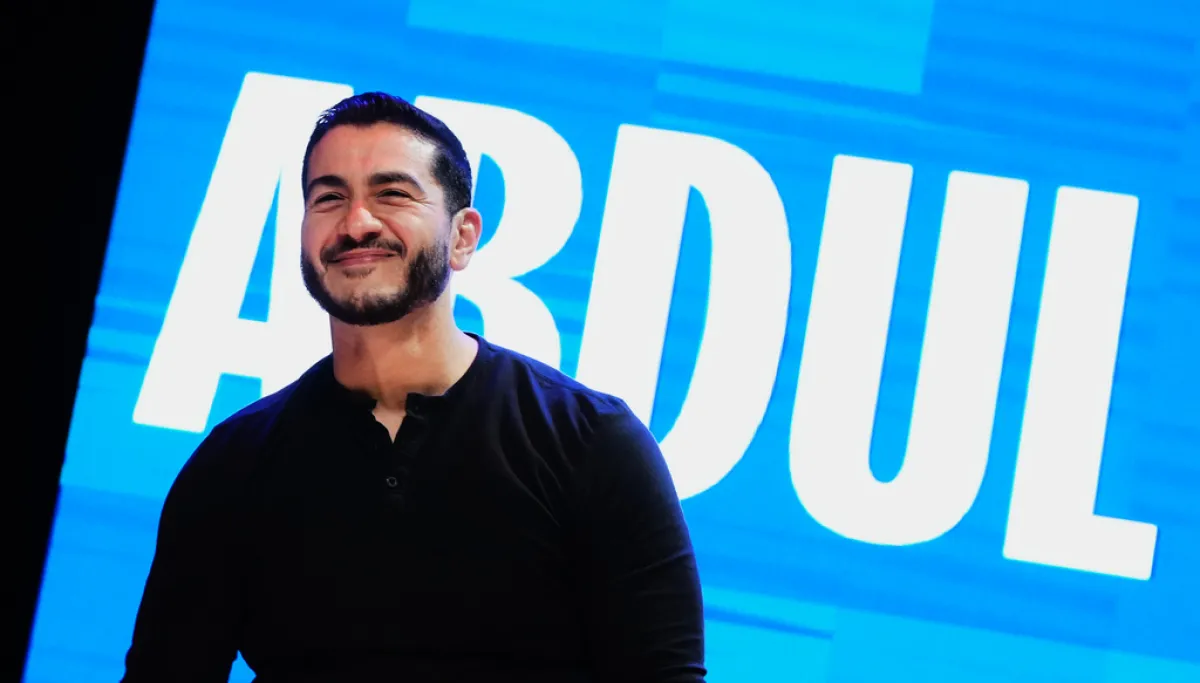
Alaska results are in, so the election is finally over. Much has been written about what the election results mean for politics. Not enough has been said about what they mean for families.Michigan’s victorious Senate candidate Abdul el Sayed openly campaigned with Hasan Piker, who has likened Jews to the Ku Klux Klan. El Sayed minimized the attempted terrorist attack on a West Bloomfield preschool and synagogue by saying “Hurt people hurt people.”Diminishing concern about the safety of Jewish children is a national scandal. On the eve of Election Day, four Jewish school buses in Williamsburg, Brooklyn, were vandalized with swastikas. These buses were meant to carry children to school. Instead, they became canvases for hatred.Post-election, politicians who implicitly transacted in anti-Jewish rhetoric or kept counsel with those who do will read their victory as vindication, while those who have lost will turn their defeat into another grievance against Jews. Neither outcome makes Jewish children safer.This is not a Democratic or Republican problem. Antisemitism appears across the political spectrum, and confronting it cannot depend on which party controls an office.When candidates traffic in antisemitic tropes, legitimize hostility toward Jews, and exploit anti-Jewish sentiment to energize their base, the damage outlasts Election Day. Victory emboldens those who see hateful rhetoric as a mandate. Defeat deepens grievances and feeds the prejudices a campaign stirred up.Jewish children are left living with the consequences, and their schools are left paying for them. What they pay amounts to an antisemitism tax.For Jewish parents, this is not a debate about political discourse. It is the child who sees armed guards outside a school entrance. It is the parent who checks for security alerts before morning drop-off. It is the principal who needs to decide whether to spend another $100,000 on security personnel or on teachers and educational programming.Research by Teach Coalition, the education advocacy organization I lead, shows the scale of that burden. Security spending at the Jewish schools we surveyed rose 84% after Oct. 7, 2023. Today, the average surveyed school spends more than $400,000 a year on security.Those dollars could pay for additional teachers, expanded special education services, tuition assistance for struggling families, or enrichment programs. Instead, they’re being used to hire more security guards, install cameras, and parents are footing the bill.Protecting children is a fundamental responsibility of the government. It cannot be outsourced to schools, charitable donors, and parents. Teach Coalition’s Project Protect helps schools navigate existing security grant programs. But the scale of today’s threat demands a greater commitment from elected officials at every level.We call on Congress to provide $1 billion annually for the federal Nonprofit Security Grant Program, which helps at-risk institutions protect themselves against violence and terrorism.Congress allocated $300 million to the program in 2026, an important investment, but one that falls far short of the growing need. As threats increase, so must our national commitment to protecting the communities that face them.NONE OF YOUR BUSINESS, ILLINOISFunding alone is not enough. Political leaders cannot condemn antisemitism after an attack while peddling the very rhetoric that fuels hostility toward Jews when it is politically convenient.The election is over. The responsibility of those who sought public office is not. Those who won must protect every constituent, including those who did not vote for them. Those who lost must recognize that defeat is never a license to scapegoat vulnerable communities.Sydney Altfield is the CEO of Teach Coalition, working with Jewish, Catholic, Muslim, and nonpublic school partners to champion policies that put students and families first.
The elections are over — the antisemitism tax goes on
Full Article
Original Source
Read the full article at Washingtonexaminer →KhanList aggregates and links to publicly available news content. We do not host full articles from third-party sources. Always verify important information with original sources.