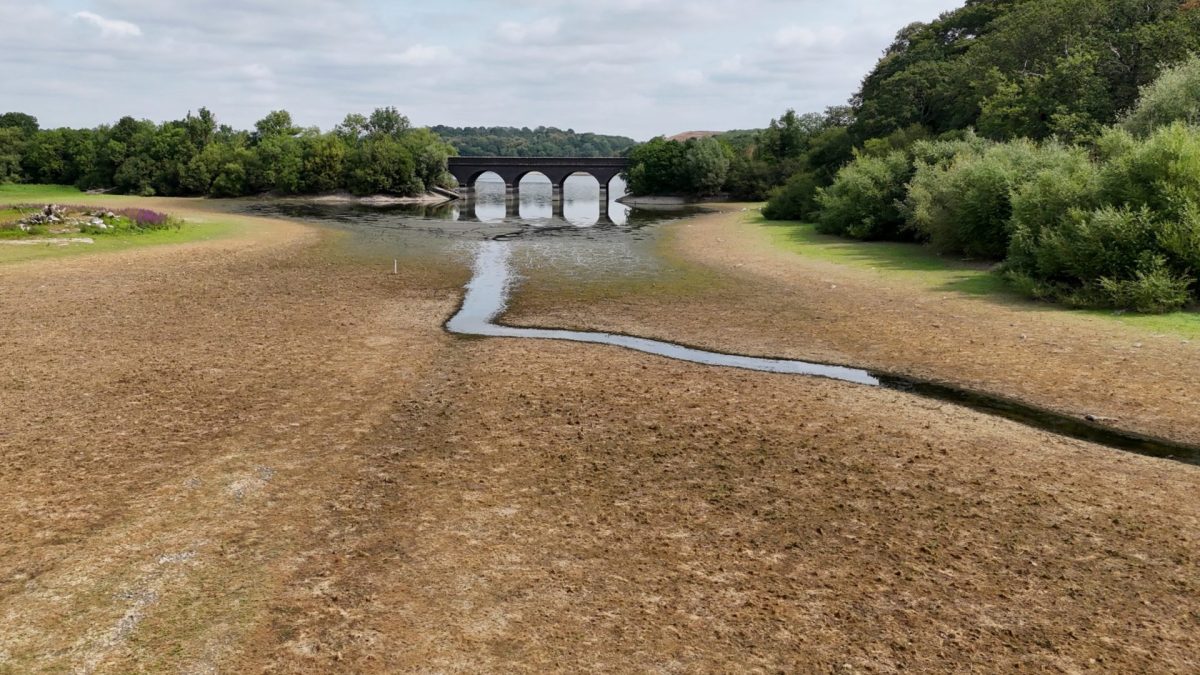
Almost half of England’s reservoirs are operating at lower than normal water levels, including two classed as “exceptionally low” after four consecutive heatwaves. Landscapes across the country lie parched with no sign of rain, as this month is on track to be the driest July on record, with huge areas in a flash drought, brought on very suddenly despite a wet winter. With weeks of summer left to go and minimal rain forecast for the worst-hit areas, many reservoirs are nearing critically low levels, raising fears some locations could run dry. Shorts It comes as the UK has been put at risk of a “firewave”, with a lack of rainfall meaning a prolonged period of wildfire activity is looking more likely. A wildfire covering an area of protected heathland the size of 140 football pitches led to the emergency evacuation of at least 60 people in Suffolk on Thursday. For some, the aridity has brought back memories of the cracked ground at empty reservoirs during the infamous summer of 1976, when shortages got so bad that water had to be rationed. Drought has been declared across half of England and the whole of Wales, as of Thursday. Southern England has been hit particularly hard, having received just 1 per cent of its average rainfall for July, and most areas are experiencing lower-than-usual rainfall. Water levels are “notably low” at Dove group (including Foremark and Staunton in Derbyshire), Clywedog in Wales, Grafham Water in Cambridgeshire, Hanningfield in Essex and the Lower Thames group near London and Clatworthy in Somerset. At Blagdon Reservoir near Bristol and Wimbleball Reservoir in Somerset, water levels have been recorded as “exceptionally low”, which means they are in the lowest 5 per cent compared to previous levels at this time of year. Hayley Fowler, a professor of climate change impacts at Newcastle University, warned: “We’re entering an era of water extremes: more floods in winter, more droughts in summer, and not enough storage to bridge the gap. “If we don’t act now, the taps that ran dry in 1976 could run dry again. This drought isn’t just about a lack of rain.” Water demand is higher than usual during periods of hot weather, following record-breaking heatwaves in May and June, with almost no rainfall since the spring meaning reservoirs are also not being replenished. Reservoir storage has fallen to 75.3 per cent for England, around 7.4 per cent below the long-term average for the time of year. ‘There’s no quick fix’ Fowler said there must be urgent action taken to preserve water supplies amid climate change, “ageing infrastructure and too much water being lost through leaks”. She added: “Britain needs to treat water security as seriously as energy security, because once reservoirs run low, there’s no quick fix. “The Climate Change Committee points to even more serious water shortages, with England alone facing a public water supply shortfall of around five billion litres per day by 2055. “The warning is clear: climate change is increasing drought risk faster than we’re adapting our water infrastructure.” Experts said there must be short-term solutions to alleviate some of the demand for reservoirs in the coming years, as the cumulative effects of recurrent annual droughts will have more critical consequences. Daniel Johns, managing director at Water Resources East, a membership organisation made up of 200 industry, environmental and community groups, noted that some farmers are pushing for more on-site reserves, which they could use to irrigate their own farms and others in the event of drought. This could make farms, which require large amounts of water, more self-sufficient, where currently they typically rely on abstracting water from local rivers. Looking ahead to the rest of the summer, Johns said the outlook is not particularly hopeful, either. “There doesn’t seem to be any respite in the forecast for now. Even if there is rain, it would take a while now for it to replenish reservoirs,” he said. “It’s a clear sign that climate change is in the here and now.” Low water levels at Ardingly Reservoir, West Sussex, which is at less than 25 per cent capacity (Photo: Tony Kershaw/SWNS) Tackling the five billion litre shortfall As Fowler pointed out, at current supply levels, England is forecast to be in a five billion-litre daily water deficit by 2055. The Environment Agency is building nine new reservoirs to address the massive shortfall, set for completion by 2050. The i Paper understands that these cannot be built any quicker, despite heightened worries around the UK’s drought resilience. But there will be 30 major infrastructure projects aiming to increase water supplies before the 2050 target, including water recycling and desalination plants. Water minister Emma Hardy said: “We’re delivering long-term change in the water industry and driving record investments in infrastructure, including nine new reservoirs.” But the recent drought has raised the alarm that this project may not bring about change fast enough, taking decades to go through planning, construction and then fill up the reservoirs. This year, any critical water shortages from low reservoirs could likely be compensated by water brought in from elsewhere, but this may not always be the case.
The eight reservoirs at risk of running out of water
Full Article
Original Source
Read the full article at Inews →KhanList aggregates and links to publicly available news content. We do not host full articles from third-party sources. Always verify important information with original sources.