
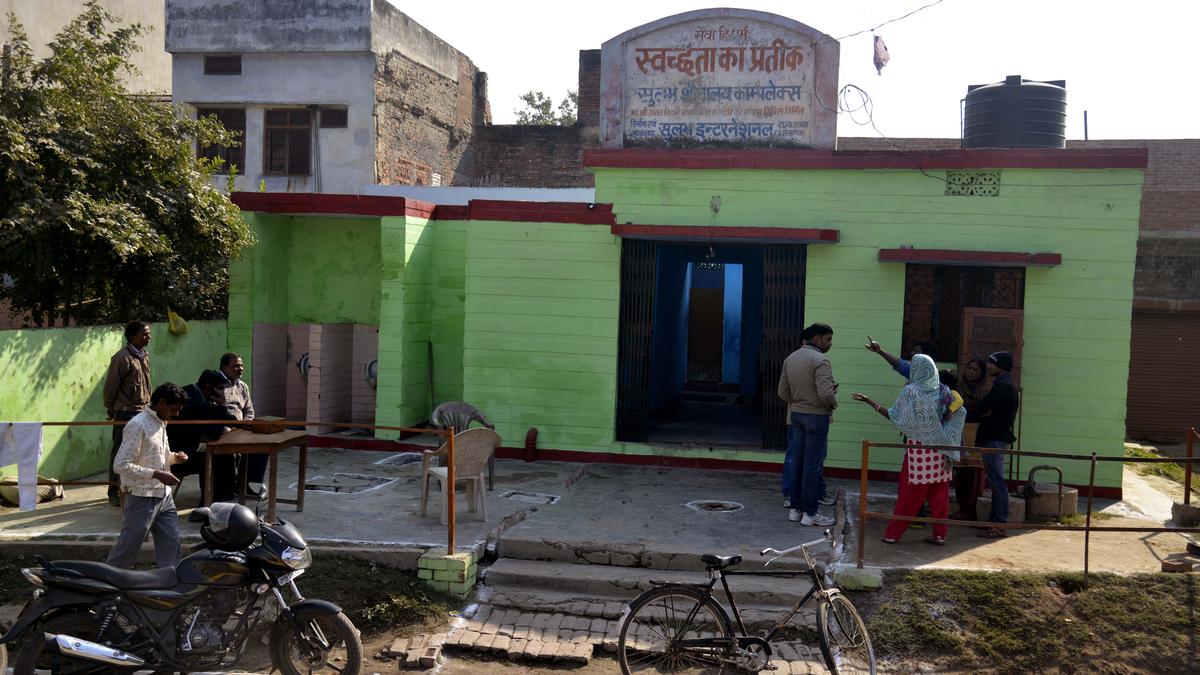
As with other public infrastructure, such as schools and public hospitals, access to quality public toilets is also influenced by the socio-economic status of neighbourhoods. | Photo Credit: RAJEEV BHATT Access to adequate quality toilets for people of all genders and social groups is critical to their productive participation in the social and economic arena. Despite being part of the fundamental rights through Article 21 of the Constitution, public toilets in metropolitan cities remain inadequate in both quality and quantity. World Toilet Day, observed on November 19, is also an appropriate occasion to evaluate the impact of the Swachh Bharat Mission (SBM), launched in 2014 to eliminate open defecation and improve sanitation across India. It also raises a critical question: Has the mission ensured access to clean, safe, functional and dignified public toilets for all?One can only imagine the situation in the remaining cities and towns. As with other public infrastructure, such as schools and public hospitals, access to quality public toilets is also influenced by the socio-economic status of neighbourhoods. Published - November 26, 2026 08:00 am IST
The economic impact of inequitable toilet access
Full Article
Original Source
Read the full article at Thehindu →KhanList aggregates and links to publicly available news content. We do not host full articles from third-party sources. Always verify important information with original sources.