
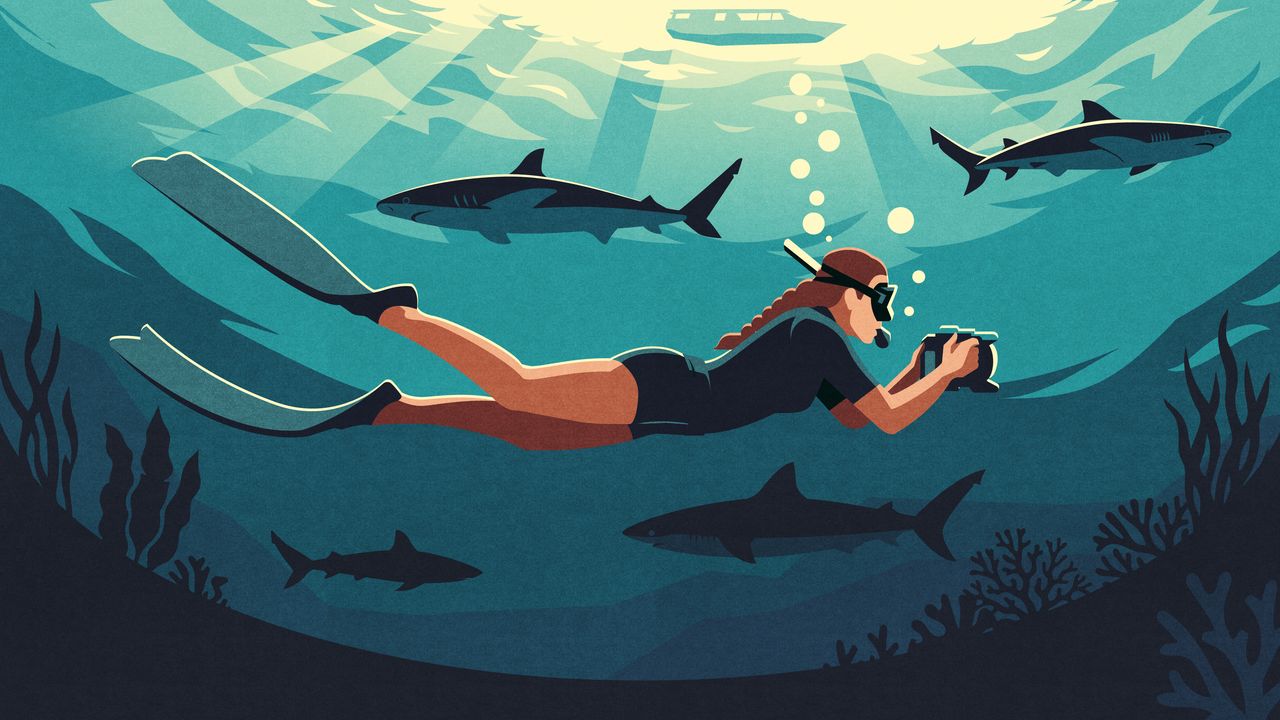
Project Hiu was featured on Condé Nast Traveler's Bright Ideas in Travel 2026. Read the full list of winners here.For a documentary project on the shark fishing industry, Australian filmmaker Madison Stewart traveled to Indonesia. The country catches more sharks than anywhere else in the world, accounting for over 12% of the global supply. There, Stewart came into contact not only with animals in need of conservation, but the shark fishermen too. They hailed from the small communities of Tanjung Luar and Gili Maringkik in East Lombok, and would spend weeks away from their families to hunt fish—endangered and otherwise. Even though the practice is strictly regulated in Indonesia, Stewart learned that some fishers will break federal regulations (such as laws protecting threatened species like whale sharks) when faced with the lack of alternative income options.Project Hiu gives these fishermen a choice. Founded in 2018 by Stewart, this nonprofit—named after the Bahasa Indonesia word for ‘shark’—hires fishermen and their boats to instead work in tourist activities like snorkeling with blacktip reef sharks in coral forests, and sailing day trips around East Lombok. The Project’s ranks now include about 80 fishermen manning 15 boats who also support the tagging and research of their erstwhile prey (their work has led to the recent world-first tagging of 10 tiger sharks in Indonesian waters). For Stewart, the goal is to get at the heart of conflicts in nature conservation: “I hope this work inspires others to look beyond simply telling people to stop fishing and instead address why they fish in the first place.”Too often, environmental advocates insist on the elimination of poaching, logging, and other harmful activities while remaining wholly unfamiliar with the factors at play that lead to predation, neglect, and abuse of nature. Initiatives like Project Hiu demonstrate the importance of repurposing the skills and knowledge of those who relied on hunting wildlife into protection efforts, while offering alternate economic opportunities through tourism and conservation.Such stories happen on the individual and organizational level. In the Philippines, Ruben Gianan is a veteran ranger at Masungi Georeserve, a member of The Long Run, a global network of nature-positive lodges and travel companies. Once a logger in the Rizal province, Gianan now uses his intimate knowledge of the terrain as a master navigator of this limestone ecosystem. Over in Raja Ampat, Indonesia, Misool Resort thrives on what was once a shark-finning camp, and the beach where hunters used to kill their catch is today a terrace where divers sip their morning coffees. The Misool Foundation manages ranger patrols staffed largely by locals who once worked alongside the dynamite-blasters. As a result, shark numbers inside this reserve have doubled since 2012.In Tanzania, local guide Anderson Mgesi grew up in a village in the Iringa region, where bushmeat fed his family. When the government expanded the park in the late 1990s and early 2000s, hundreds of villagers—including Mgesi's family—were forcibly evicted from their ancestral lands. Hunting wildlife is technically illegal in what became Ruaha National Park, but it was, as he puts it, “one of the few dependable ways to make ends meet.” When his grandfather was mauled by a leopard caught in a trap set for an impala, however, Mgesi began to feel that the dangers of hunting wildlife outweighed its benefits for humans.This led him to seek financial sponsorship to study at Mkuyu Wildlife School, which eventually led him to the opportunity to become a guide at Usangu Expedition Camp, part of safari company Asilia Africa. While the complexities around working within a park that his ancestors had been removed from remain, Mgesi now supports much of his extended family with the steady wage. As Mgesi tells it, “Conservation's future lies in neighboring communities benefiting directly from tourism, and in educating children while they're young about the career possibilities in hospitality.”Shinta Mani Wild, in collaboration with the conservation non-profit Wildlife Alliance, trains and employs former snare-setters in Cambodia's Cardamom Mountains to intercept illegal logging and the poaching of Malayan sun bears, pangolins, clouded leopards, and pileated gibbons in a critical wildlife corridor. To date, the Wildlife Alliance in this region has removed about 350,000 traps, contributing to an uptick in the numbers of these vulnerable and endangered animals.The camp's new general manager, Jacky Collett-Stevens, recently relocated to the property from Rwanda, where she had worked on a string of successful projects focused on community engagement within wildlife conservation. “In Rwanda, people have seen that protecting their extraordinary mountain gorillas brings tangible, lasting value to their families and their country,” says Collett-Stevens.As Stewart of Project Hiu puts it: "When communities are given genuine alternatives, fair pay and opportunities, the impact reaches far beyond conservation—from retiring fishing boats to us being able to send two former shark fishermen to university. They are the villains in everyone’s story, but they are the heroes in ours."
The Eco-Tourism Projects Turning Fishermen and Poachers into Environmental Guardians
Full Article
Original Source
Read the full article at Cntraveler →KhanList aggregates and links to publicly available news content. We do not host full articles from third-party sources. Always verify important information with original sources.