
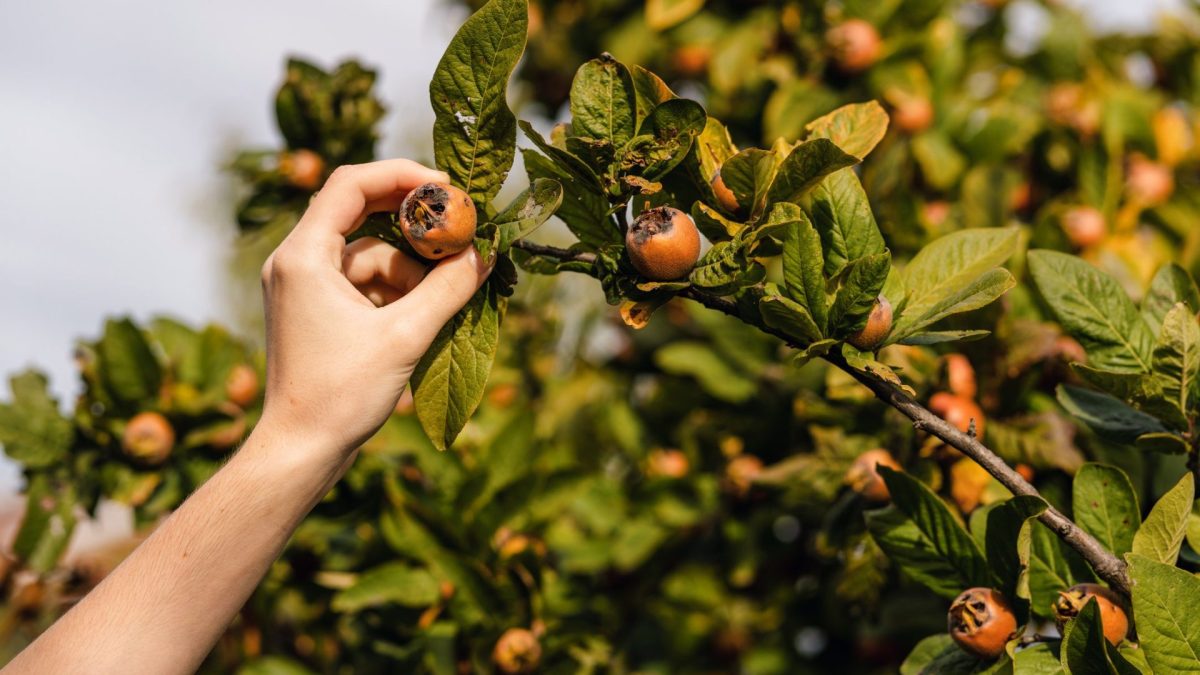
It has always been a mystery to me as to why people plant so many deciduous ornamental trees when they could have lovely medium-size trees with spring blossom, autumn colour and pretty, edible fruits. Any reasonable garden soil in full sun or light shade suits them. Medlars, quinces and morello cherries are especially ornamental and fruitful. Less common are almond-peach hybrids, while amelanchiers are widely grown for ornament but do have fruit potential too. Medlars have strange fruits like giant, chestnut-sized haws which are hard and inedible until they are completely ripe and very soft. They are left on the trees until November and either picked when they go soft, or as soon as they can be parted from the trees and brought into a cool shed to ripen in a tray lined with paper – a process called bletting. If you don’t fancy bletted fruits, the underripe fruits make good jelly. The Iranian form has the RHS Recommended Award of Garden Merit and is sold by specialist fruit nurseries. It needs less bletting to be palatable than most medlars. They produce large, white insect-friendly flowers in late spring that are seldom spoiled by frost and usually have a good autumn colour before leaf fall. Quince, too, flower in late spring with attractive white flowers, which are somewhat frost sensitive. Like medlars they are self-fertile so one tree will fruit reliably. They favour moist soils but will crop in most situations. Their yellow, often downy, fruits ripen in late autumn. They don’t soften and cannot be eaten out of hand but develop a pleasant aroma when ripe. Use them with apples in jellies or pies or to make quince paste.They produce yellow autumn colour before leaf fall. Quince Serbian Gold has the RHS Recommended Award of Garden Merit and is available from specialist nurseries. Morello cherries produce sour cooking cherries in summer and are as flower-laden as ornamental ones with white flowers in mid to late spring, they often produce good autumn colour too. The flowers are frost sensitive so a sheltered spot suits them. They tolerate light shade better than most. Birds can strip the fruits – so sleeve the fruiting shoots with fleece to keep fruit bird- and insect-free. Ripe quinces in autumn (Photo: Westend61/Getty/Westend61/Nabiha Dahhan) Where fruit is the main aim, fan-trained trees against a wall or fence are easy to net and frost damage risk is reduced. Unlike almost any other fruit, a fan-trained tree on a north-facing wall can be fairly productive. Quinces and medlars can also be fan-trained. Almonds (Prunus dulcis) make fine smallish trees but flower very early – January or February – which rules out nuts in all but the most sheltered southerly gardens. However, almond-peach crosses, Prunus × persicoides, are an interesting tree that has potential as a nut-bearer flowering freely early, in March before leaves open, so still a tree for southern gardens. Nuts ripen in early autumn. Available forms include Ingrid and Robijn. Experience with these is so far limited in Britain, but they are an interesting development. Amelanchier is widely planted for its early, very abundant spring flowers and gorgeous autumn colour. Being native to parts of North America, including Canada, they are very hardy. They also produce edible summer berries which resemble blueberries in size, colour and taste. Amelanchier alnifolia Obelisk (6m), is recommended for ornament and fruit. Birds can strip the crop, so protect it by sleeving with fleece or fruit-protection bags. New shrubby forms – including Honeywood and Smoky (up to 3m) – are bred for fruit production and are ideal for small gardens. Guy Barter is the Royal Horticultural Society’s (RHS) chief horticulturist @GuyBarter The RHS is a charity inspiring everyone to grow via its research, advisory, outreach, shows and gardens. For more information, visit: rhs.org.uk
The easy-to-grow fruit trees you should be planting, according to a gardening expert
Full Article
Original Source
Read the full article at Inews →KhanList aggregates and links to publicly available news content. We do not host full articles from third-party sources. Always verify important information with original sources.