
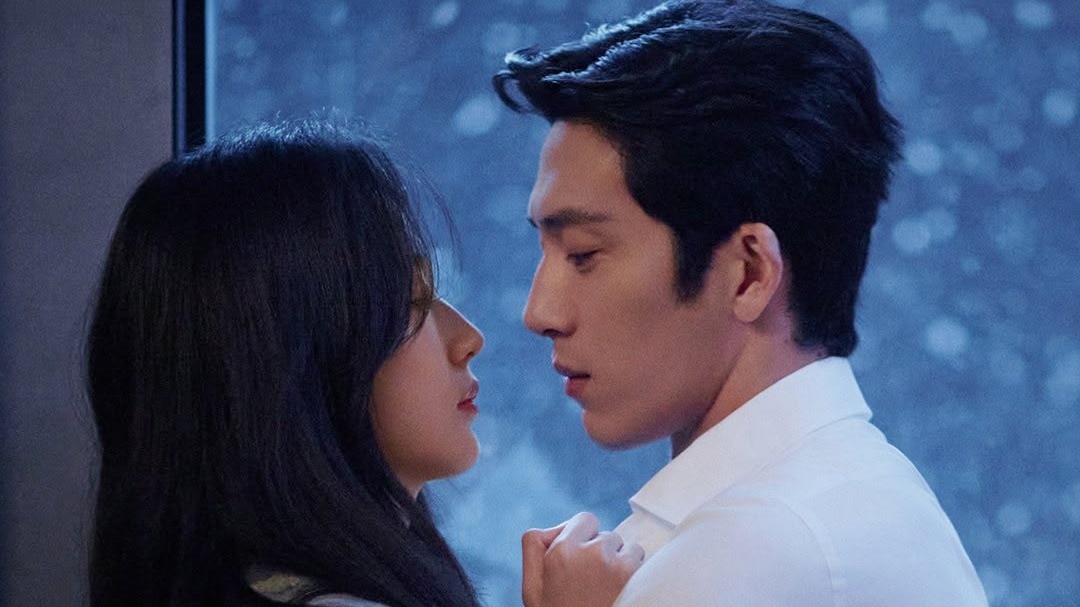
What makes The Early Spring interesting is not that it takes its time to get two people together. It is that it understands what happens after they are together — when attraction becomes routine, care becomes expectation, and love begins to run into all the things people carry with them.Directed by Jiang Ji-Zheng and adapted from Gu Niang Bie Ku’s novel Zao Chun Qing Lang, the 24-episode Chinese drama stars Jing Boran as Luan Nian and Sun Qian as Shang Zhitao. Set against the competitive world of advertising, it follows Shang Zhitao, a young newcomer to Beijing who joins a top agency, and Luan Nian, its sharp-tongued creative director. What begins as professional friction gradually develops into a relationship that stretches across years, with ambition, insecurity, friendship and personal struggles complicating their romance.The romance is built on chemistry, but The Early Spring does not confuse chemistry with compatibility.Shang Zhitao and Luan Nian are deeply attracted to each other, and the show is refreshingly unafraid of acknowledging that. Physical intimacy is not treated as something frivolous, shameful or something that needs to be sanitised to make a romance respectable. Their desire for each other is part of their relationship, and the series gives its female protagonist the agency to own that desire without turning it into either a scandal or her defining trait. Their physical relationship does escalate, but it never becomes the only way the show understands their connection. There are acts of service, emotional support, professional encouragement and the small routines that develop when two people spend years knowing each other. The intimacy feels like one part of a larger relationship rather than a substitute for one.The Early Spring understands that you can do everything for someone and still misunderstand what they need from you. You can be attentive, make sacrifices, offer support and believe you are showing love, while the other person is waiting for something else entirely. That gives the show’s treatment of miscommunication more weight than the standard romantic-drama misunderstanding. Their problems are not simply created because neither character will have an obvious conversation. They come from two people who care for each other deeply but sometimes struggle to understand what the other is actually asking for. That makes their separation hurt. Jing Boran and Sun Qian are crucial to making this work. Their chemistry has both physicality and familiarity; they feel like two people who have spent enough time together to know each other’s rhythms. Jing plays Luan Nian’s guardedness without making him emotionally inaccessible, while Sun gives Zhitao a determination that extends well beyond her relationship with him. She wants to be recognised professionally, to make her own choices and to be loved without having to become a more convenient version of herself.The duo sells that contradiction well. There is an ease to them that makes the length of their relationship believable, but they also understand the fractures underneath it. Neither character is reduced to the role of the wounded lover. The workplace setting adds substance to the romance. Zhitao’s professional ambitions are taken seriously, while the mentor-mentee dynamic introduces questions about power, confidence and what it means to find your own voice in a demanding industry. The supporting characters are similarly useful because they provide friendships and professional relationships that exist beyond the central couple.The drama also handles mental health without turning it into a convenient explanation for every bad decision. Emotional baggage shapes behaviour, but the characters remain responsible for the choices they make. That makes their mistakes easier to understand without necessarily excusing them.Visually, The Early Spring is restrained in a way that suits its storytelling. It gives its actors room to communicate through expressions, gestures and proximity rather than constantly dressing up every emotional beat. The camera understands when a moment needs space.The biggest weakness is the final stretch. The 24-episode structure leaves the post-breakup portion feeling more compressed than the relationship that precedes it. Several developments deserved fuller scenes, particularly as the characters begin confronting what went wrong between them. The emotional destination is convincing, but some of the steps towards reconciliation arrive too quickly. That matters because The Early Spring has spent so much time telling us that relationships are built in the details. When the couple finally begins to work through what broke them apart, the show could have given those conversations and realisations more space.Still, it lands on an emotionally satisfying idea. Luan Nian and Zhitao do not find their way back to each other because they suddenly become perfect. They return because they have changed enough to understand each other differently and because love, for all its complications, is also about allowing someone to be imperfect without making them feel unworthy of being loved.“You don’t need to be perfect to be loved” becomes the quiet truth underneath The Early Spring. It is also what makes the romance feel more mature than its familiar workplace setup suggests.The show may stumble in getting to its final emotional beats, but it understands a truth about lasting relationship: chemistry can bring two people together, desire can keep them close, but understanding is what gives them a chance to stay.The Early Spring is streaming on Netflix.- EndsPublished By: Priyanka SharmaPublished On: Sep 9, 2026 21:26 IST
The Early Spring review: Jing Boran, Sun Qian shine in a deliciously messy romance
Full Article
Original Source
Read the full article at Indiatoday →KhanList aggregates and links to publicly available news content. We do not host full articles from third-party sources. Always verify important information with original sources.