
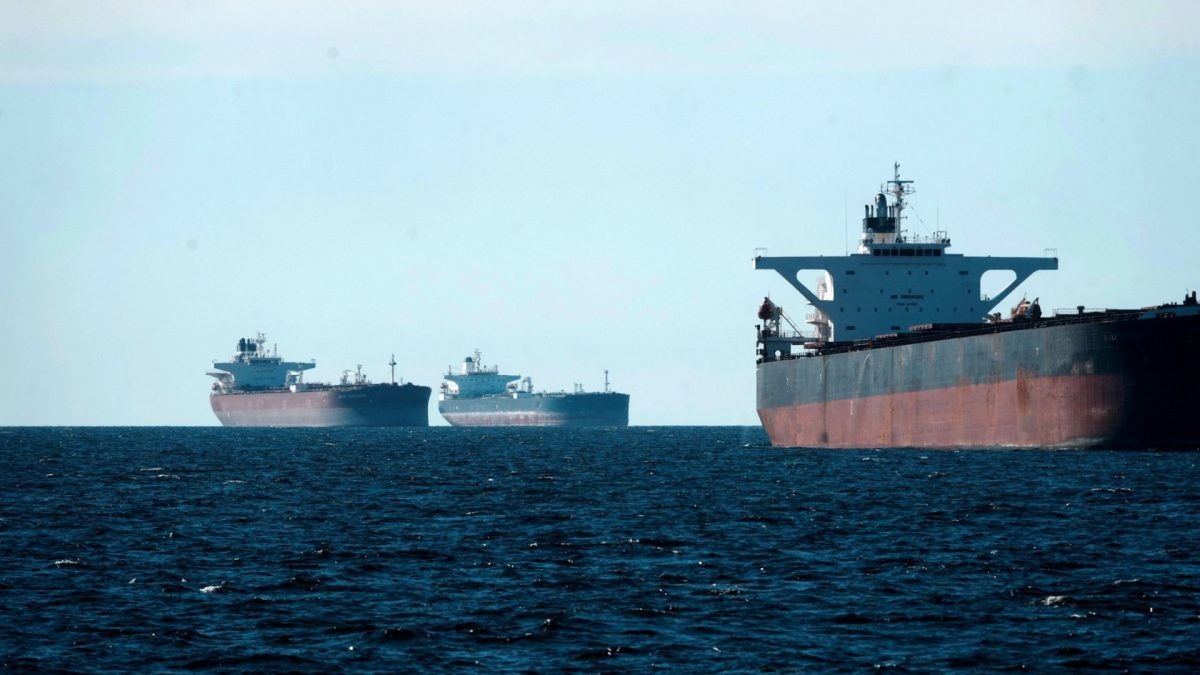
A distress call from an uninsured Russian “shadow fleet” vessel thought to be loaded with fuel shows the “increased risk” to life and the environment as Putin’s tankers tackle a more difficult maritime route to avoid the English Channel, experts say. The Myra issued an urgent call for help around 2pm last Saturday while battling waves almost 10 metres tall and winds of 86mph in the North Atlantic near the coast of Northern Ireland. The vessel, which is 20 years old, is one of Putin’s shadow fleet tankers which is widely considered to have reached the limit of safe operation. Major oil companies generally operate no vessels beyond 15 years for safety reasons. If an uninsured tanker becomes damaged and leaks its cargo, it can result in the coastal state footing the bill – which in this case would have been the UK and Ireland. The i Paper has previously reported how aging shadow fleet tankers, some nearly 30 years of age, are passing through UK waters, risking thousands of tonnes of oil leaking in the event of a failure of the vessel’s hull. With fears of an oil spill and concern for the 21-strong crew on board, the RAF and British coastguard scrambled to assist the oil products tanker which was around 200 miles off the coast in the Irish Exclusive Economic Zone. Despite intending to head down towards the Mediterranean, the Myra had diverted around the top of the UK to avoid the English Channel. The route is increasingly common with shadow fleet vessels after the Royal Navy’s capture of the Smyrtos in June, as the UK looks to clamp down on sanctioned vessels carrying Russian oil. The false-flagged Myra is described by Starboard Maritime Intelligence as having “no recorded P&I insurance, and is sanctioned by the UK, EU, USA, Canada and Switzerland”. Their analyst Mark Douglas was among those initially reporting that the ship, which departed the Russia part of the Baltic Sea on 15 October, was travelling “likely having loaded fuel in [the] Ust Luga” port in Russia. At least two other shadow fleet tankers appear to have been following Myra’s path, according to analysis by The i Paper, with the sanctioned Rora and Leruo both circumnavigating the UK instead of going through the Channel after departing Russian port Primorsk. False alarm, but a real threat The scale of the danger of the situation subsided after those on board later said the distress call had been a false alarm and continued on their route towards Spain. It has not been confirmed whether the ship was carrying fuel, as would be expected for a tanker departing Ust Luga and destined for Port Said in Egypt, but open-source analysis suggests the vessel appears to be empty or only part-loaded. Nonetheless, the incident has brought into focus the stark warnings from maritime experts of the environmental and financial threat uninsured shadow fleet vessels pose. Myra’s distress call highlights “the increased risk as poorly managed, unregistered and uninsured tankers risk the North Atlantic to avoid enforcement actions”, Douglas said. Gonzalo Saiz, a research fellow at the defence and security think-tank Royal United Services Institute, highlights the case of the shadow fleet tanker Caroline Bezengi as the reality of what happens if one of these tankers gets into trouble. 🚨🇴🇲 Oman: the CAROLINE BEZENGI oil spill has now reached the coast.The slick has expanded to more than 2000 km², according to satellite imagery analysed by Reuters.Marine risk and salvage specialist Ambrey is now involved in the emergency operation to salvage the grounded… https://t.co/UWkS0JZ5Ps pic.twitter.com/q14maSKD2B— Russian Forces Spotter (@TiaFarris10) August 13, 2026 The vessel has been leaking oil off the coast of Oman for four months since it became stuck on rocks after a suspected mine attack in June, with satellite imagery in October suggesting the spill was still ongoing. “It is an example of the implications of one of these shadow fleet tankers being falsely flagged, which means there’s no flag state behind that tanker that could check if it was adequately insured or who the beneficial owner is,” explained Saiz. “There’s nobody to pay up other than the affected coastal state for the clean-up,” he added, saying that if Russia is forced to put its own flag on its fleet, it would be more likely to be found liable to pay for any clean-ups. “A Russian insurer reportedly emerged to fund the response to the ship but expectations on the reliability of Russian actors is naturally low at the moment.” Myra’s path The shadow fleet has become a lifeline for Putin’s war effort, with ships suspected of sailing under false flags in order to evade blockades and make money from sanctioned oil. Around 75 per cent of Russia’s crude oil is transported by Putin’s decrepit and ageing fleet of ships. A photo of Myra shared by a tanker watcher on Instagram captured her travelling on 17 October, after departing from her Russian port. The tanker can be seen in ballast, which means she is sitting high in the water indicating that she is not loaded. Vessels carrying oil are heavier, and sit lower in the water. This is a fair indication Myra was, unusually, not carrying fuel after leaving Russia. A spokesman for the British Maritime and Coastguard Agency confirmed the operation last Saturday. “HM Coastguard received distress alerts from a tanker with 21 people on board travelling around 350 nautical miles off the Isle of Mull. “A Royal Air Force aircraft was sent to investigate and established communications with the vessel, whose crew confirmed a distress signal was activated as they left an area of large swells. “It was determined that there was no need for assistance, and that the vessel would continue with onwards passage,” the spokesman said. As Myra passed near Spain on Friday, monitors are questioning whether the conspicuous vessel may be targeted for seizure. Richard Meade, of shipping intelligence publication Lloyd’s List, said: “Myra’s voyage towards the Mediterranean presents European authorities with a rare opportunity to target a stateless tanker after enforcement pressure pushed Moscow to move much of its shadow fleet on to the Russian registry.”
The ‘distress call’ that shows how Putin is risking a UK disaster with his shadow fleet
Full Article
Original Source
Read the full article at Inews →KhanList aggregates and links to publicly available news content. We do not host full articles from third-party sources. Always verify important information with original sources.