
In the 1920s, Tredegar was a town like many in south Wales. Private collieries and iron works held a grip over the working people, with owners and managers powerful in local institutions such as the town council and hospital board.Bevan, the son of a miner, had spent time underground and was all too familiar with the lack of control ordinary people had over their working lives and living conditions.The Query Club gradually came to realise that if they wanted to change things, they had to be where the power was. "The Query Club was this organisation which was Bevan and his comrades asking 'how do we actually achieve change here in Tredegar? How do we try to influence things?'," said Dr Nye Davies. "I think they decided what we need to do is be on every single committee, every single board, every single institution that has some level of influence in the community and we need to get like-minded socialists on to those boards."Davies, a senior lecturer at Cardiff University who was written books on Bevan, believes the search for power was central to everything the Query Club wanted to achieve.One of its leading figures was Walter Conway, the only member over 30, and an orphan raised in the local workhouse. Rather against the popular perception of neglect and brutality the name often evokes, the master of the house had taught Conway to read and write and given him a lifelong love of learning.This was something he shared in common with Bevan.In 1915, Conway beat 50 other applicants to become secretary of the Tredegar Medical Aid Society. As in other towns, workers formed the society by contributing a small payment from their wages, to cover costs when medical needs arose.During Conway's time in charge, the society expanded from a membership of 5,000 at its start to 20,000 by the time of his death in 1933, representing 95% of the town.They had access to doctors, nurses, dentists, and hospitals.Wives, children and non-miners were all admitted, changing this health service for workers into a universal one – for Tredegar, at least.The other change was led by the Query Club. They knew all the important institutions of the town – the council, the hospital board, the workingmen's club, even the medical aid society itself – were dominated by board members who belonged to the major power in the town, the Tredegar Iron and Coal Company, with an interest in keeping power in the hands of the well-to-do.As members of the emerging Labour party and committed socialists, they set their sights on changing that.John Morgan, a local councillor and the great-nephew of one of the 20 members of the Query Club, still lives in Tredegar and has researched its history.The Workman's Institute, where the club would eventually meet following its early days in cafes, is long gone.But the Medical Aid Society building now houses the Tredegar Medical Aid Society Heritage Centre.A small meeting room at the back is dedicated to the Query Club, with photographs and information preserving its memory."I used to go out walking with my uncle when he was in his 80s and 90s," he explained."He died when I was about 12 but if I knew then what I know now I'd have spent hours talking to him about the Query Club because some of the things they got up to - they were radicals."In 1922, they put Bevan up for the town council, and by 1929, the 16 members comprised of 10 from Labour, with five of these members of the Query Club.Bevan moved on to the next level of power by being elected to the county council, in Newport. But as Davies explains, he realised this still wasn't enough, adding: "Bevan said 'power is still eluding us, it's still elsewhere'."And that's what led him to go to Parliament as the ultimate place where power lay."That quest for power was really what drove the Query Club, what really drove Bevan and inspired him for the rest of his career."In 1929, he was elected as MP for Ebbw Vale, and went to Westminster, where he quickly gained a reputation as a powerful speaker.Davies partly credits the Query Club with helping create Bevan the orator. "These debates and arguments over ideas were really important in shaping Bevan's outlook as well," he added."One of Bevan's strengths was his debating skills and his ability to deconstruct arguments."
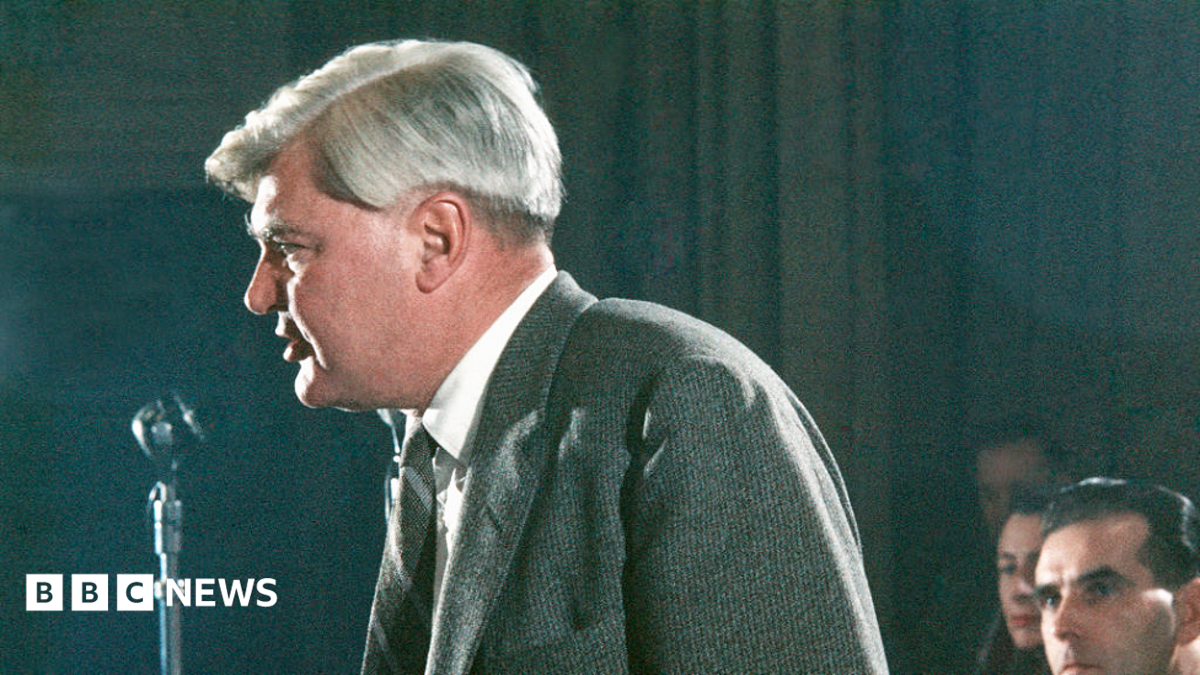
The debating club that helped shape NHS architect Aneurin Bevan's drive for power
Full Article
Original Source
Read the full article at Bbc →KhanList aggregates and links to publicly available news content. We do not host full articles from third-party sources. Always verify important information with original sources.