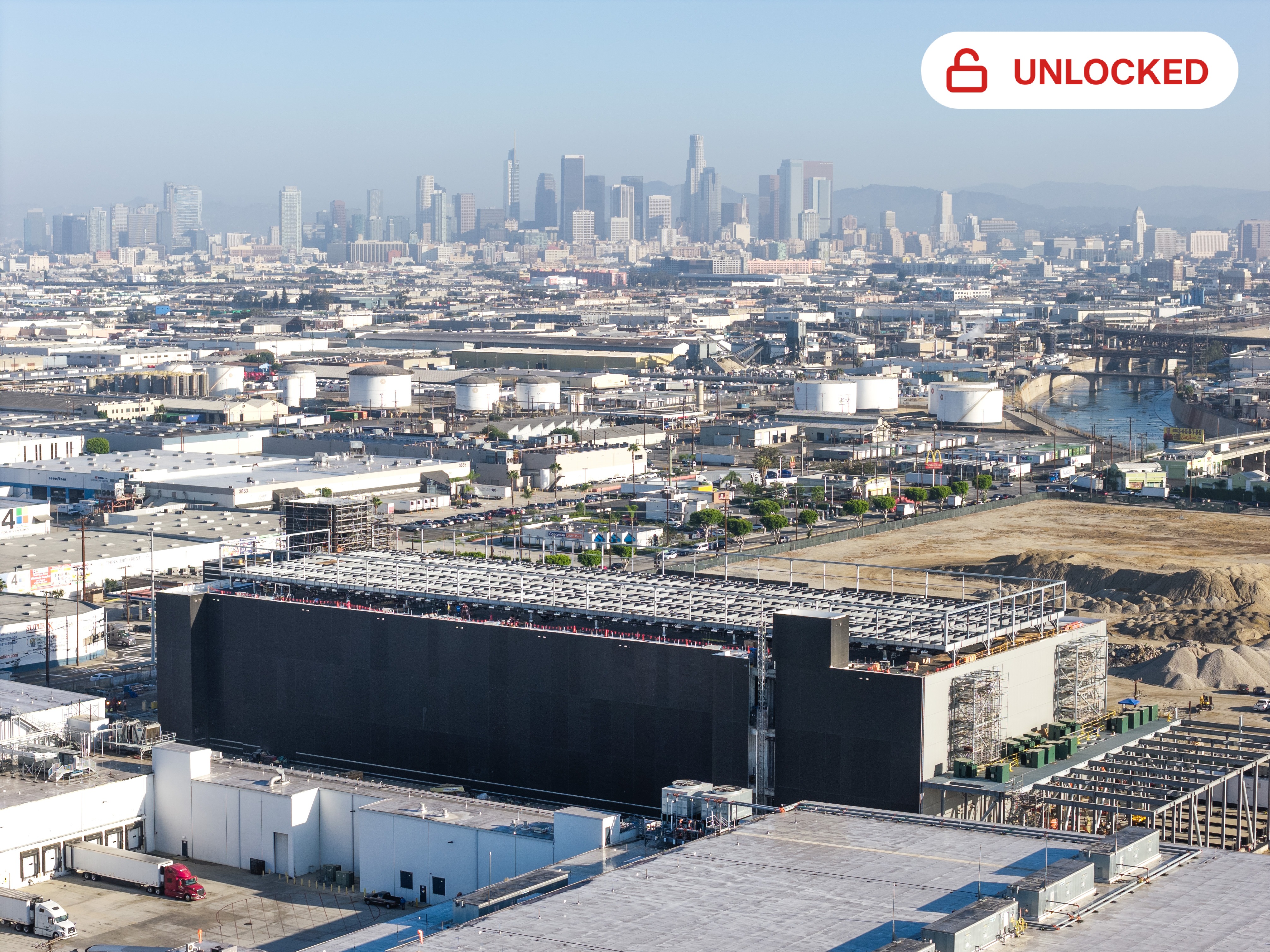
Turn any article into a podcast. Upgrade now to start listening. Members can share articles with friends & family to bypass the paywall. You’re reading Dispatch Energy, a weekly newsletter on energy and climate policy featuring Alex Trembath, Philip Rossetti, Lynne Kiesling, Rory Johnston, and Roger Pielke Jr. To access more Dispatch reporting and analysis, become a member today. Welcome to Dispatch Energy! Conventional wisdom holds that the Luddites, the 19th-century English workers who smashed textile machinery to protest automation, were anti-technology. But historians of the movement have added considerable nuance: The Luddites were skilled craftsmen who opposed not the technology but what the technology did to their wages, working conditions, and livelihoods. This perspective lives on—opposition to technological innovation is usually far more complicated than pro- or anti-technology. What people care about are the real or perceived consequences of innovation. Luddite dynamics have been replayed in the context of almost every important technology of the last half-century: fracking, incandescent light bulbs, SUVs, childhood vaccines, water fluoridation, nuclear power, wind turbines, genetically modified crops—each became a proxy fight in which the combatants often let pro- or anti-technology symbolism crowd out consideration of risks and benefits. Data centers have now joined the list of contested technologies, and the fight follows a familiar script. One veteran organizer explained plainly why national environmental groups seized on the issue in an interview with Politico: “There is not a better way to be relevant that is as prevalent as data centers.” That organizer—Jane Kleeb, the Bold Alliance founder who spent two decades rallying communities against oil pipelines—explained the underlying strategy: “After doing this work for 20 years, it is easier to mobilize communities to block something than it is to build something.” Build, Don’t Ban Drone view of a data center under construction in Vernon, California, on July 14, 2026. (Myung J. Chun / Los Angeles Times via Getty Images) I’m no defender of every technological innovation. But on the issue of data centers, the central question is not “Which side are you on?” Rather, it is whether the empirical claims for and against data centers stand up to scrutiny. Today’s column takes a deep dive into the most common claims in support of moratoria on building new data centers. Claim one: Data centers raise your electric bill and threaten the grid. People care deeply about the cost of living. If data centers contribute to increasing those costs, we should expect strong opposition. But is it actually the case that data centers are driving up the average American’s electricity bill? A 2026 study by researchers at the nonprofit Electric Power Research Institute (EPRI) applied an instrumental variables approach to isolate the causal effect of data center growth on retail electricity rates from 2015 to 2024. Their findings? Data centers pushed average U.S. retail rates modestly down. The mechanism follows familiar economics: Electricity generation features high fixed costs, transmission and distribution reward scale, and unit generation costs keep falling—so durable new demand spreads those fixed costs across more kilowatt-hours and lowers the average price. The electricity demand of data centers, actual and projected, is more modest than most people realize. U.S. data centers consumed about 183 billion kilowatt-hours in 2023, roughly 4 percent of national electricity consumption. By comparison, air conditioning dwarfs that figure—cooling homes and commercial buildings consumes about 425 billion kilowatt-hours a year, accounting for some 10 percent of all U.S. electricity consumption and 19 percent of the power used in American homes—yet no one proposes banning it (well, maybe in Europe). And the International Energy Agency projects that data center demand growth through 2030 (around 240 terawatt-hours) will trail the added demand from electric vehicles and household electrification. Data centers add new demand, but they are just one among many reasons why electricity demand is expected to soar. But the EPRI analysis looked backward, and the authors noted that if future supply falls behind demand, the effect can reverse, leading to higher consumer electricity prices. A 2025 load growth report by the power consulting firm Grid Strategies found that five-year peak-demand forecasts jumped sixfold in three years, to 166 gigawatts, with data centers driving roughly 55 percent of that growth. And the U.S. electrical grid is currently ill-equipped to meet this growing demand: The same report found that the U.S. built fewer than 900 miles of high-capacity transmission in 2024 versus an estimated annual need near 5,000 miles. The key to limiting possible electricity price increases is to ensure that demand and supply are well matched. The fact that it is easier for advocates to block demand rather than increase supply helps to explain why opposition to data centers has mobilized. However, two facts should temper alarm. Grid Strategies concludes that utility forecasts overstate data center load growth by around 40 percent, because the utilities behind those projections fail to discount projects that never get built or never draw their full load. And grid operators already manage the risk: The North American Electric Reliability Corporation, a nonprofit international authority that sets reliability standards for the grid in the U.S., Canada, and part of Mexico, is writing rules for the rapid load swings resulting from large AI facilities. Meanwhile, the Joint Legislative Audit and Review Commission (JLARC), an oversight agency for the state of Virginia, found that existing utility and PJM processes—above all the authority to delay connecting new loads until adequate capacity exists—limit the reliability risks from rapid demand growth. Data centers have not raised rates to date, and whether they do in the future depends on whether regulators let supply expand. JLARC projected that a typical Dominion Energy residential customer could see costs climb $14 to $37 a month by 2040—driven not by data centers as such but by the difficulty of building infrastructure and the risk that fixed costs impose on other ratepayers. That points to the importance of price policies that make large customers pay their own way, and not to moratoria. (Chart via Amanda Swinghamer Henderson) Claim two: Data centers consume excessive water. Average use and peak capacity differ sharply. JLARC found that most Virginia data centers use about as much water as a large office building, with some requiring less than a single household—and judged current use in the state to be sustainable. The choice of cooling design accounts for most of the variation. U.S. data centers consumed about 17 billion gallons of water for cooling in 2023. American lawns dwarf that: Residential landscape irrigation runs to about 9 billion gallons a day—roughly 190 times the annual data center total. Data centers’ share of total U.S. water withdrawals is well under 0.1 percent of overall U.S. consumption. However, the nationwide average doesn’t do much to help a stressed county’s summer peak water demand. A 2026 study led by researchers at the University of California-Riverside estimates that U.S. data centers could require roughly 700 million to 1.5 billion gallons per day of new water capacity through 2030 at current intensity, that plausible efficiency gains could cut that sharply, and that the burden would fall hardest on host communities. To deal with the likelier prospect of a local peak demand on hot summer days rather than a national water crisis, they recommend peak-use reporting, “pipe neutral” arrangements (in which a data center agrees to fund or build projects that add as much water back to the system as it consumes), and coordinated water-power planning—not bans. Claim three: Data centers add excessive carbon emissions, worsening climate change. This claim looks at two things: on-site emissions and grid emissions. On-site, JLARC found that data centers’ backup diesel generators run almost exclusively for testing and contribute under 4 percent of regional nitrogen oxide emissions in Northern Virginia—the densest concentration of data centers on Earth. The larger emissions question concerns the electricity data centers consume. U.S. data centers accounted for roughly 105 million tons of carbon dioxide in 2023, about 2.2 percent of national emissions. For comparison, U.S. agriculture emits around 660 million tons of greenhouse gases a year—more than six times as much and about 10.5 percent of the national total—and U.S. commercial aviation accounts for roughly 180 million tons, about 3 percent of the U.S. total. Few people would support moratoria on farming or aviation. Whether the added electricity demand raises emissions depends on how that electricity is produced. New natural gas power plants or delays in coal plant retirements would increase emissions, but new production from nuclear or renewables and storage would not significantly increase emissions. Data center emissions—like all emissions across the economy—are a function of the pace of decarbonization, and blocking new consumption does not lead to accelerated decarbonization. It could do the opposite if the moratoria result in data center development moving to another state or country with a more carbon-intensive grid. (Table via Amanda Swinghamer Henderson) The problem is the pace of building, not the data centers. The issue underlies all three complaints: supply that is not keeping up with demand—in short, a lack of energy abundance. Prices rise only if generation and transmission fail to keep pace. The EPRI analysis found that when supply grows in tandem with demand, new load pushes rates down, not up. Reliability suffers when operators must connect large loads faster than they can add capacity. Water stress matters most at local peak demand, when a community lacks the pipe and treatment capacity for a summer surge in demand, especially when conditions are hot and dry. Emissions climb when low-carbon generation cannot be deployed fast enough. In each case, new data centers expose existing problems; they do not create the problems anew. If the United States could add generation, transmission, and water capacity at the pace of earlier eras, the data center “crisis” would mostly disappear. Abundant supply spreads fixed costs and lowers rates, ample reserve margins absorb load swings, local water capacity turns a summer peak into a routine withdrawal, and low-carbon generation built ahead of demand contributes to decarbonization of the economy. The constraint is our national inability to build—hampered by permitting queues and interconnection backlogs that mean that new transmission takes six to 10 years to build—while new demand emerges much faster. A moratorium seeks to freeze demand to match a sclerotic supply side. A better response speeds the creation of supply to meet demand. That means permitting reform, faster interconnection, advanced transmission, and water system investment, including new supply. Blocking construction treats the symptom rather than the disease. Crucially, blocking construction is not cost-free. New data centers mean greater economic growth, with broad benefits across the economy. There are no calls for moratoria on aviation or agriculture because they have obvious benefits that the public and policymakers easily understand. New data centers have economic benefits, but those benefits are much more difficult for people to see. The AI-infrastructure buildout contributed about 0.8 percent of U.S. GDP by early 2026, and Harvard economist Jason Furman calculated that information-processing investment drove about 92 percent of U.S. GDP growth in the first half of 2025. JLARC credited Virginia’s data centers with about $9.1 billion in GDP and 74,000 jobs a year. The net figure is smaller and contested—Goldman Sachs notes that roughly two-thirds of the spending flows to imported components—but as a technology behind the lion’s share of recent growth, data centers belong in a category along with flying and farming. Data centers do impose real, concentrated local burdens requiring policies in response. Moratoria deliver none of these policies while forfeiting large economic benefits. It is certain that data centers will continue to be built—somewhere. The backlash in some communities has the diagnosis backward, and the remedy does more harm than the disease. A much better approach is to relearn how to build—fast and responsibly—and to ensure that the benefits of the resulting economic growth are widely shared. The Luddites’ concerns were justified, but smashing machines was not the solution. Policy Watch The seven Colorado River Basin states blew through a second federal deadline in February, failing to agree on how to manage the river after the 2007 operating guidelines expire at the end of this year. The original 1922 compact was created in an era of water abundance, and today, amid much lower flows, the states are divided on how significantly the Upper and Lower Basins should each cut their respective allocations. Lower Basin governors offered to reduce Arizona’s allocation by 27 percent, California’s by 10 percent, and Nevada’s by roughly 17 percent, but Upper Basin negotiators representing Colorado, Wyoming, Utah, and New Mexico countered that this winter’s low snowpack alone already imposes cuts exceeding 40 percent of their allocation. With no consensus, the Interior Department’s Bureau of Reclamation released its Final Environmental Impact Statement on July 31, imposing a federal framework that allows the Lower Basin shortages of as much as 3 million acre-feet in dry years and concentrates the deepest cuts on Arizona. The bureau will now open a public comment period on the impact statement before issuing a Record of Decision—expected around October 1, 2026—that formally adopts the post-2026 operating rules, after which any state that objects retains the option of taking its claims to the Supreme Court. Further Reading Two recent arguments make the affirmative case for building. At the Breakthrough Institute, Ted Nordhaus argues that solving environmental problems requires regulatory policy that is generative rather than restrictive: “The question for the environmental law profession over the coming decades … is not what will you stop but what will you build?” That framing pairs naturally with Ezra Klein and Derek Thompson’s 2025 book Abundance, which diagnoses how the accumulated proceduralism of the past half-century—environmental review, permitting, litigation, etc.—has made it painfully slow to build the housing, transmission, and clean energy the country says it wants. Roger Pielke Jr. is a senior fellow at the American Enterprise Institute, where he focuses on science and technology policy, the politicization of science, government science advice, and energy and climate.
The Data Center Backlash Is Really About Abundance
Full Article
Original Source
Read the full article at Thedispatch →KhanList aggregates and links to publicly available news content. We do not host full articles from third-party sources. Always verify important information with original sources.