
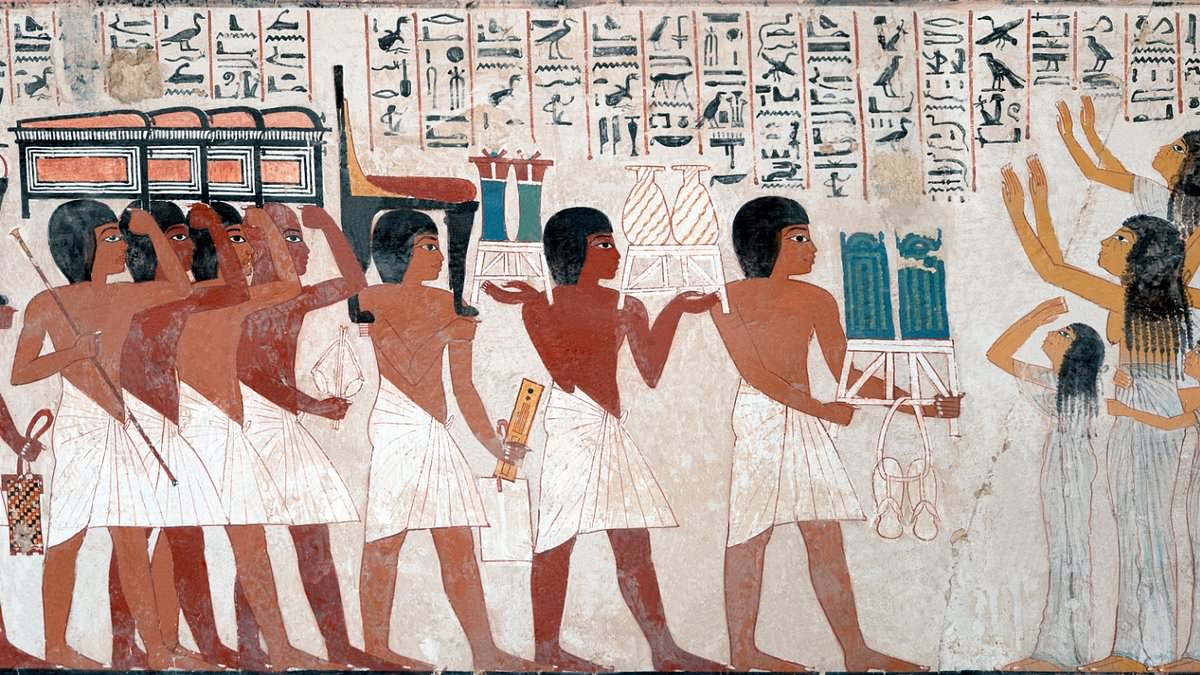
Published: 05:24 EDT, 5 October 2026 | Updated: 06:05 EDT, 5 October 2026 When Egypt's earliest kings died, they may not have gone to the afterlife alone.Archaeologists examining the remains of people buried around royal tombs have discovered many had suffered devastating blows to the head.This suggests trusted servants were killed and entombed alongside their rulers in a brutal ritual dating back 5,000 years.And these sacrifices would have been made to ensure kings had attendants in the afterlife, experts said.‘Retainer sacrifice is a type of human sacrifice where those close to a ruler are killed when the ruler dies,’ lead author Dr Roselyn Campbell, from Purdue University, said.‘In many cultures, retainer sacrifice is practiced because of beliefs that the sacrificed individuals will continue to serve the ruler in some kind of afterlife, but retainer sacrifice can also be a visceral display of the ruler's power.‘Some retainers might have volunteered to die to achieve eternal life or honour; others may have been chosen or even forced.’ Researchers re-examined 46 skulls belonging to servants and officials buried around the funerary enclosures of three First Dynasty rulers at Abydos in southern Egypt (pictured) A fresco depicting a funeral procession in ancient Egypt. The new study suggests trusted servants were killed and entombed alongside their rulers in a brutal ritual dating back 5,000 years Plan of the royal tombs (left) and funerary enclosures (right) at Umm el-Qaab in Abydos, southern Egypt. The diagrams show the tombs of First Dynasty rulers surrounded by rows of subsidiary burials, where researchers believe some royal retainers may have been sacrificed to accompany their rulers into the afterlifeFor their investigation, researchers re-examined 46 skulls belonging to servants and officials buried around the funerary enclosures of three First Dynasty rulers at Abydos in southern Egypt.The remains, originally excavated in the 1920s by British archaeologist Sir Flinders Petrie, are now housed in the University of Cambridge's Duckworth Collections.When they were first discovered, experts believed they may have been an example of human sacrifice – but the remains showed no signs of trauma.Now, using modern forensic techniques unavailable to earlier archaeologists, the team looked for hints of injuries that occurred around the time of death.They found evidence of potentially fatal cranial trauma in 18 of the skulls, including fractures and, in one case, a chopping wound near the eye.The researchers concluded that at least 39 per cent of the individuals examined may have been deliberately killed by blows to the head, providing fresh evidence that some royal retainers were sacrificed when their ruler died.These linear fractures may have initially been mistaken for naturally caused damage, the team said. The findings add to previous evidence that ancient Egyptians carried out sacrificial practices. Pictured: Detail from a wooden label discovered in the tomb of an official at the Saqqara cemetery, which appears to depict a bound individual being stabbed in the chest while another figure collects the blood in a vessel An ancient Egyptian tomb painting showing a funerary or offering scene. The new study showed 39 per cent of servants and officials buried near the funerary enclosures of kings had potentially fatal head wounds‘The injuries on the preserved crania are generally linear fractures, which would likely cause rapid unconsciousness, internal bleeding and death,’ Dr Campbell said.The research, published in the journal Frontiers in Environmental Archaeology, states it remains unclear exactly how the individuals were killed.Ancient Egyptian rulers are frequently depicted striking enemies with maces, but the injuries seen on the retainers' skulls do not match the type of damage such weapons would typically cause.Instead, the fractures suggest they were struck with a broad, flat object, although the possibility of accidental falls cannot be ruled out entirely.
The dark secret of Egypt's ancient kings: 5,000-year-old skulls suggest royal servants were bludgeoned to death so they could follow their ruler into the afterlife
Full Article
Original Source
Read the full article at Dailymail →KhanList aggregates and links to publicly available news content. We do not host full articles from third-party sources. Always verify important information with original sources.