
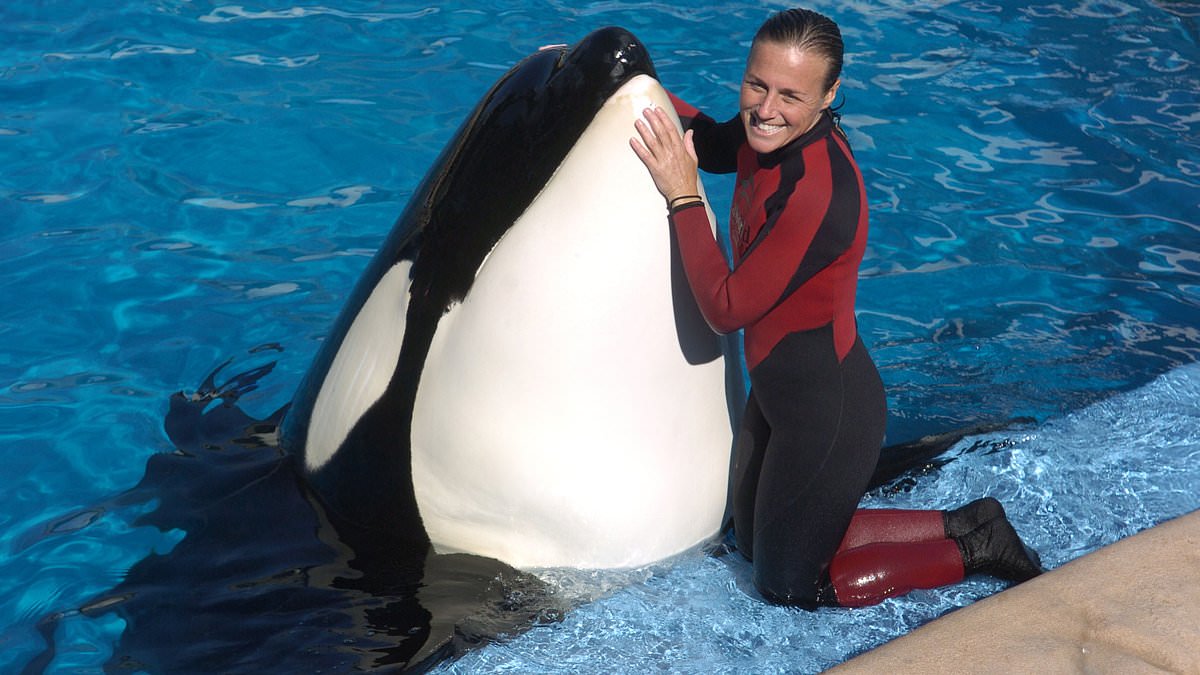
The zoos where visitors and staff face the greatest risk of being mauled, attacked or even killed by wild animals have been exposed in a new analysis.The Daily Mail examined thousands of 'exotic incidents' at wildlife parks across the US, compiled by animal welfare charity Born Free over the past 25 years.The records reveal how visitors have been mauled by big cats, bitten by monkeys and savaged by wild dogs – while even experienced zookeepers have fallen victim to attacks by wolves, tigers, elephants, orcas and pandas.Topping the list for the highest number of incidents is SeaWorld in Orlando, Florida, the marine park notorious for the 2010 death of veteran trainer Dawn Brancheau, who was dragged underwater and killed by a six-tonne orca named Tilikum.The findings raise questions about the risks of keeping wild animals in captivity and allowing people to come into close contact with them.Dr Mark Jones, Head of Policy at Born Free, told the Daily Mail: 'Zoos rely on placing visitors in unrealistically close proximity to potentially dangerous animals, in wholly unnatural circumstances.'They present complex, intelligent and fundamentally dangerous wild animals as tractable, benign objects of curiosity, and in some circumstances promote direct contact between animals and people, which can lead to injury and death.' Veteran animal trainer Dawn Brancheau (pictured) was dragged into the water by Tilikum the orca during a session at SeaWorld Orlando and killedIt is estimated that zoos around the world attract 700 million visitors annually - with only a tiny fraction of guests coming into dangerous contact with animals.However, injuries and deaths do occur, especially when people are encouraged to interact or touch the captive animals.At SeaWorld Orlando, Tilikum the killer whale was involved in a string of incidents, including the fatal atack on trainer Dawn Brnacheau.The killer whale also killed a 27-year-old man named Daniel Dukes, who was found naked and draped over the whale in the morning after having apparently entered the enclosure after hours.In addition, the famous water park has been the site of several less dramatic incidents, including an eight-year-old girl who was left with puncture wounds while feeding a dolphin in 2012.Incidents at SeaWorld attractions are also responsible for the exceptionally high number of incidents in San Antonio, Texas and San Diego, California. The kangaroo 'Mr Jack' at Five Star Farm zoo in Myrtle Beach, South Carolina, is believed to have killed a keeper who was attempting to 'roughhouse' with the animal Where have the most incidents occurred? Orlando, Florida: 5 confirmed incidentsSan Diego, California: 5 confirmed incidentsSan Antonio, Texas: 4 confirmed incidents Tampa, Florida: 4 confirmed incidentsIndianapolis, Indiana: 4 confirmed incidentsSource: Born Free Exotic Incidents Database According to Mong and Associates, a legal firm which tracks injury incidents, there have been at least 16 deaths at animal theme parks and water parks classified under the SeaWorld brand, two of which involved animal attacks at SeaWorld Orlando.However, most of these deaths were not due to animal activity. SeaWorld Parks has been contacted for comment. In total, the Born Free's Exotic Incidents Database records 12 cases in which an animal threatened, harmed, or killed a human at a SeaWorld attraction since 1999.Dr Sarah Kennell, Zoologist and Founder of Species First, told the Daily Mail: 'Removing an animal from the wild, or indeed breeding successive generations in captivity, does not erase its evolutionary history.'Its physical capabilities, sensory world and behavioural predispositions must be understood and taken into account when designing its environment and developing management practices.'Any incident which brings humans and captive animals into close contact carries a potential risk of injury, either through humans approaching the animal or by the animal escaping its enclosure.Samantha Ward, Professor of Animal, Rural & Environmental Science at Nottingham Trent University, told the Daily Mail: 'It is important to recognise that serious incidents involving either visitors or animals are relatively uncommon when considered against the millions of annual visits made to accredited zoos worldwide. Many of the most dangerous interactions occur when a human enters an animal's enclosure intentionally or by accident, as was the case in the famous encounter between the gorilla Harambe and a three-year-old boy In 2022, Greg Graziani (pictured), wildlife director at Florida Gator Gardens in Florida, lost his left hand after an alligator bite during routine zoo work The most shocking animal attacks at US zoos Tilikum the orca drowns veteran handler Dawn Brancheau at SeaWorld Orlando.Two employees at Indiana Zoo hospitalised after wolf attack.Ryan Easley, owner of Growler Pines Tiger Preserve in Oklahoma, mauled to death during tiger show.A keeper at Five Star Farm in South Carolina found dead after 'roughhousing' with a kangaroo.A woman claims her six-year-old son was attacked by a giant Pacific octopus at San Antonio Aquarium.A 30-year-old woman was mauled by a jaguar at the World Wildlife Zoo in Arizona after jumping into its enclosure to take a photoEight-year-old girl left with puncture wounds after being bitten by a dolphin at SeaWorld Orlando.Two-year-old boy Maddox Derkosh was killed after falling into an African wild dog exhibit at the Pittsburgh Zoo.A baby hospitalised after its pram was knocked over by a startled elephant at Denver Zoo.Bai Yun the giant panda 'wandered' out of its exhibit and bit one of its keepers at San Diego Zoo. Child grabbed on both sides of the head by a young tiger during a 'Tiger Playtime' event at the Wildlife in Need Zoo, Indiana. 'Nevertheless, risk can increase where there are unrecognised issues with enclosure design, maintenance, or adherence to established safety protocols.'Where contact incidents do occur, they are often the result of exceptional circumstances rather than routine failures.'Professor Ward adds that potential risk factors include visitor rule-breaking, attempts to climb barriers, accidental falls, inadequate supervision of children, enclosure defects, extreme weather events, or failures in management systems.These situations put keepers who interact closely with their animals in particular danger.In June, two Washington Park Zoo employees were taken to hospital after being seriously injured in a wolf attack, leaving one 39-year-old woman with at least four bite wounds to her neck and limbs.In another exceptionally unusual incident, a keeper at the Five Star Farm zoo in Myrtle Beach, South Carolina, who was known to 'roughhouse' with a kangaroo was found dead in their enclosure - having been killed by 'blunt force trauma'. The incident reports also include dozens of accounts of people being injured or attacked after breaking into or falling into animal enclosures.In possibly the most high-profile incident, a two-year-old boy named Maddox Derkosh was killed in an animal attack after falling into an African wild dog exhibit at the Pittsburgh Zoo. In 2019, a 30-year-old woman was mauled by a jaguar at the World Wildlife Zoo in Arizona after jumping into its enclosure to take a photoThe boy's mother had lifted him onto a viewing railing to help him see better when he slipped and fell roughly 14 feet (4m) into the enclosure and was immediately attacked and killed.Similarly, in the World Wildlife Zoo in Utah, a 30-year-old woman was injured by a jaguar after climbing into its enclosure to take a picture.However, there are also plenty of accounts in which animals break out of their enclosures and cause havoc.The majority of the time when animals escape, they don't attack and are easily returned to their enclosures.Likewise, when they do cause harm, it is often accidental, such as an elephant which ran out of its enclosure and knocked over a pram with a baby inside at Denver Zoo in 2001.However, the stress of being out in the human world can sometimes drive escaped animals to act in a way that endangers humans.In one particularly odd incident in 2002, a 'pet' emu 'escaped from his enclosure after being bitten by a donkey', running wild for three days and injuring a police officer.While in 2011, a giant panda at San Diego Zoo 'wandered out of' its enclosure and bit one of its keepers. A woman claims that a giant Pacific octopus at San Antonio Aquarium attacked her son, leaving the six-year-old with painful sucker marks Dr Paul Rose, an expert on captive wild animals in zoos from the University of Exeter, told the Daily Mail: 'Modern zoo enclosures are designed around a detailed understanding of animal behaviour, physical capabilities and potential risks, alongside consideration of human behaviour and the visitor experience.'However, as with any human-managed environment, no system can be guaranteed to be entirely free from risk.'Accidents may occur because of equipment failure, deficiencies in design or maintenance, procedural errors, unexpected animal behaviour or people failing to comply with safety instructions.'Dr Rose's research suggests that zoos are safer when we understand animal behaviour.'The more we understand about the animals in our care, including their individual personalities, social relationships, behavioural needs and responses to their surroundings, the better placed we are to provide appropriate environments and manage potential risks,' he explains.That lack of understanding might explain the worrying hotspots of dangerous incidents associated with several privately operated and unaccredited zoos in the US.For example, the exotic incidents database discloses over 10 incidents in which humans or animals were harmed at the Wildlife in Need zoo in Indiana.The zoo's owner, Tim Stark, gained notoriety through his appearance on the show Tiger King and was arrested in 2020 for keeping animals without a licence. A number of incidents also occur at unaccredited zoos, such as the Growler Pines Tiger Preserve in Oklahoma, where keeper and owner Ryan Easley (pictured) was mauled to death by a tiger during an animal show Mr Easley received deep lacerations across his neck, back, and upper body, extensive haemorrhaging in the neck muscles, crush and puncture trauma to the cervical vertebrae and spinal cord, and contusions on his scalpIn one incident, a child was grabbed on both sides of the head by a young tiger during a 'Tiger Playtime' event while other children were bitten and scratched.Mr Stark also told the US Department of Agriculture's inspectors that he had 'euthanised' a young female leopard by beating her to death with a baseball bat.Meanwhile, at the Growler Pines Tiger Preserve in Oklahoma, which was not accredited by any major zoological organisation, a tiger handler was mauled during a big cat show at the park in 2025.The handler and zoo owner, Ryan Easley – who had once conducted business with Joseph Maldonado, better known as Joe Exotic – died from wounds inflicted during the attack.However, experts stress that these incidents do not show that zoos, even privately owned ones, are inherently dangerous.Instead, these incidents reflect a need for zoos to have proper accreditation and a sustained focus on animal welfare.Professor Ward says: 'One possible explanation is that some privately owned facilities may operate with fewer resources, support, or lower levels of professional oversight than large, accredited zoological institutions.'Accreditation schemes, participation in professional associations, routine inspections, and investment in staff training can all contribute to maintaining high welfare standards.'
The dangerous zoos where people keep getting injured or killed: Shocking report reveals the wildlife parks where visitors have been drowned by orcas, mauled by kangaroos and bitten by pandas
Full Article
Original Source
Read the full article at Dailymail →KhanList aggregates and links to publicly available news content. We do not host full articles from third-party sources. Always verify important information with original sources.