
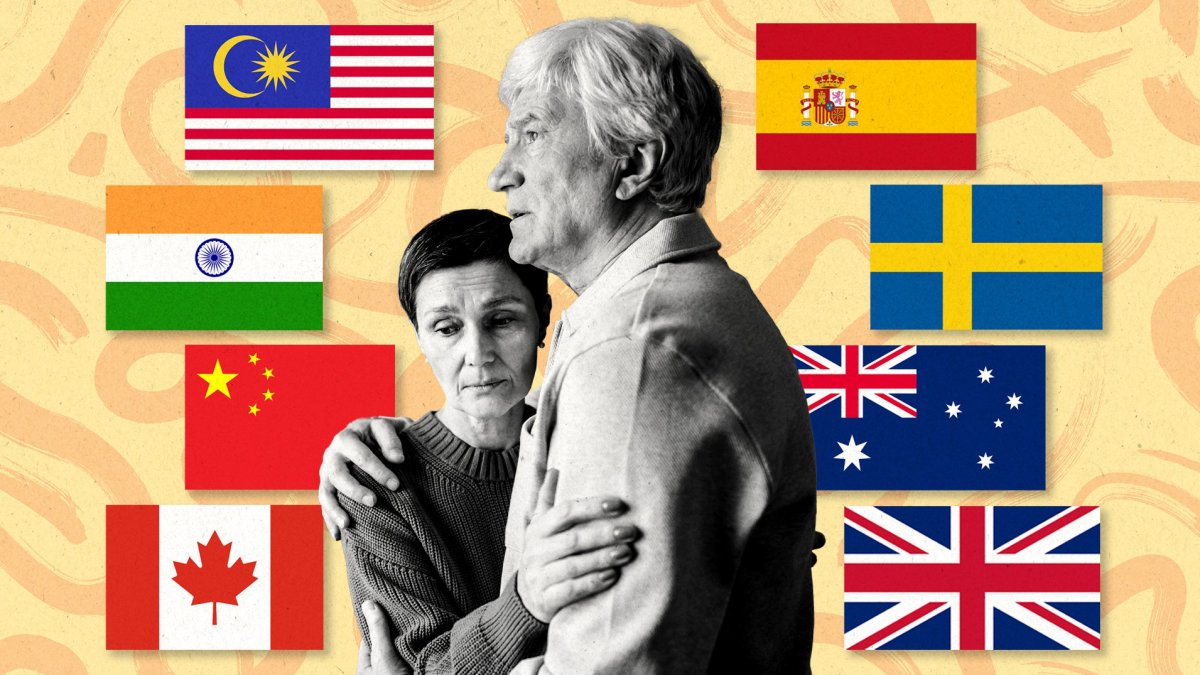
British grandparents have come bottom of an international league table of how often they see their grandchildren. Just nine per cent see their grandchildren every day, fewer than in any of the other 14 countries surveyed. The Family First Global Survey questioned more than 18,000 people across 15 countries and also found that in Australia, 10 per cent of grandparents see their grandchildren daily, compared with 12 per cent in Sweden and 14 per cent in Canada. Meanwhile, in Malaysia (68 per cent), India (65 per cent) and China (54 per cent). Family structures, living arrangements and expectations of grandparents can be very different. As a psychologist specialising in later life, what interests me isn’t simply how often grandparents see their grandchildren, but what makes those relationships meaningful. Is daily contact necessarily a sign of greater closeness? And what happens when grandparents have busy, independent lives of their own? Families no longer live around the corner One explanation is geographical distance. Adult children leave home to attend university, pursue careers, find affordable housing or settle with partners. Some move across the country; others move abroad. Even a journey of an hour or two makes casual visits difficult. Geography may help explain why Australia, Canada and the United States have relatively low levels of frequent contact. Large distances between cities and dispersed families create practical barriers. In countries such as India and Malaysia, multigenerational households and different expectations of family involvement can make daily contact more common. These arrangements reflect different economic circumstances, housing patterns and cultural expectations. We cannot assume one model is better than another.Everyone has a busy life — including grandparents One of the most revealing findings of the study is that 53 per cent of British grandparents identify children’s schedules as a barrier to spending more time together. Beyond school, children have homework, sport, music lessons, clubs and friendships. Weekends can be just as busy. Parents are juggling employment and household responsibilities. And grandparents are not necessarily sitting at home with empty diaries. Many are still working, through financial necessity or because they enjoy their work. Others are volunteering, travelling, studying, caring for older relatives or pursuing their own interests. The assumption that retirement means unlimited availability for grandchildren is increasingly outdated. Grandparenthood may be a cherished relationship without becoming someone’s entire identity. There’s also a distinction between enjoying time with grandchildren and providing regular childcare. A 2026 SunLife survey of 2,000 British grandparents found that 52 per cent provide childcare during the working week, while 27 per cent feel obliged to do so, up from just nine per cent in 2024. More than a third (37 per cent) wish they could spend more time having fun with their grandchildren rather than looking after them. More time doesn’t automatically mean greater closeness Perhaps the most fascinating finding is that frequent contact doesn’t necessarily correspond with feeling sufficiently involved. In India, where 65 per cent of grandparents see their grandchildren daily, 47 per cent nevertheless feel they are missing out on their grandchildren growing up. In Sweden, where just 12 per cent have daily contact, only 30 per cent report that feeling. These figures suggest that expectations matter. Someone accustomed to daily involvement might feel excluded when circumstances change, while another grandparent might feel perfectly connected through occasional visits and regular conversations. The research also found that 68 per cent of British grandparents would like more family time, compared with 78 per cent globally. Many clearly want greater contact, but that doesn’t necessarily mean daily involvement. Emotional closeness is about mutual affection, trust and belonging, not simply the number of hours spent together. What can we learn from grandparents overseas? In Spain, grandparents are often part of everyday family life. Erika Andersen, an American living in Spain, describes often seeing three or even four generations gathered in parks and plazas, with children playing while parents, grandparents and great-grandparents chat over coffee or cider. Families often remain geographically close, with adult children returning to their home areas when they start families. Living more than an hour away can be considered a considerable distance. But this closeness has another side. Grandmothers are frequently unpaid babysitters, and sometimes effectively run the household. Greater involvement can bring greater responsibility, whether welcomed or not. Swedish research offers another perspective. A study involving 63 people across three generations explored what grandchildren value in their relationships with grandparents. One ten-year-old said that though her grandfather was the mischievous one who allowed snacks while they watched films, it was her grandmother she felt closest to. They spoke often on the telephone, and she trusted her with secrets she didn’t want to share with her parents. What mattered wasn’t simply the activities they enjoyed, but the relationship of trust they had developed. For grandparents separated by greater distances, technology offers other possibilities. American grandmother Carol Steiner, living in Massachusetts, shares activities with her grandson Henry in Seattle through video calls. As she told AARP, they exchange drawings, complete puzzles and even take virtual walks looking for insects. Meanwhile, Elli Haffey, who lives in California while her grandchildren are in Australia, bought matching toys, books and magnetic tiles so they could play and share activities together over video calls. Both have found ways to do things with their grandchildren rather than expecting young children simply to sit and talk to a screen. These experiences suggest that meaningful relationships grow through shared rituals, ordinary companionship and taking an interest in children’s lives. Crucially, relationships need to be reciprocal. Grandchildren have their own interests and preferences, while grandparents need relationships that work for them too. A relationship, not a timetable Of course, some grandparents experience painful separation through family conflict, estrangement or circumstances beyond their control. Others live nearby but would welcome much greater involvement. We shouldn’t minimise those experiences. There is no single ideal model of grandparenthood. Some welcome extensive childcare responsibilities; others prefer occasional visits. Relationships change as grandchildren grow older, and grandparents’ own circumstances and preferences matter too. Rather than asking how often grandparents see their grandchildren, perhaps we should ask different questions. Do they enjoy their time together? Do grandchildren feel loved and supported? Can grandparents be involved in meaningful ways without sacrificing their independence? The British figures tell us how often grandparents see their grandchildren, but not whether they feel included, valued or emotionally close to them. Ultimately, being a good grandparent isn’t about how many days you spend together, it’s about the relationship you build with the time you have. Dr Denise Taylor is a chartered psychologist and author who writes about later life, work and meaning beyond full-time employment. Her latest book, ThriveSpan: Walking Gently Into What Matters Now, is out now
The crucial difference between grandparents in the UK and other countries
Full Article
Original Source
Read the full article at Inews →KhanList aggregates and links to publicly available news content. We do not host full articles from third-party sources. Always verify important information with original sources.