
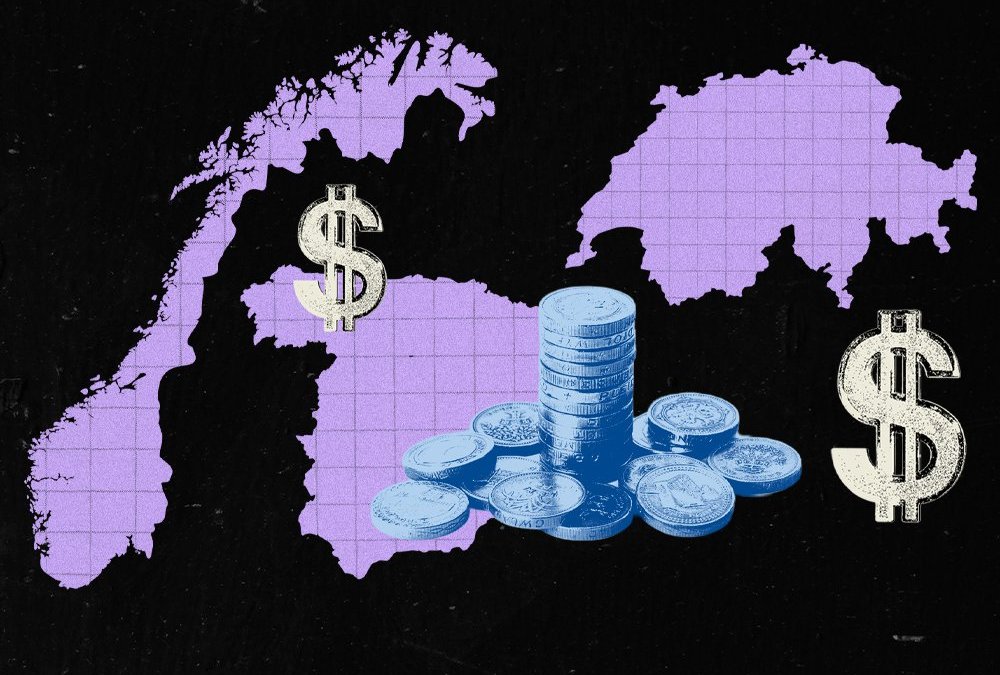
With Andy Burnham reported to be weighing up tax rises as he assumes office, some are calling for him to ramp up taxes on the richest people in the UK. Capital gains tax and income tax could go up for the wealthy, or Burnham could decide on a wealth tax, a levy on the entirety of a person or entity’s total worth. It’s a popular idea: last year YouGov found that 75 per cent of Britons backed it. Though other countries have brought in such a tax, they have had mixed success. And opponents suggest taxing the rich more would drive them abroad, and stifle the growth which Britain needs. So, should we tax the rich more? Entrepreneur Charlie Mullins, writer and broadcaster Zing Tsjeng and economist Professor Lucy Barnes give their perspectives. Public support for greater taxation of the rich is a majority position in polls and in scholarly research, in the UK and elsewhere. Yet what’s popular may not be what’s effective. That said, the economists’ consensus might surprise you: while they are very wary of potential adverse effects on investment (especially when it comes to corporate income taxes), a plurality of economists agree that wealth taxes could help raise revenue and reduce inequality in the UK. It is also uncontroversial among experts that taxes on income from labour – like income tax – and income from capital – like capital gains tax – should be equalised. At the moment, taxpayers earning an extra £1 in wages or salaries would pay 20p or 40p in income tax on that £1 (plus national insurance). Earning an extra £1 from capital gains, though, incurs a tax of 18p or 24p. Because most people with income from capital gains are in the higher tax bracket, there’s a big gap between the amount of tax owed on the same income, depending on whether it comes from work or from increases in the value of capital. What this highlights is that taxing the rich and levying a wealth tax are not exactly the same. The former means taxing the flow of money that they’re making every year; the latter means taxing what they’ve already got, in whatever form it exists. Only three European countries have an annual tax on net wealth: Spain, Switzerland and Norway. If we look at things through economic theory, the best system combines comprehensive taxes on income – and taking away some of the “special treatment” which income from capital rather than labour currently gets – with inheritance taxes and a wealth tax. The key job of a wealth tax in this system is to act as an indirect tax on unrealised capital gains – that is, paper profits of assets which wealthy people hold but have yet to see because they haven’t, say, sold shares which have increased in value. Despite public and expert support, movement towards higher taxes on the rich has been limited, after historical declines since the 1970s. A recent proposal to introduce a 2 per cent annual wealth tax in France was defeated in the senate last summer, despite widespread public approval and the support of seven Nobel laureates. One explanation for this is an outsize influence of the minority view. Another is the practical difficulty of good taxation of the rich. First is the threat of geographic mobility. Headlines about millionaires leaving the country may exaggerate this issue, but there is a real underlying logic – under typical tax rules. For example, the Spanish wealth tax is levied by the autonomous regions, but can only function properly with a national-level backstop to prevent competition between the regions causing a “race to the bottom” where each tries to lure the wealthy their way with preferential treatment. Galicia has adopted a 50 per cent discount, for instance, while Madrid and Andalucia have both effectively eliminated the wealth tax. However, this problem is the outcome of other choices made in the tax system, not a fundamental law of nature. Most countries use residence as the core eligibility criterion, so changing residence to avoid taxation is possible. But citizens of the United States are liable for US taxes on their worldwide incomes for their entire lives. Making tax obligations contingent on citizenship, rather than residency, mitigates the mobility issue. Other policy solutions, such as exit taxes, are used by many countries (Canada, Australia, France and Norway, among others) within residency-based tax systems. These don’t take away the appeal of moving completely, but they reduce the financial benefits of leaving a higher-tax system, as well as collecting some of the tax. The second difficulty in the effective taxation of the rich is specific to the taxation of assets, rather than income. To tax assets, we need to know their value, and this is often not straightforward. So how do we tax those assets? We could ask people to assess their value themselves, but this is obviously open to under-reporting, so it requires a robust audit and enforcement regime. Instead of just auditing, the tax authorities could be the ones to do the initial assessment. But this comes with the downsides of potential abuse (probably rare, but extremely serious) and high cost (inevitable, and important: the tax authorities would need to access and compile huge amounts of information). Existing systems instead tend to take a third path: assessing values, but not regularly updating them. The problem here is that the gap between what the value was assessed at and what it’s really worth gradually gets bigger and bigger. There are ways to correct this, like updating the assessment whenever the wealth is transferred – for instance, when a penthouse apartment or a megayacht is sold on. But that can lead to problems too. In California, for instance, property tax implications are now a major determinant of decisions (not to) move house, slowing down the whole market. On balance, the self-assessment and enforcement model is the most promising. But the devil, as always, is in the details. Most people think that we should tax the rich more, and international comparisons highlight potential pitfalls to avoid. Yet they do not suggest that we shouldn’t try.
The countries that show us how to tax the rich – and how not to
Full Article
Original Source
Read the full article at Inews →KhanList aggregates and links to publicly available news content. We do not host full articles from third-party sources. Always verify important information with original sources.