
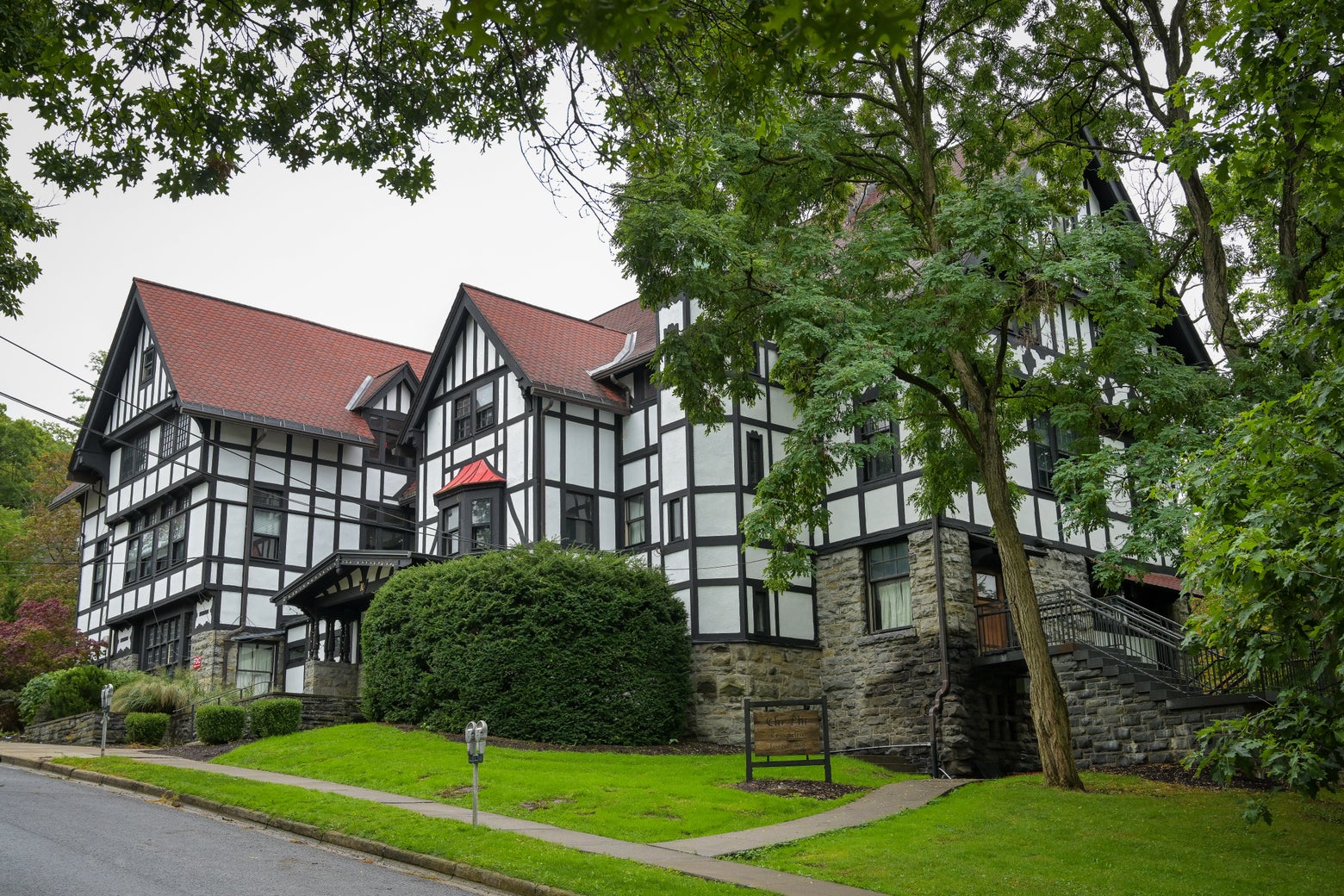
School The “Cornell Seven” case is no longer about the letter of the law. The Chi Phi fraternity house at Cornell University. Heather Ainsworth/AP Sign up for the Slatest to get the most insightful analysis, criticism, and advice out there, delivered to your inbox daily. The case of the “Cornell Seven,” the seven former fraternity members accused of drugging and gang-raping a 20-year-old woman, is a disturbing one. The alleged assault occurred in 2024, but criminal charges were not brought; now, the woman is suing her alleged assailants, as well as their fraternity, her former sorority, Cornell University, and the bar that served her alcohol that night. The men deny any wrongdoing; the district attorney says he had good reasons for not bringing a criminal case; and the university says it responded appropriately at the time. Much of the public seems to disagree, and there have been growing calls for criminal sanctions. As of this week, the Tompkins County district attorney has reopened the criminal case. The alleged details of this case are wrenching and sickening: A young woman went to a fraternity party to meet a guy she thought was her friend. They danced and drank, and, according to her statement to police, the first man asked Jane Doe if she would have a threesome with him and another friend; she said she agreed largely because she wanted to please the first guy. But then other guys entered the room; Jane Doe reports hiding under the covers and pushing various men’s hands away as they grabbed at her. She says the men offered her ketamine, and she took it, and as the night progressed she became extremely intoxicated, and other men had sex with her. Not mentioned in the police report but highlighted in the lawsuit is that some of the men were on Snapchat, sending messages about there being “free pussy” available and inviting other men to come over and join in. It’s that last fact—the Snapchat messages—that has most infuriated much of the public. And it should. It should be at the center of the conversation about sexual violence, consent, and male entitlement to women’s bodies. And as much as the public’s understanding of sexual violence has grown more sophisticated in the wake of various waves of the feminist movement and the gains made by #MeToo, the truth is that we are still abysmal when it comes to understanding, let alone publicly discussing, the ways in which sex, power, and male violence intersect. The Cornell case is a complex one, which makes it all the more difficult to traverse—to go beyond the legalese and actually talk about what we’re talking about. The demands for criminal prosecution have grown so loud that, in an unusual move, the district attorney published a letter explaining why he didn’t bring those charges in the first place. New York’s rape law is narrow: Sex with a person who is extremely intoxicated but conscious doesn’t count as rape if the alleged victim voluntarily drank or took drugs (as opposed to being secretly drugged or forced to drink). According to the DA, “Jane Doe’s statement described her participation in drug use and sexual conduct as voluntary, conscious, and consensual.” He then published part of the statement signed by Jane Doe. Whether that statement truly captures an interaction that was “voluntary, conscious, and consensual” seems less clear to me than it does to prosecutors. One also wonders why Jane Doe brought herself to the police station in the first place if all she had to report was voluntary, conscious, and consensual group sex—most people don’t have great fun consensual sex and then report it to the cops. In any case, it seems clear that New York’s sexual assault law was one barrier to prosecution; the police’s interpretation of Jane Doe’s allegations was another. Perhaps a fresh set of prosecutorial eyes will come to a different conclusion; perhaps a grand jury will decide an indictment is warranted; perhaps a jury will convict, or not. All we know is that right now, prosecutors are revisiting the case, and it has sparked national outrage. This time, though, there is a novel element at play. Several individuals and Cornell’s student newspaper have named the seven accused men; a former South Park writer is building a website that he says will include “names, photographs, documents, messages, and other information related to the case.” In one telling, this is transparency in the service of accountability; in another, a name-and-shame campaign of dangerous vigilantism. This is fraught territory: Extralegal attempts at justice are rarely carried out fairly, let alone with due care, and they often do not end well. Our criminal justice system has rules and procedures in place to maintain the presumption of innocence and to require the kinds of factual reviews and legal deliberations that are not possible on Twitter or TikTok. But it’s also true that the criminal justice system is as imperfect as the people who created it and who sustain it, which is to say that it is vastly flawed—especially when it comes to the kinds of crimes that are overwhelmingly committed by men against women, especially when those crimes are sexual in nature, and especially when they are committed in private. The vast majority of rapists never go to jail. Women the world over have suffered through sex that is violent and forceful and been told that’s normal, and certainly not illegal. The fact that one interpretation of the laws of the state of New York suggests that a person can have sex with a woman who is profoundly incapacitated, but as long as she chose to drink and remains conscious, her body is fair game, well, that in itself demonstrates just how not neutral the law can be, and whose assumptions and preferences it tends to reflect. The efforts to name the men and share information about the case speak to a truth felt deep in the bones of many women (and many men, too): that we can be abused and used as if we are little more than orifices for male power, bonding, and gratification, and then we are the ones who will shoulder the shame, the blame, and the consequences. “What happens if the law doesn’t apply?” is a harder conversation to have. It’s easy to fall back on legalism here and conclude that if the allegations don’t meet New York’s fairly high bar for rape charges, then there’s nothing to be done. And the particulars of the law might explain why the DA didn’t bring charges two years ago. But it doesn’t absolve the men or the institutions (Cornell, the DA’s office) involved. It doesn’t answer the larger social question that animates so many of these cases: How should we treat other human beings? Why do we shrug when men so often treat women so horribly? Why do we still presume that men simply are sexually predatory, extractive, and coercive, and that it’s on women to be the ever-vigilant guardians of sexual morality? And what should the social consequences be for behavior that is appalling, sadistic, and damaging, even if (especially if) it doesn’t meet the current definition of a crime? In this case, Jane Doe filed a lawsuit seeking damages, not criminal penalties or jail time (only a prosecutor can seek those). She is saying: These men did something egregiously wrong, and even if prosecutors didn’t believe it met the requirements for criminal prosecution under New York law, it was still wrong, and they should still pay a price. She’s also saying that Cornell didn’t respond appropriately. The school did shut down the fraternity and expelled two of the men, but the rest were allowed to stay with various disciplinary procedures; some reportedly saw their penalties decreased after they wrote essays. Her life has stalled out; theirs have ticked on. It’s helpful to look the particulars of this case in the face, not in asking if the facts meet the black-letter legal definition of a crime in the state of New York, but to ask if what happened was morally and ethically egregious enough to merit a broader social reckoning (and perhaps financial penalties from a lawsuit). What must have been going through the heads of the men involved here? How depraved and sadistic does one have to be to see an intoxicated, out-of-it young woman and decide that the appropriate course of action is to invite your friends over for “free” access to her body? Plenty of people have fun and consensual group sex. They don’t typically go to the police afterward. And if what Jane Doe and these men wanted was fun and consensual group sex, they could have arranged that for the next day when they were all sober. But let’s just be honest: Most sober and empowered 20-year-old women don’t want to have sex with more than a half-dozen men in a single night, and I suspect that the men in question knew that Jane Doe was not an enthusiastic participant but someone who had to be pressured and plied. Which may explain why the men in question pushed more drugs on her, and in intentionally demeaning ways—one allegedly put ketamine on her penis and told her to sniff it off, for example. It’s hard to conclude that the men in question weren’t pushing more drugs and alcohol because they knew that a more intoxicated young woman would be a less resistant one. None of us were in the room when the alleged rapes occurred, but the tone of the Snapchat messages offers a sense of the atmosphere, which seemed to be one of male bonding over a woman rendered person-less, nothing more than a “free pussy”—something the men enjoyed not simply because sex is a fundamental human pleasure and it feels good, but because they felt powerful and bonded by communally degrading the young woman in question. Her degradation, and the power they felt they derived from that, was the turn-on, not the sex itself. And “free pussy” also implies, although of course does not prove, that at least some of the men believed Jane Doe to be unable to consent—that this was a bunch of men having their way with an incapacitated girl-rendered-object, not a fun consensual group romp. It’s hard to read about this case and not also think of porn and the affects its total ubiquity has had on the minds and spirits of men. Much of even mainstream porn is shockingly violent; degradation and physical abuse of women is what’s titillating. The broader right-wing manosphere takes the violent misogyny of so much mainstream porn and applies it to a broader worldview that flat-out says women are not quite human. This is the misogynist swamp that so many young men swim in. That young men are inundated with sexualized violence does not, of course, absolve them of bad, sadistic, predatory, or illegal behavior. In this case, the reality of New York law may mean that accountability doesn’t come from jail time (although the law can be changed, and this case may serve as a good catalyst to doing just that). As a society, though, we get to decide what’s acceptable outside of the bounds of the law. If the law doesn’t allow for jail time, then what? Is a monetary judgment enough? Is public identification of the seven men warranted, or even a social good? How can we learn to talk about sex in a way that doesn’t position it as something women have and men get (including by pressure, coercion, and force) but that women then have to “take responsibility” for? And if people break these social rules, what should a noncriminal penalty entail? None of this requires litigating the details of this case, which are so far quite limited. But it does ask us to move beyond the purely legalistic and ask what is morally and ethically correct, and where behavior is so morally and ethically disgusting that it merits more punishment than our legal system is currently set up to dole out. Campaigns of wide-fire public shaming can have disastrous consequences; and also, shame is a powerful tool used in just about every society to draw lines around behavior. It’s often used badly. Sometimes, though, it’s productive and pro-social. It is wrong—very wrong, and an indicator of something extremely broken and sadistic—to sexually penetrate or otherwise sexually take advantage of a person who is incapacitated and not thinking clearly. Those taking advantage are almost always male. Those taken advantage of are hugely disproportionately female. And women’s experiences and beliefs have, for most of the history of the world, been ignored in the imagining, penning, interpreting, and enforcing of laws. Those are relevant facts, too. It is tempting to end this essay on a pithy note, or a call for what we should do next. I have no grand call to action here, except this: Men can choose to not do this. Men can choose to treat women the way they would like to be treated (I suspect that most men, when extremely drunk and high on ketamine and having reluctantly consented to some limited sexual activity, would not find it pleasant to have their condition advertised as “free ass” to random men on Snapchat). We can create a culture in which men who treat women this way are considered reprehensible, pathetic, and worthy of scorn, whether or not they have technically committed a crime. College Crime Law Sexual Assault Women
The “Cornell Seven” Rape Case Has Ignited the Country. Let’s Talk About What We’re Actually Talking About Here.
Full Article
Original Source
Read the full article at Slate →KhanList aggregates and links to publicly available news content. We do not host full articles from third-party sources. Always verify important information with original sources.