
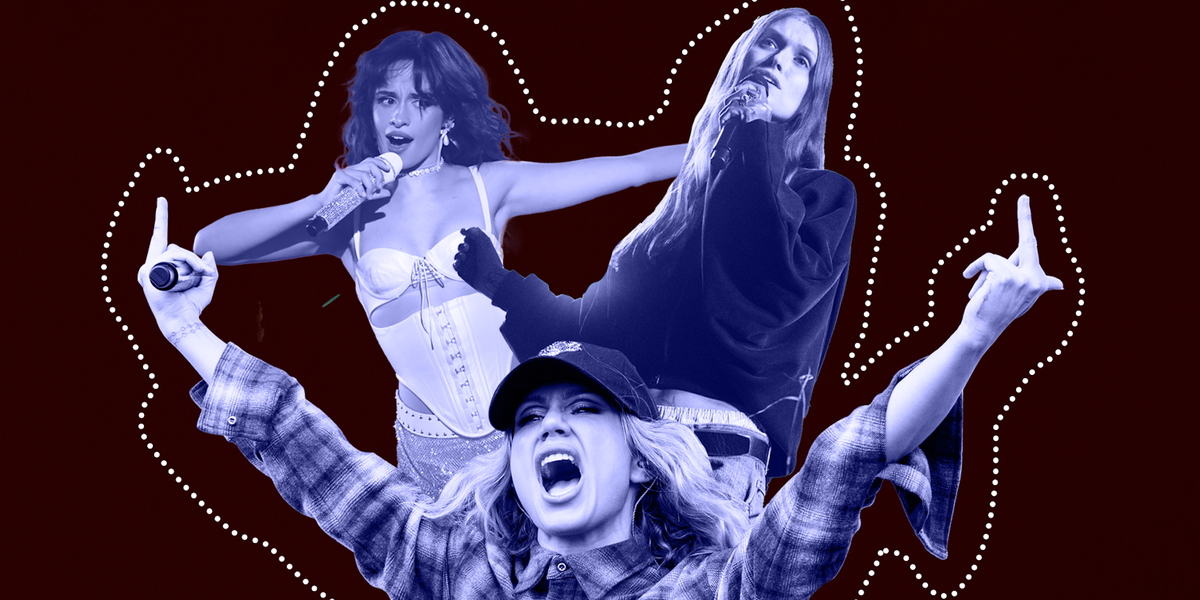
Khadija Horton for Cosmopolitan//Getty ImagesIt’s official: Slayyyter has graduated from being a gay guy music video night staple to a full-on Grammy nominee since dropping her first major-label album, WORST GIRL IN AMERICA.The underdog has seemingly become a Main Pop Girl before our very eyes. She drew a record-breaking 50,000 people at Lollapalooza and her first-ever headlining show at Madison Square Garden sold out in minutes. Her viral hit, “CRANK,” even landed a perfectly placed needle-drop in the equally awards-buzzy film Club Kid. These are only a fraction of the feats that prove her Best New Artist nod has been years in the making and, dare I say, rightfully earned.But what happens when the pains of her past finally catch up to her ascent? At the height of her breakout year, old social media posts using racial slurs resurfaced and introduced new fans to her regrettable history just as she was building momentum for the Grammys.Though she had previously taken accountability for her behavior in 2020, she seemingly surrendered to the recent “Slayyyter Is Over Party” conversations fueling Stan Twitter with a post on her private account.“This newfound attention is cool and all, but it’s unsettling about having people try to find things to ruin me with,” she reportedly wrote. “Why do you want to see me fail so bad?”Slayyyter isn’t the first pop star to have old social media behavior resurface as her career reaches new heights. Ethel Cain penned a four-page statement acknowledging her racist posts after the controversy surrounding them escalated, including the doxxing of her family and partner. When Camila Cabello’s use of the N-word resurfaced in 2021, she publicly apologized and took part in weekly racial healing sessions. While the circumstances aren’t identical, each situation raises questions about what accountability looks like when a pop star’s past follows them into a new chapter.Brendon Thorne//Getty ImagesAmy Sussman//Getty Images“Everyone has to be online to build their brand and promote their work in 2026, but a lot of times, the parasocial relationship that leads to monumental disappointment for some fans when they find out their fave isn't perfect is due to their being online,” comedian and podcast host Akilah Hughes, who called Slayyyter out for her recent response, tells Cosmopolitan.Hughes only discovered the artist this past year after hearing her songs in several New Music Friday roundups. She admits that she “was definitely paying attention” to each drop and “was ready to be ‘early’ on” her music until those old posts popped up on her social feeds.“I don’t think Slayyyter is necessarily a victim, though it’s definitely unfortunate that—as she’s put out this great album and is in the midst of a huge ascent—her own behavior is haunting her,” she explains.For Kiara Smith, a culture writer and podcast host who has followed Slayyyter since 2019, her posts brought a different kind of disappointment. At first, she was skeptical about the scandal’s reemergence.“It seemed like someone just resurfaced the posts to start drama, rather than actually caring about what she said,” Smith tells Cosmopolitan.In the heat of the hate train, users allegedly started piling on fabricated screenshots that falsely depicted her as targeting Black recording artist Normani. Smith acknowledges that while she should be held accountable for the real posts, the fake ones serve no additional purpose.Black trauma is not a hot-button topic to debate. Tweets like that hurt real people and should be treated seriously. — Kiara Smith“What she said was terrible and inexcusable, but we have to be accurate when sharing things so as not to cause further harm to Black people for no reason,” Smith shares. “Black trauma is not a hot-button topic to debate. Tweets like that hurt real people and should be treated seriously.”Hughes echoes a similar sentiment. “For a lot of young people, being the perfection police is a way to gain clout online,” she says. “Having an encyclopedic knowledge of the times everyone has messed up is akin to power.”She continues, “Offline, in the real world, people are much more willing to give grace and additional chances. Because real life affords nuance, and the internet affords none.“I think the internet is a very unforgiving place and has no place for nuance,” Smith adds. “If a person fucks up in real life, you can not fuck with them all you want. But in the end, I think everyone should want that person to be better and learn from their mistakes.”Offline, in the real world, people are much more willing to give grace and additional chances. Because real life affords nuance, and the internet affords none.— Akilah HughesBut is that grace extended equally? Can an artist—particularly a female artist—ever really overcome her past mistakes?Slayyyter did her part years ago, yet she’s forced to revisit her past and educate herself as she reaches new levels of fame. Male counterparts like Chris Brown and Morgan Wallen have historically been awarded second (and third…and fourth) chances for other serious offenses, yet have continued to enjoy commercial success and industry support.“We know that the internet and the world are way less forgiving to women. If you’re a woman, you have to do 10 times more to come back from a controversy,” Smith says. “Lots of people have had controversies where they say a lot of nothing, but when this first came out years ago, Slayyyter seemed genuinely apologetic and even donated to many Black people and organizations afterwards. Not to say that excuses it, but we have to consider the effort she’s already made.”John Medina//Getty ImagesJason Kempin//Getty ImagesTwo things can be true: while pop stars should be held accountable for such offenses, they should also be able to reflect and move forward. This isn’t to defend or endorse their actions, but to invite fans and artists to have more productive conversations—especially as this vicious cycle of scarlet letter-stamping continues to be normalized, particularly with female acts.Accountability doesn’t guarantee forgiveness, nor should it. But that doesn’t mean any possibility of growth should be off the table, and Slayyyter has seemingly come to peace with that.When describing her personal thesis behind WORST GIRL IN AMERICA to Cosmopolitan back in March, she nearly prophesied what her come-up would inevitably entail.“You can’t really escape where you’re from,” she said. “You can change and grow into something better, but the things that happen to you when you’re young—you carry them with you for the rest of your life.”
The Complicated Politics of Forgiving a Pop Star
Full Article
Original Source
Read the full article at Cosmopolitan →KhanList aggregates and links to publicly available news content. We do not host full articles from third-party sources. Always verify important information with original sources.