
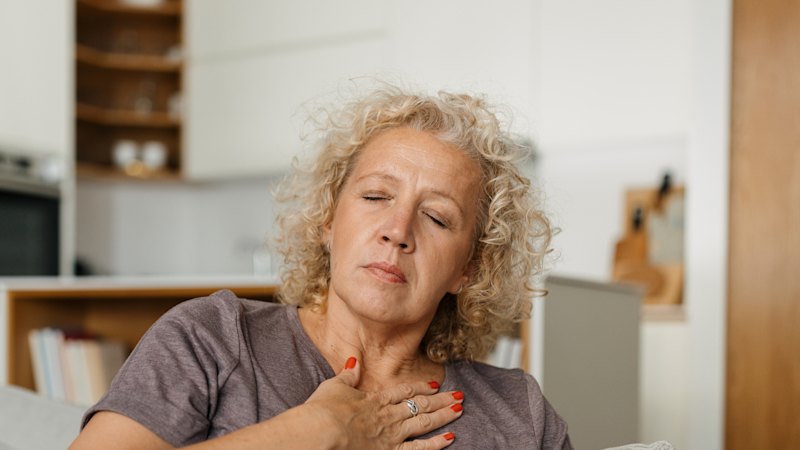
Erica SloanSeptember 3, 2026 — 5:00amThe feeling of a heart attack – which occurs when blood flow to the heart is limited or cut off – is often compared to an elephant stomping on your chest. But the signs can sometimes be far subtler, particularly in women. In fact, one of the most common symptoms in this group is something you might be tempted to push through or ignore: fatigue.To be sure, exhaustion with a clear cause, such as feeling tired after a long week of work or a few nights of bad sleep, is not something to worry about, says Arash Bereliani, a cardiologist at Beverly Hills Institute for Cardiology and Preventive Medicine. But “a significant, unexplained decrease [in energy] from your baseline” warrants concern, he says.Research suggests women are more likely than men to experience a range of warning signs in the days and even weeks leading up to a heart attack, with the most common being fatigue, occurring in up to 70 per cent of women who have a heart attack.When the heart struggle to pump enough blood, other organs and muscles miss out on oxygen, which leads to fatigue.Getty ImagesThe reason the two go hand in hand: a drop in blood flow to the heart causes it to “become stiff and not work properly,” Bereliani explains. Over time, it struggles to pump out enough blood, so your other organs and muscles begin to miss out on critical oxygen and nutrients, leading to low energy.But feeling exhausted, even to an extreme, doesn’t always set off alarm bells – for women or doctors. After all, “so many women are multitaskers and are time-starved and are caregivers and are working and have so many things on their plate,” says Amy Ahnert, a cardiologist with Atlantic Medical Group and director of the Women’s Heart Program at Morristown Medical Centre.In a large study of people under age 55 hospitalised for a heart attack, women were more likely than men to perceive their symptoms as simply stress or anxiety, and also to have seen a provider who did not attribute their symptoms to their heart.Below, experts explain why severe fatigue often accompanies a heart attack in women and how to tell if your exhaustion is a red flag.Why fatigue is a common heart-attack symptom in womenThe majority of research done on heart attacks has been conducted in men, “and for many years, we deduced that their typical symptoms – chest pain and tightness with radiation down the left arm – would extend to women,” Bereliani says. While it’s since become clear that women often experience other symptoms, science hasn’t quite caught up to explain why.One theory is related to differences in heart size and anatomy, Bereliani says. A heart attack might activate the nervous system in distinct ways or cause more pronounced changes in blood flow to different organs in men versus women, leading to varying symptoms.The most common cause of a heart attack, a buildup of plaque inside an artery, also tends accompany a rise in inflammation, Bereliani says. This seems to be more commonly linked with fatigue in women than it is in men (for reasons experts don’t fully understand).There are also distinctions in the kind of heart disease that tends to strike men versus women. Men are more likely to have obstructive coronary artery disease, which involves plaque blocking one of the three main vessels feeding the heart; women more often have microvascular disease, which occurs when the tiny vessels in the heart get stiff or fail to widen, Ahnert says.The latter commonly causes fatigue and chest pain in women outside of a heart attack, Bereliani says. But in certain cases, dysfunction in these little vessels can worsen over time, hindering more blood from reaching the heart and ultimately triggering a heart attack (even without a blockage in a main artery). It’s one theory for why certain women experience more incremental or vague symptoms such as fatigue over a longer lead-up period: rather than a discrete blockage, they have this more “diffused” disease process, Ahnert explains.If you feel exhausted doing tasks you normally do with ease, like blow-drying your hair, this could be cause for concern.Getty ImagesHow to tell regular tiredness apart from heart-related fatigueThe cardiac kind is usually profound and unexplained by any change in your lifestyle or activity level, Ahnert says. “It’s like, ‘I can’t do anything. I have no energy. I’m weak, and I’m tired.’”Ordinary tiredness also “improves with sleep or a weekend off,” Bereliani says. But with fatigue from heart disease, he says, you may wake up as tired as you were when you went to bed.It’s also a red flag if your fatigue tracks with physical exertion, Bereliani says. When you’re just exhausted from a rough week, chances are you can still walk the one kilometre that you’re used to walking every day, for example. But with heart-related fatigue, a physical task that was once no problem can wipe you out. Bereliani recalls a heart attack patient whose main symptom was that she suddenly couldn’t hold her arms up long enough to blow-dry her hair.Duration is another factor: if the fatigue seems to linger for days or weeks without an obvious cause, then that’s concerning too, Bereliani adds.Fatigue should also raise your suspicions of a heart problem if it comes alongside other possible cardiovascular symptoms, Ahnert and Bereliani say. While chest pain remains the most common sign of a heart attack across the board, women are more likely than men to have a heart attack without chest pain and to experience a greater number of non-chest-related symptoms, many of which can be subtle or ambiguous. Research also suggests that women might feel a kind of pressure in the chest, as opposed to outright pain. Or they may have pain that emanates from another part of the upper body versus the centre of the chest, Ahnert says.Both experts say women should especially look out for fatigue occurring alongside:Chest discomfortJaw, neck or back painShortness of breathNausea or vomitingIndigestion or heartburnSweatingDisrupted sleepDizziness or lightheadednessWhen to see your doctor or go to the emergency roomFeeling a bit fatigued is not necessarily a reason to make a doctor’s appointment. But “if it’s persistent, if it’s exertional, if it’s associated with other symptoms, if it doesn’t get better [in a few days] – then you need to contact your doctor and make sure everything is OK,” Bereliani says.Above all, Ahnert says, it’s important to trust your instincts. If you feel like something isn’t right, and you’re getting blown off by your health care provider, seek another opinion, she says.Fatigue that feels debilitating or is accompanied by another symptom that limits your ability to go about your daily life – such as not being able to catch your breath, a distinct new upper-body pain or profuse sweating – is reason to go to the ER, Ahnert says. (It’s safest to call 000 instead of getting a taxi or friend to drive, she emphasised, because if you are having a heart attack, you could experience cardiac arrest or a life-threatening arrhythmia while en route.)Ultimately, Ahnert says, if the thought crosses your mind, it’s usually better to call 000 than to delay. “For the most part, women tend to underestimate their symptoms,” she says. “I’d rather you be wrong and be reassured than to find out afterward that we missed a big heart attack.”Washington PostMake the most of your health, relationships, fitness and nutrition with our Live Well newsletter. Get it in your inbox every Monday.From our partners
The common heart attack symptom many women ignore
Full Article
Original Source
Read the full article at Smh →KhanList aggregates and links to publicly available news content. We do not host full articles from third-party sources. Always verify important information with original sources.