
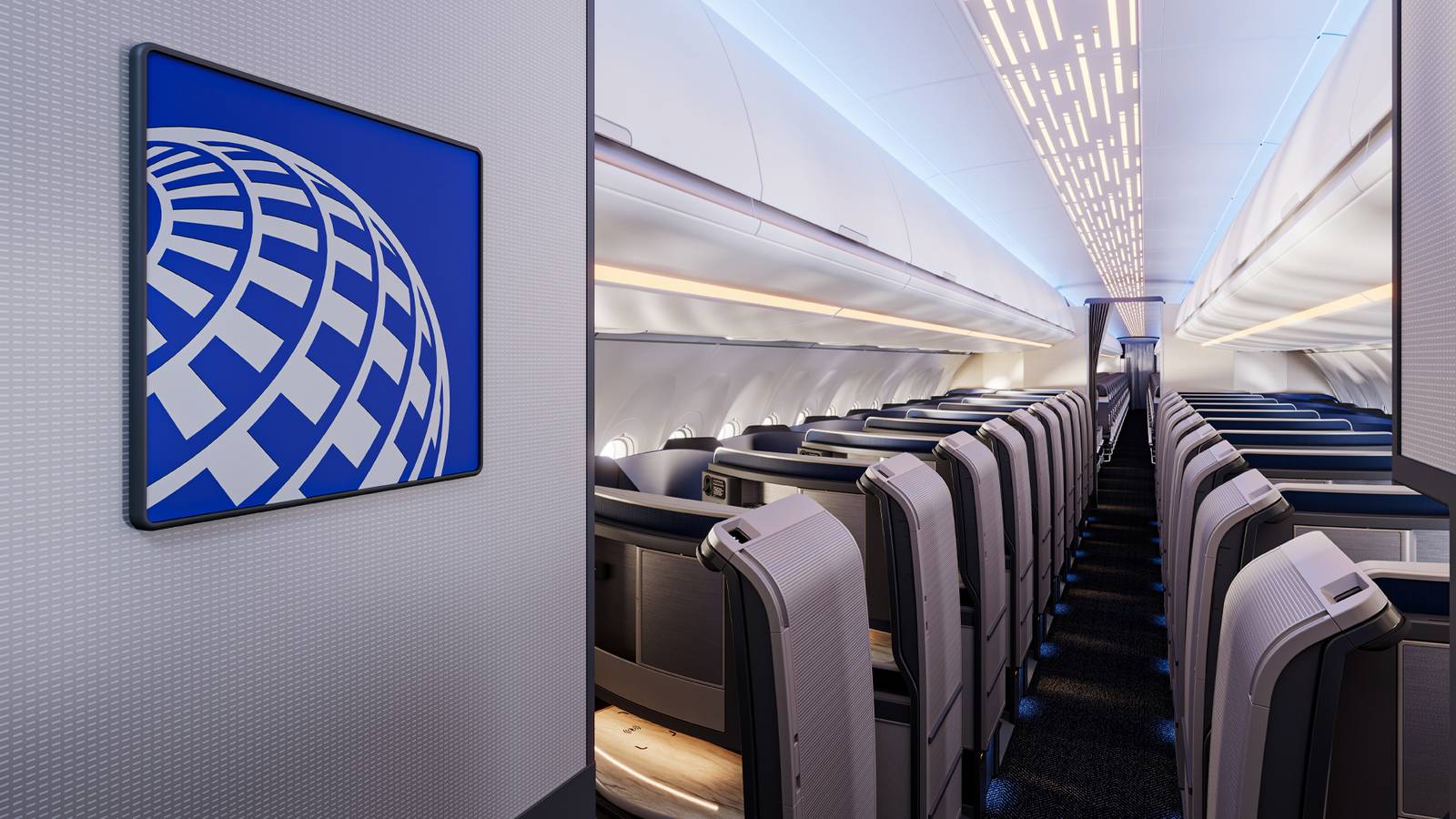
Published Nov 14, 2026, 9:00 AM EST Daniel comes to Simple Flying with a business focused approach to the aviation world. Daniel enjoys analyzing strategy and how companies move against each other to gain a step ahead in the skies. Besides strategy, Daniel also has a passion for aircraft design and the history of aviation. Based in New York American Airlines and United Airlines now both fly the Airbus A321XLR, a new long-range narrowbody that promises excellent economics and enough range to comfortably serve Europe nonstop from the US. Nowadays, however, business class passengers expect not just lie-flat seats, but direct aisle access, and this is hard to accomplish on a narrowbody. Direct aisle access business class seat models are generally much longer than they are wide, and this is an inefficient use of space on a narrowbody. With narrowbodies increasingly being used on longer flights, seat manufacturers have developed new direct aisle access lie-flat models specifically for single-aisle jets. American Airlines has selected the Collins Aerospace Aurora for the A321XLR, a herringbone model with sliding doors where seats face the aisle at an angle. United Airlines has selected the Elevate Altitude, a very similar seat model with doors. These and other similar models represent the next innovation in business class seat design for narrowbodies, and the reception has been mixed. The New Seat Models Being Introduced By Airlines Credit: American Airlines Lie-flat business class seats have been around for years on narrowbodies, with the Thompson Vantage and Collins Aerospace Diamond being the two most common platforms used for A321s, 737s, and 757s. While they offer great comfort and a bed, they do not offer direct aisle access, and a widebody business class seat model isn't space-efficient for these planes. Then in 2020, Thompson Aero Seating revealed the VantageSOLO, a new direct aisle access pod designed specifically to work on narrowbodies. The VantageSOLO is a herringbone model, a seating configuration that has generally fallen out of favor in the widebody market due to a lack of privacy, storage, and ergonomics. The VantageSOLO, however, has a significantly more ergonomic and modern design than earlier herringbone seats, allowing for greater personal space and privacy. The seat can also be equipped with a sliding door, which has become an expectation for top-of-the-line business class products. The subsequent Collins Aurora and Elevate Altitude are quite similar to the VantageSOLO, while Safran and Stelia have also debuted reverse herringbone seat models optimized for single-aisle jets. In addition, the Vantage and Diamond remain popular with narrowbody operators, although the newer seat models are becoming increasingly common with airlines. While the reverse herringbone models have found their customer base, the herringbone models are becoming particularly popular with airlines, but not passengers. Problems With Herringbone Seats Credit: American Airlines Long-time reviewer Ben Schlappig at One Mile At A Time described passenger reactions to American's Flagship Business cabin on the A321XLR as 'I've Never Seen Passengers So Unhappy'. According to him, his fellow travelers had commented to one another about the lack of personal space, while customers walking through the aisle were confused about why the seats faced away from the window. Considering how new the product is, the reactions of passengers to these seats are hardly ideal. United's A321XLR has been in service for much less time, but some people have already criticized the seat for being angled towards the aisle, making it difficult to look out the window. Similar criticisms have also been made against the Thompson VantageSOLO, in service with carriers like JetBlue and Iberia. As a whole, while the new generation of herringbone seats represents a significant improvement over their predecessors from the 2000s, they're not universally loved by passengers. The Stelia Opera SA is another new narrowbody-optimized lie-flat seat model, and importantly, it's a reverse herringbone seat, where the seats face away from the aisle. This seat, in service with carriers such as Etihad Airways and ITA Airways, has been met with much more positive feedback, due to the extra space and superior ergonomics that it offers compared to herringbone seats. Safran is also selling the similar VUE seat, while Elevate offers the reverse herringbone Ascent Narrowbody. Why Herringbone Seats Are Catching On Again Credit: George Mutch I Shutterstock Herringbone seats are much more space-efficient than reverse herringbone seats, as the entrance to the pod can also be used for the bed when the seat is fully reclined, whereas this has to be a separate area on a reverse herringbone seat. On a twin-aisle aircraft, a reverse herringbone seat can overcome this disadvantage by being configured with a lower angle relative to the sidewalls, allowing airlines to install four seats per row. On smaller widebodies, such as the Airbus A330 and Boeing 787, herringbone seats would need to be configured three-abreast due to how much lateral space they take up. While they're more space-efficient longitudinally, they're less space-efficient laterally. As such, there's not much of an advantage to a herringbone seat, while early seat models were widely considered inferior to later reverse herringbone models. Current Narrowbody Lie-Flat Seat Models Being Used By Airlines Description Select Operators Collins Aerospace Aurora Herringbone direct aisle access lie-flat American Airlines, Air Canada Collins Aerospace Diamond Four-abreast lie-flat Copa Airlines, STARLUX Airlines Elevate Altitude Herringbone direct aisle access lie-flat United Airlines Elevate Ascent Narrowbody Reverse herringbone direct aisle access lie-flat Alaska Airlines (future) Safran VUE Reverse herringbone direct aisle access lie-flat Delta Air Lines (delayed) Stelia Opera SA Reverse herringbone direct aisle access lie-flat Etihad Airways, ITA Airways Thompson Vantage Staggered lie-flat Aer Lingus, SAS Thompson VantageSOLO Herringbone direct aisle access lie-flat Iberia, JetBlue, Saudia In a single-aisle 1-1 configuration, however, an efficient seat needs to be wider than it is long, since each seat takes up the equivalent of three economy seats, as opposed to on a widebody where they take up two or 2.5 economy seats laterally. Modern herringbone seats can be installed with a pitch as low as 32 inches (81.3 cm), whereas the Stelia Opera SA has a typical pitch of 38 inches (96.5 cm). On a narrowbody, this can cost one or two rows, which is simply lost revenue. The Safran VUE is designed with a minimum pitch of 33 inches (83.8 cm), which would make it competitive with the herringbone seat models. However, this seat, originally meant to debut with Delta Air Lines, has faced significant certification delays due to FAA crash test failures, and it's been reported that Delta could potentially move away from the VUE altogether. With such a tight pitch, it also remains to be seen if the seat would actually be an improvement over herringbone models. The Realities Of Flying The A321XLR Credit: RTX While cost is often focused on when discussing airline operations, revenue is just as important, and the A321XLR is not a winner when it comes to revenue. Depending on specific configurations, the aircraft may only carry 150-180 seats in a typical full-service layout, and this simply isn't a substantial amount when you consider that the aircraft will be operating six to eight-hour flights, often with an augmented crew. In addition, the aircraft won't be able to carry substantial cargo. Because the aircraft doesn't generate a significant amount of revenue and floor space is limited, interior efficiency becomes extremely important. On a widebody, choosing a less space-efficient seat might be worth it if capacity is not cut down substantially, since business class cabins are usually rather large and airlines can be flexible with lavatory and monument arrangements to preserve capacity. Sacrificing a row or two of business class on an A321XLR is a much bigger problem. The aircraft's selling proposition is its incredibly low costs, but its small size means that airlines will need to be laser-focused on maximizing every square inch of space, even more than on a widebody. As such, the herringbone seats should remain incredibly popular with carriers looking to offer direct aisle access. Meanwhile, more spacious products like the Stelia Opera SA will primarily be selected by a smaller number of airlines looking to differentiate themselves with a more spacious product. The Other Challenges Of Flying On The A321XLR Credit: Pavel1964 I Shutterstock One of the least thought-about aspects of flying on a long-range airliner is the lavatory situation. Generally, there are always multiple present. However, on the A321XLR, most airlines only install one lavatory for business class passengers, located at the front of the cabin. Not only do all passengers share this lavatory, but it has to be shared with the pilots as well. Meanwhile, the A321XLR reportedly cannot accommodate a mid-cabin lavatory due to its plumbing, which means that all remaining lavatories are clustered at the rear. From a service perspective, the A321XLR only has one aisle, which can be challenging for cabin crews on long-haul flights. American Airlines has also faced an issue where crews need to store passengers' in-flight entertainment monitors to perform service, although this seems specific to the airline and the seat model used. Furthermore, the herringbone seats being increasingly used tend to be light on storage, requiring customers to mainly use the overhead bins. Operationally, the A321XLR lacks dedicated crew rest compartments, which means that airlines will need to block seats in the passenger cabin on longer flights. Because the aircraft is already small and will often be operating close to its payload-range limitations, it won't be able to carry a significant amount of cargo on most of its real-world missions. While the plane certainly has its advantages, it does also come with certain compromises that airlines will need to accept when flying this aircraft.
The Common Complaint Premium Passengers Have After Flying American & United Airlines' Newest Narrowbodies
Full Article
Original Source
Read the full article at Simpleflying →KhanList aggregates and links to publicly available news content. We do not host full articles from third-party sources. Always verify important information with original sources.