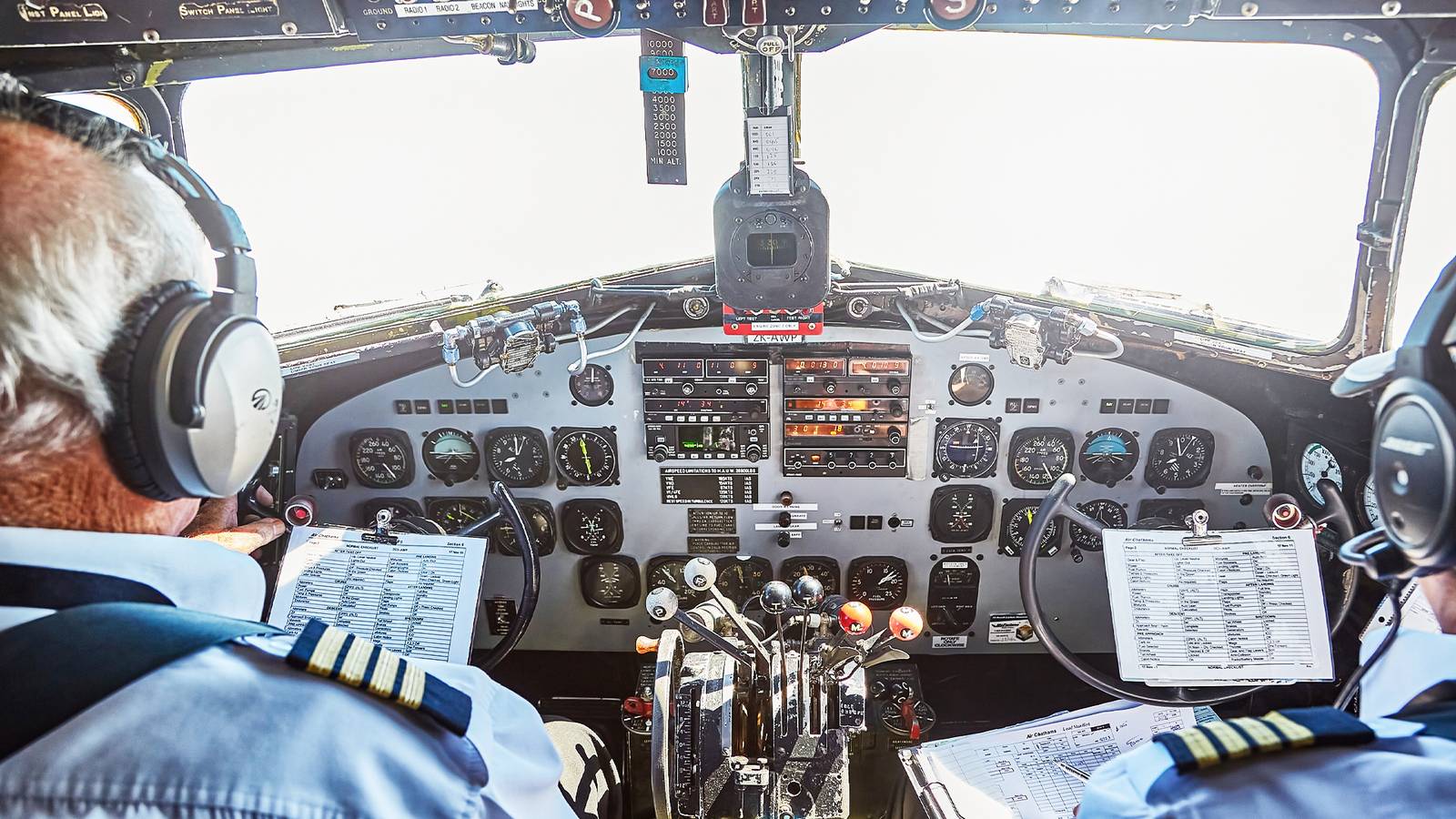
Published Aug 16, 2026, 3:00 AM EDT Jack comes to Simple Flying with a lifelong interest in all things aviation. He holds a degree in Aerospace Engineering from Georgia Tech, and is a certified private and remote pilot. Beyond these experiences, Jack previously worked for a corporate flight department where he gained first-hand experience in the world of business aviation. Currently, Jack works in the professional services industry and continues to build his flight hours outside of work. Passengers boarding an airliner often catch a glimpse of the flight deck before the cockpit door closes to see pilots reaching across the instrument panel, touching switches, adjusting knobs, and scanning displays in what appears to be a carefully rehearsed sequence. Only after completing those actions does a pilot typically pick up a written checklist and read it aloud. To an outside observer, the order seems backward. Why perform dozens of tasks from memory before consulting the document designed to prevent mistakes? The answer lies in a cockpit technique known as a flow. Rather than treating the checklist as a step-by-step instruction manual, airline crews and other professional pilots are trained to configure the aircraft using standardized memory patterns before verifying every critical item with the checklist. The result is a workflow that combines speed with redundancy. A flow allows pilots to work efficiently during time-sensitive phases of flight, while the checklist provides an independent confirmation that nothing was overlooked. Although the Federal Aviation Administration does not publish a universal definition of cockpit flows, the concept has become a cornerstone of standard operating procedures because it gives crews two separate opportunities to detect an error before the aircraft leaves the ground. A Flow Is A Choreographed Memory Pattern, Not A Checklist Credit: Shutterstock A cockpit flow is best understood as a physical routine rather than a written procedure. Instead of reading a list and performing each action one at a time, pilots move their hands through the cockpit in a predetermined pattern, configuring switches, selectors, and controls from memory. The sequence is practiced until it becomes second nature, allowing crews to prepare the aircraft quickly while maintaining a consistent rhythm regardless of workload or distractions. Rather than grouping actions by aircraft system, pilots follow the physical layout of the cockpit, moving in an orderly path across the flight deck. AOPA describes flows as progressing in a logical direction, typically from left to right or from top to bottom, so every switch and control is encountered once without unnecessary backtracking. The objective is consistency. Performing the same movements in the same order every flight reduces the likelihood of overlooking an item or repeating one unnecessarily. This approach also explains why flows are not standardized across the aviation industry. The FAA publishes guidance for checklist design and encourages operators to develop comprehensive standard operating procedures, but it does not prescribe a universal cockpit flow. Instead, airlines, manufacturers, and training organizations build procedures around the specific layout of each aircraft type. A Boeing 737, an Airbus A350, and a Beechcraft King Air all have different cockpit arrangements, so their flows naturally differ even though the underlying philosophy remains the same. That flexibility is one of the technique's strengths. Pilots are memorizing a path through a familiar workspace, and by associating each action with a specific physical location, the flow becomes easier to recall under pressure and more resistant to interruptions than a sequence learned only by rote. Why Cockpit Flows Follow Geography Instead Of Systems Credit: Shutterstock The practical advantage of a cockpit flow becomes clear when examining how it is performed in a real aircraft. In a King Air, for example, the "first flight of the day" flow does not begin with a checklist or a review of individual aircraft systems. Instead, it starts at the pilot's left subpanel and progresses in a deliberate left-to-right sweep across the cockpit. Once that pass is complete, the pilot moves to the fuel panel before returning for a second left-to-right scan after electrical power has been established. Every movement follows the cockpit's physical layout rather than grouping tasks by electrical, hydraulic, or fuel systems. That sequence may seem unusual, but it reflects the way people naturally interact with their environment. A pilot is less likely to miss a switch by moving methodically across the panel than by mentally jumping between unrelated systems scattered throughout the cockpit. The flow eliminates unnecessary hand movements and reduces the cognitive effort required to remember where the next task belongs because the cockpit itself becomes the memory aid. The same philosophy extends beyond the preflight setup. Before engine start, before taxi, before takeoff, and after landing, crews perform flows that mirror the locations of the controls needed for that particular phase of flight. Over time, those physical movements become so familiar that experienced pilots can complete much of the configuration process almost instinctively while still maintaining full awareness of each action they perform. The King Air example illustrates why cockpit flows are often described as choreography. Every reach, glance, and switch movement has been deliberately placed within a sequence that balances efficiency with accuracy. Rather than relying on memory alone, pilots rely on the physical organization of the cockpit to guide them through the preparation process in the same dependable order on every flight. The Checklist Is An Audit, Not An Instruction Manual Credit: Shutterstock Once the cockpit flow is complete, the written checklist comes into play. Contrary to what many passengers assume, this is not the moment when pilots begin configuring the aircraft. Most of the required actions have already been performed during the memory flow. The checklist serves a different purpose: confirming that every critical item was completed correctly before moving to the next phase of flight. AOPA describes this as the "do-verify" method. Pilots first accomplish the required tasks from memory using a standardized flow, then read the checklist to verify that nothing has been missed. This provides two independent opportunities to catch an error. If a switch was overlooked during the flow or inadvertently left in the wrong position, the checklist offers a final chance to detect the mistake before it can affect the flight. This philosophy also shapes how professional checklists are designed. FAA guidance for standard operating procedures recommends that checklists contain only operationally relevant items, follow the sequence in which actions are normally performed, and reserve challenge-and-response verification for the most safety-critical tasks. The goal is to keep checklists concise and practical rather than turning them into lengthy instruction manuals that increase workload during busy phases of flight. Treating the checklist as a verification tool also makes it more effective after interruptions. If a radio call, maintenance question, or operational delay breaks the crew's concentration, pilots can resume their standardized flow before using the checklist to confirm the aircraft's configuration. Instead of relying entirely on memory or on a written list alone, the two methods complement one another, creating a layered process that has become standard practice throughout professional aviation. How Habit Patterns Keep Pilots Ahead Of The Aircraft Credit: Shutterstock Flows are especially valuable during phases of flight when workload rises rapidly, and there is little time to consult a lengthy checklist. After takeoff, for example, the aircraft is climbing, communicating with air traffic control, retracting high-lift devices, accelerating, and preparing for the next clearance, all within a matter of minutes. To manage those competing tasks efficiently, pilots rely on compact memory patterns that bundle related actions into a single routine. King Air Magazine again illustrates this concept with the post-takeoff "Y Pattern." As the aircraft climbs away from the runway, the pilot performs four actions in a fixed order: landing gear up, landing and taxi lights off, flaps up, and yaw damper on. Rather than recalling four independent checklist items, the pilot associates them with one practiced movement through the cockpit. The pattern becomes a mental shortcut that reduces workload while ensuring the aircraft is configured correctly for climb. The same philosophy appears throughout airline operations. Different aircraft and operators develop their own memory aids for climb, descent, approach, and after-landing procedures, but each one is built around repetition and consistency rather than improvisation. By performing the same physical sequence every flight, crews develop habits that remain reliable even when distractions, weather, or time pressure increase. These habit patterns are not intended to replace discipline or encourage shortcuts. Instead, they allow pilots to complete routine configuration tasks efficiently so they can devote more attention to navigation, weather, traffic, and communication. When paired with a written verification checklist, they create a system that balances efficiency with safety-critical cross-checks, helping crews maintain accuracy without sacrificing situational awareness. Why Every Airline's Flow Looks Different But Follows The Same Logic Credit: Airbus There is no universal cockpit flow that every airline or aircraft follows. A captain transitioning from a Boeing 737 to an Airbus A350, or from a regional jet to a widebody, must learn a new set of memory patterns because the locations of switches, displays, and controls are different. Even operators flying the same aircraft type may tailor their flows to match company standard operating procedures, provided they remain consistent with manufacturer guidance and regulatory requirements. Despite those differences, the underlying philosophy rarely changes. Every flow is designed to move through the cockpit in a logical sequence that minimizes unnecessary hand movements and creates a repeatable routine for both pilots. Crews train those patterns until they become second nature, allowing each pilot to anticipate where the other is in the process and making it easier to recognize if a step has been skipped or interrupted. That standardization is particularly valuable in multi-crew operations. Because both pilots know the sequence being followed, they can coordinate their duties without verbalizing every action. Once the flow is complete, the checklist provides an independent cross-check that confirms the aircraft is correctly configured before the flight progresses. The combination of standardized memory patterns and written verification has become a defining feature of professional cockpit operations, helping explain why the seemingly routine hand movements passengers observe before departure are anything but random. Quiet Choreography Behind Every Safe Flight Credit: Shutterstock To passengers, the cockpit flow can look like a series of routine hand movements performed almost automatically before the checklist appears. In reality, those movements represent one of aviation's most effective human-factors tools. By turning aircraft configuration into a practiced geographic sweep, pilots reduce mental workload, create consistent habits, and establish a reliable foundation before independently verifying every critical item with a checklist. The distinction is an important one. A flow is designed to accomplish the work, while the checklist is designed to confirm it. Together, they provide two separate opportunities to identify an omission before it can affect the flight. That layered approach has become a defining characteristic of modern cockpit operations because it recognizes a simple reality: even experienced pilots benefit from systems that make the correct action the easiest one to perform. As flight decks continue to evolve with larger displays, more sophisticated automation, and increasingly capable flight management systems, the principle behind cockpit flows is unlikely to change. Individual patterns may be adapted for new aircraft and new technologies, but the objective will remain the same. Pilots will continue relying on disciplined, repeatable movements that keep them ahead of the airplane, allowing the checklist to serve its intended purpose as a final verification rather than a first instruction.
The Choreographed Cockpit Sweep Pilots Run From Memory Before The Checklist Even Comes Out
Full Article
Original Source
Read the full article at Simpleflying →KhanList aggregates and links to publicly available news content. We do not host full articles from third-party sources. Always verify important information with original sources.