
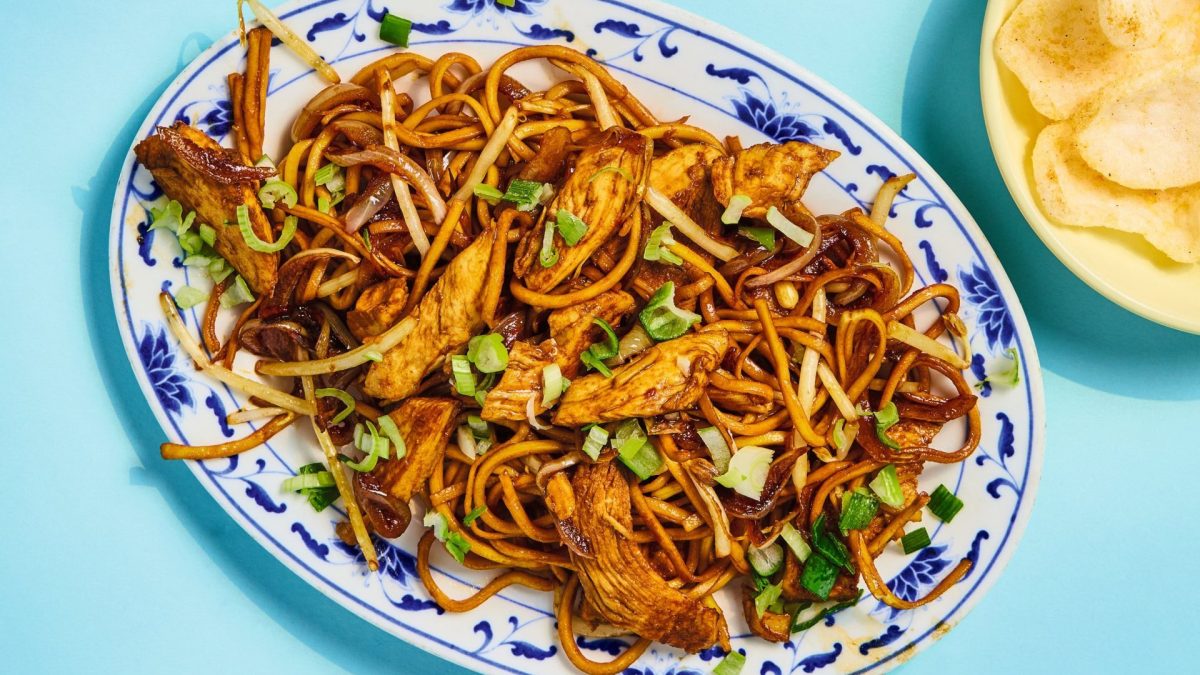
Everyone loves a Chinese meal, but cooking it at home remains a mystery for many. Chin and Choo Taylor have revealed some of the cuisine’s secrets in their new book, The Ultimate Chinese Takeaway Bible, which is packed with 150 easy recipes to try. They have promised to help anyone cook like an authentic takeaway chef. Here are some of their favourite dishes… Shorts Chicken chow mein (dry) Serves 1-2 1 chicken breast 1 nest of noodles 1½ tbsp vegetable oil ½ small onion, sliced 1/3 tsp MSG (available to buy online, and at most supermarkets) 1 tbsp dark soy sauce 1 tsp light soy sauce Good handful of bean sprouts 2 spring onions, diced, to garnish This is the most-ordered noodle dish in any takeaway. Start by poaching the chicken breast. Add enough water to a high-sided saucepan to be able to submerge the chicken and place over a high heat. Bring the water temperature to 80°C/176°F, then place the breast in the water and poach for 30 to 40 minutes, making sure the water temperature never goes above 90°C/194°F or drops below 80°C/176°F. You’ll need to cook it until the inside temperature of the chicken reaches 80°C/176°F. Remove the chicken and place in cold water until cooled. Be patient – if you cut it while it’s hot or warm, it will tear. We cut the breasts into slices for all of our main dishes. Find the grain, which is the direction of the muscle fibres, and cut across it. If you think the slices are too wide, cut them in half. Now place a pan with enough water to submerge the noodles on to boil. Once boiling, place the nest into the water and bring back to the boil. If using thin noodles, use chopsticks or tongs to agitate them so they loosen. Boil for three to four minutes (two to three minutes for thinner noodles), then drain. Fill the pan back up with cold water, over the noodles, repeating the process two to three times – this stops them from overcooking. Leave to drain for 10 minutes. Place the oil in a pan over a high heat and heat until very hot. Add the onion and move it around every 10 seconds until it starts to brown. Add the chicken and cook for a few minutes until it starts to brown, stirring every 10 to 15 seconds. Add salt and the MSG. Stir, then let the MSG brown. Add the noodles and leave to sit for 10 seconds, then stir and leave to sit for a further 20 to 30 seconds. Repeat this for two to three minutes. When the noodles have softened, mix in the soy sauces, then the bean sprouts and cook for another two to three minutes. When the bean sprouts are cooked through, serve garnished with the spring onions. Kung Po chicken Kung Po chicken Serves 1 1½ tbsp vegetable oil ¼ onion, diced 150g pre-prepared poached chicken (see chicken chow mein recipe, above) Handful of drained canned pineapple chunks in syrup 1/3 green pepper, cubed 1 tsp garlic purée 1/3 tsp MSG 1/3 tsp salt 2 tsp spicy hot bean sauce 300ml sweet and sour sauce 20g canned water chestnuts 20g canned bamboo shoots 2 tsp sugar Drop of dark soy sauce Potato starch slurry For the cashews: 200ml vegetable oil 60g unroasted, unsalted cashew nuts Chef duo Chin Taylor with his mum, Choo Taylor Start by preparing your cashews. Put the oil in a small saucepan and bring to a medium heat. Add the cashews and leave for two to three minutes, then remove from the oil and drain on kitchen paper. They may look pale, but they will continue to brown after removal from the pan. Heat the 1½ tablespoons of vegetable oil in a pan over a high heat until hot, then add the onion and cook for 20 to 30 seconds. Now add the chicken and pineapple and cook for 30 to 40 seconds – the browner your pineapple, the better. Add the pepper and cook until it catches and slightly caramelises. Add the garlic purée, MSG and salt and stir for 20 to 30 seconds, making sure the garlic doesn’t burn. Now add the hot bean sauce and stir for 20 to 30 seconds. Add the remaining ingredients except the soy and potato starch slurry, mixing well. Bring to the boil and add the soy sauce, for colour, then simmer for one to two minutes. Thicken to your desired consistency with the potato starch slurry, place on a dish, garnish with cashew nuts and serve. Note: to make the potato starch slurry, combine potato starch and cold water in a ratio of 1:1.2, mix and use immediately. Garlic and oyster sauce with pak choi Garlic and oyster sauce pak choi Serves 1-2 2 tbsp vegetable oil 200g pak choi, leaves separated 1/4 tsp salt 1/3 tsp MSG 3 garlic cloves, finely chopped 1½ tbsp oyster sauce 100ml water 1 tbsp Chinese rice wine 1 tsp light soy sauce Potato starch slurry Add the vegetable oil to a wok or frying pan and place over a high heat. When hot, add the pak choi. It will pop and spit but this is key to getting a deep flavour running through the dish. Add the salt and MSG and stir-fry until the pak choi starts to char and brown. When this happens, add the garlic and stir-fry for 20 to 30 seconds; make sure that the garlic doesn’t burn or it will go bitter. When the garlic is starting to brown, add the oyster sauce and stir it in, then add the water, rice wine and soy sauce. Stir in, bring to the boil and cook for 30 to 40 seconds, before thickening the sauce with potato starch slurry, adding a little at a time and stirring. When it’s at your desired consistency, it’s ready. Recipes extracted from ‘The Ultimate Chinese Takeaway Bible’ (Seven Dials, £26)
The Chinese recipes you’re not making – but should be
Full Article
Original Source
Read the full article at Inews →KhanList aggregates and links to publicly available news content. We do not host full articles from third-party sources. Always verify important information with original sources.