
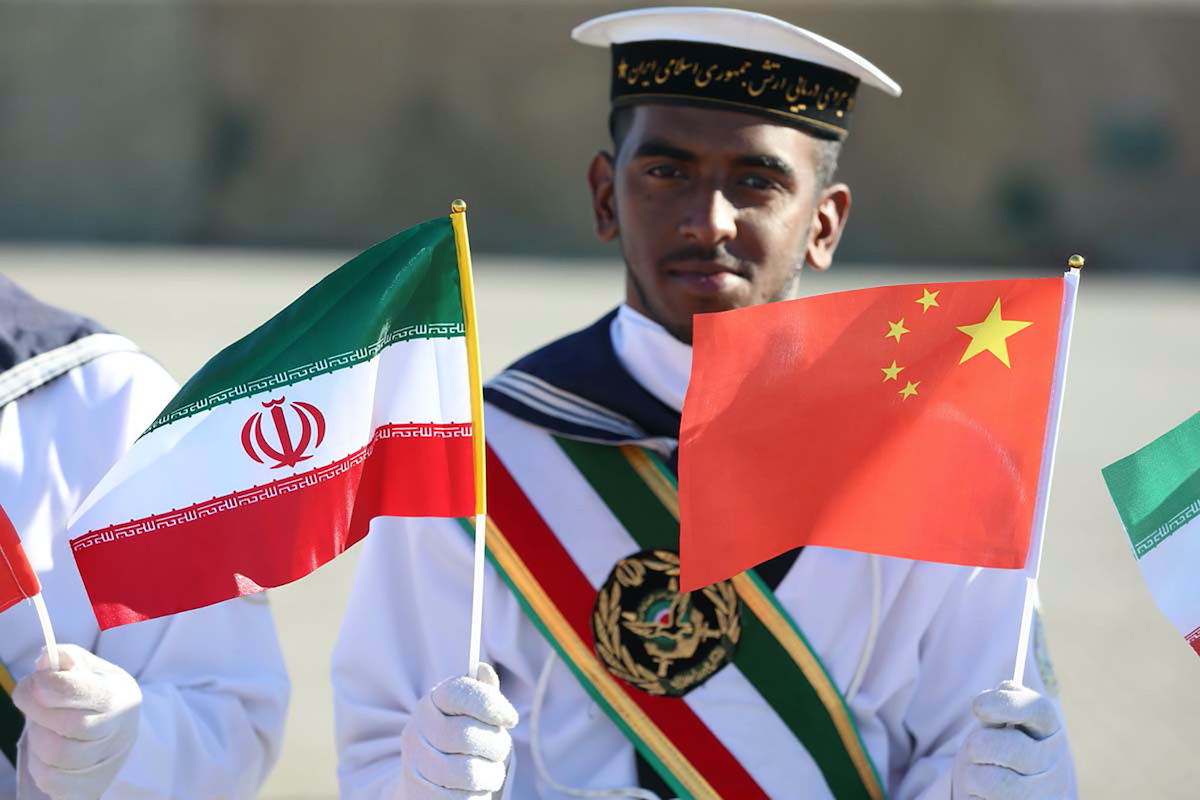
The war between the United States and Iran is no longer just a confrontation between Washington and Tehran. A second contest is taking shape alongside and behind it. China is not fighting the United States directly, but its economic, technological and diplomatic links to Iran are complicating Washington’s strategy and ability to win the conflict. This raises a larger, crucial question: Is the Iran war becoming another indirect front in the wider US-China rivalry? Nothing in the evidence suggests that Washington is at war with Beijing. Indeed, the two powers professed their fondness for each other at the recent Trump-Xi gala summit in Washington. But the Iran conflict is putting the two powers in direct competition over energy, sanctions, technology, maritime security and, perhaps most crucially, the future balance of power in the Middle East. China is Iran’s economic lifeline China occupies a special position in Iran’s wartime economy. It is Iran’s largest oil customer, accounting for 13-14% of China’s oil imports before the war, and has remained one of Tehran’s most important economic partners throughout the conflict. Those purchases have given Iran a crucial revenue source amid US-led sanctions. Independent Chinese refineries have played an outsize role because they are less exposed to the Western financial system than China’s major state-owned oil companies. Washington has responded by widening sanctions against Chinese companies, traders and logistics networks tied to Iranian oil and sensitive technology. It has also targeted China-linked procurement networks accused of helping Iran acquire technology potentially relevant for nuclear research and missile development. That puts Washington in a tightening strategic bind. Sanctioning Iranian companies is one thing; punishing major Chinese financial institutions could turn the Iran conflict into a broader economic confrontation with China. Recent reporting has described shipments of dual-use components from Chinese suppliers to Iran, reportedly including electronics and other items that can support military systems and drone production. US officials are also examining allegations that Chinese entities supplied satellite imagery connected to an Iranian strike on a facility in Jordan hosting American troops. China has rejected the accusations, while President Donald Trump has publicly played down the issue. But the line between commercial technology and military assistance is getting harder to hold. Modern warfare depends on navigation systems, satellite imagery, communications gear, electronics and advanced manufacturing. A country need not send missiles or soldiers to influence or even decide a war; it can supply components that make another state’s military more potent and resilient while under attack. For that reason, Washington is now watching China closely. Hormuz as shared vulnerability China depends heavily on Middle Eastern oil, so Iran’s ability to disrupt shipping through the Strait of Hormuz poses a direct economic problem for Beijing. Washington also wants the waterway open, but for broader economic and strategic reasons. In earlier talks, Trump and Xi Jinping agreed that the strait should remain open to the free flow of energy. Beijing has opposed the waterway’s militarization and urged de-escalation. The result is an unusual overlap of interests. China does not want Iran to collapse, but neither does it want a long war that destabilizes the Gulf and threatens energy supplies. Beijing therefore has an interest in both protecting Tehran’s economic survival and containing the war. Beijing’s support, however, has hard limits. It has not entered the war as Iran’s military ally, has repeatedly called for negotiations and has cast itself as a possible diplomatic mediator. Chinese Foreign Minister Wang Yi recently told his Iranian counterpart that Beijing was willing to safeguard Iran’s “legitimate rights and interests,” even as he urged both Tehran and Washington to show restraint and return to negotiations. China also has substantial economic ties to Saudi Arabia, the United Arab Emirates and other Gulf states, which make an open-ended commitment to Iran costly. Iran is strategically valuable to Beijing, but it is not China’s only route to energy, influence or regional access. War within a rivalry The larger competition extends well beyond Iran. Washington is trying to demonstrate that American sanctions, military power and control of the international financial system can still painfully isolate a hostile state. Beijing is showing that those punitive tools have limits when another major power keeps trading with the sanctioned target. Each Iranian barrel that reaches China blunts US sanctions, and each shipment of Chinese technology to Iran weakens US export controls. Disputes over Hormuz, meanwhile, expose both powers’ dependence on and vulnerability to the same regional energy system. The Iran war is thus testing the limits of American power and Chinese economic resilience at the same time. To be sure, calling this an undeclared US-China war goes too far. The two powers are not directly fighting each other in Iran. But dismissing China as irrelevant to the conflict would be equally misleading. The Iran war has become yet another arena in which the US and China test each other’s ability to dictate and shape events beyond their borders. Washington relies on sanctions, military pressure and financial clout to exercise power; Beijing uses trade, energy purchases, diplomatic influence and economic networks and supply chains. The question is less whether China will openly join the war on Tehran’s side than whether the war will push the US-China rivalry beyond trade and technology into a wider struggle over who has the power to shape the evolving new international system. That may prove the most consequential China factor of them all. Altaf Moti is a distinguished journalist, columnist and geopolitical analyst specializing in international security and global finance. He contributes to various international media outlets, including The Arab Weekly, Eurasia Review and Middle East Online.
The China factor behind the Iran war
Full Article
Original Source
Read the full article at Asiatimes →KhanList aggregates and links to publicly available news content. We do not host full articles from third-party sources. Always verify important information with original sources.