
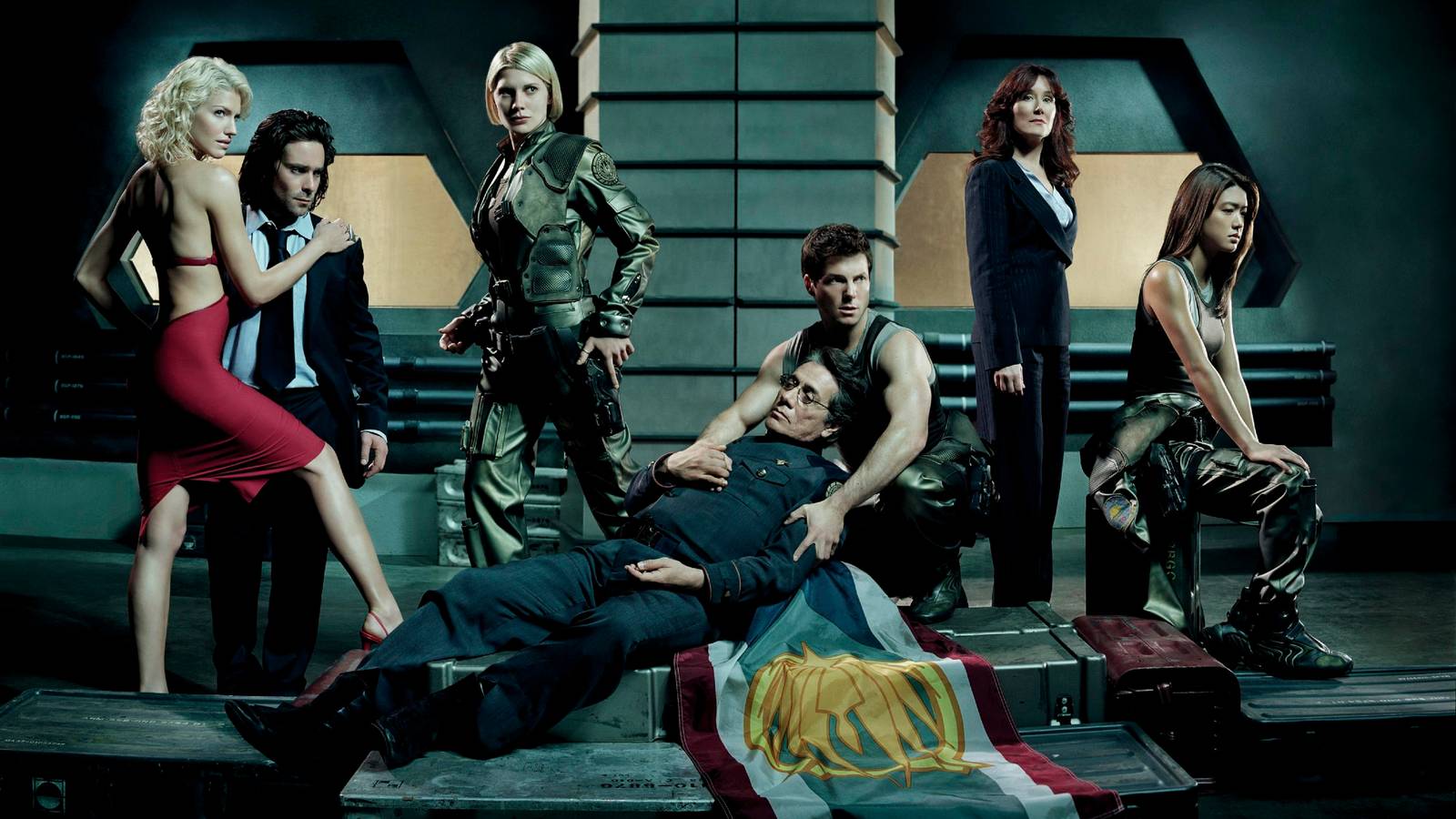
Image via MovieStillsDB Published Oct 25, 2026, 1:31 PM EDT Dani Kessel Odom (they/them) is an autistic lead writer and TV critic who covers sci-fi shows like Doctor Who and Pluribus, fantasy shows like The Magicians and Percy Jackson, and horror of all kinds. They also cover Marvel and DC TV shows and movies, with a robust knowledge of comic books. Their TV reviews can be found on Rotten Tomatoes. Dani is also part of ScreenRant's books team, using their fiction writing and literature studies as the backbone for their book analyses. They have covered events, such as the Denver Fan Expo. Professionals in the field, such as Damien Leone and Lucy Hale, have shared their articles. Their review of Ponies was quoted in the show's TV trailer. In university, they majored in English Writing with a minor in psychology. They have always had a passion for analyzing TV and movies, even taking filmography and scriptwriting classes in university. They also studied and participated in onstage and onscreen acting extensively from the ages of 7 to 18. Aside from working at Screen Rant, Dani has worked as a freelance editor and writer over the past decade, often in a ghostwriting capacity. Sign in to your ScreenRant account Many Battlestar Galactica character exits were devastating, but one had a negative impact on the TV show, causing long-term narrative ramifications. Reboots are always a major gamble, but some have paid off. The 2004 Battlestar Galactica reboot took a great story concept and added depth and complexity, transforming it into something even better. Now, the 2000s TV show is considered a classic and the best sci-fi show of the 21st century, so far. One of the most fearless aspects of Battlestar Galactica is that it wasn’t afraid to kill off beloved characters. Dee’s suicide absolutely wrecked me. I’ll never get over the painfully realistic writing. Gaeta’s execution felt tragic. From a story standpoint, it was necessary, but from a viewer's perspective, it was a sad ending to his really unnecessary fall from grace. That said, two deaths in Battlestar Galactica negatively impacted the show. The characters brought great things to the story, and their deaths launched some very frustrating storylines. The less harmful is Starbuck. Her death was the pivotal turning point that launched the divisive religious storyline. If she hadn’t died, she wouldn’t have come back as some kind of divine messenger or angel, as suggested by Starbuck's ending twist in Battlestar Galactica season 4. However, by far, the most harmful death in Battlestar Galactica was Billy Keikeya in season 2. When Vinson tried to shoot Dee, he jumped in front of her. Unfortunately, the negative ramifications of his death lasted a season and a half. Why Paul Campbell Left Battlestar Galactica Image via MovieStillsDB Billy Keikeya wasn’t killed off for creative reasons, unlike other deaths that negatively impacted the TV show. Instead, Paul Campbell made the choice, according to a 2008 interview with Media Blvd Magazine (accessed via the Web Archive), though he didn’t expect it to happen when it did. As he explains, about half the cast weren’t under contract at the end of season 1. As such, they could’ve all walked away from the show, and the showrunner and writers would’ve been out of luck. Moving into season 2, they signed folks. However, Campbell booked a pilot between seasons 1 and 2 and wasn't obligated to return. He left to see if that would work out, and it didn’t. When Paul Campbell returned for Battlestar Galactica in episode 7, they gave him an ultimatum that he needed to sign a five-year contract if he wanted to stay on the show. He pushed off the decision for so long that they believed he wasn’t committed. They needed to plan and write future storylines, which they couldn’t do without a commitment. Moving forward without a contract would’ve made everything harder, since they wouldn’t know if or when Campbell would decide to walk away from Battlestar Galactica. So, they killed Billy. Unfortunately, the rushed nature of writing him off becomes clear in the writing. Billy Keikeya's Death Sent Battlestar Galactica Characters Spiraling Image via MovieStillsDB From a logistical standpoint only, I completely understand the creative team’s decision to write Billy off. The question about whether Paul Campbell would be present would make everything harder, and they would have to be prepared to write Billy out of a story at a moment’s notice. Also, if they were going to have him die, sacrificing himself is probably the best a person could ask for in a show like Battlestar Galactica. The problem is that Billy anchored so many characters’ storylines. He always felt important to the story, but the extent to which he was necessary only became clear once he was gone. He and Roslin had a good relationship. He served as her confidant, her moral compass, and her anchor. She always felt more grounded with him around, and he opened her up more than any other character. Unfortunately, Tory replaced him. Tory’s sudden trust and involvement never really made sense, as she and Roslin were complete strangers. Billy and Roslin had a preexisting relationship, so their closeness made sense. She couldn’t serve as Roslin’s conscience, leading to the leader’s authoritarian arc. They also never fully connected, so her being a Cylon didn’t have a massive emotional impact. Billy being a Cylon would have felt like an emotional betrayal but also a really fantastic twist, and it was one of the most popular Battlestar Galactica theories. Signal Received · Deep Space Broadcast The Ultimate Sci-Fi TV Trivia Quiz “The truth is out there.” 🚀DeepSpaceFinal frontiers ⌛TimeTravelWibbly wobbly 👽AliensWe are not alone 👁DystopiaThe black mirror 💡UpsideDownHawkins, 1983 ENGAGE → 01 The most famous opening monologue in TV sci-fi begins: “Space: the final frontier. These are the voyages of the ___.” Complete the line from the original 1966 Star Trek series. AUSS Voyager BUSS Defiant CStarship Enterprise DUSS Discovery ✓ Engage! William Shatner’s iconic opening — “Its five-year mission: to explore strange new worlds, to seek out new life and new civilizations, to boldly go where no man has gone before” — has become one of the most quoted passages in all television. Later Trek series would adapt it, but the Enterprise is the one that started it all. ✗ Subspace interference! The answer is Starship Enterprise. USS Voyager belongs to the 1995–2001 series, the Defiant to Deep Space Nine, and the Discovery to the modern 2017 series. It’s the original Enterprise, captained by James T. Kirk, that William Shatner immortalized in that final-frontier monologue. NEXT → 02 The Doctor’s time machine is disguised as a 1960s British police box and is famously bigger on the inside than the outside. What is the acronym it’s known by? ATRACIS BTARDIS CTRADIS DTANDIS ✓ Allons-y! TARDIS stands for Time And Relative Dimension In Space. The name was coined by the Doctor’s granddaughter Susan in the very first 1963 episode. The police-box shape is the result of its chameleon circuit getting stuck while parked in 1963 London — and it’s stayed that way for sixty-plus years. ✗ Chronal distortion! The answer is TARDIS — Time And Relative Dimension In Space. The other options are invented distractors. The TARDIS first appeared in 1963 and has followed every regeneration of the Doctor since, though its interior famously redesigns itself whenever the showrunners want a fresh look. NEXT → 03 The acclaimed 2004 Battlestar Galactica reboot — considered one of the greatest sci-fi TV shows ever made — was developed by which writer-producer, a veteran of Star Trek: The Next Generation and Deep Space Nine? ARonald D. Moore BJ. Michael Straczynski CDavid Eick DGlen A. Larson ✓ So say we all! Ronald D. Moore developed the modern Battlestar Galactica, reimagining Glen A. Larson’s 1978 original as a gritty, post-9/11 political allegory. Moore had cut his teeth writing many of TNG and DS9’s best episodes. His BSG aired 2004–2009 and tackled terrorism, torture, faith, and what it means to be human. ✗ Frak! The answer is Ronald D. Moore. J. Michael Straczynski created Babylon 5, David Eick was Moore’s co-executive-producer on BSG, and Glen A. Larson created the original 1978 Battlestar Galactica. Moore took Larson’s cheesy space opera and rebuilt it into a Peabody Award-winning meditation on war and morality. NEXT → 04 Netflix’s ’80s-drenched sci-fi hit Stranger Things is set in a small American town sitting above a secret government lab that tore a hole into the “Upside Down.” What is the town called? ADerry, Maine BCastle Rock, Oregon CHawkins, Indiana DSpringwood, Ohio ✓ Friends don’t lie! Hawkins, Indiana is the fictional town the Duffer Brothers invented for Stranger Things — home to Hawkins National Laboratory, where Dr. Brenner’s MKUltra-style experiments opened a rift into the Upside Down. The show is actually filmed in Jackson, Georgia, but the Hawkins sign is now an iconic TV landmark. ✗ The Upside Down! The answer is Hawkins, Indiana. Derry is Stephen King’s fictional town from IT, Castle Rock is another King town (and an anthology series), and Springwood is from A Nightmare on Elm Street. The Duffer Brothers deliberately evoked King’s small-town horror tradition when creating Hawkins. NEXT → 05 In The X-Files, Fox Mulder has a famous poster hanging in his FBI basement office — a UFO photograph with a three-word tagline beneath it. What does the tagline say? A“Trust No One” B“The Truth Is Out There” C“Deny Everything” D“I Want To Believe” ✓ The truth is out there! “I Want To Believe” sits below a blurry UFO photo on the poster that hangs in Mulder’s basement office throughout the series. The line became so associated with the show that it was used as the title of the 2008 feature film, The X-Files: I Want to Believe. ✗ File that one away! The answer is “I Want To Believe.” “Trust No One,” “Deny Everything,” and “The Truth Is Out There” are all iconic X-Files taglines — but it’s “I Want To Believe” that’s literally printed on the UFO poster in Mulder’s office, and which became the title of the franchise’s 2008 movie. NEXT → 06 Apple TV+’s Severance — about office workers whose memories are surgically divided between their work and personal lives — was created by a first-time showrunner who used to be a customer service rep. Who is he? ADamon Lindelof BDan Erickson CBen Stiller DJonathan Nolan ✓ Praise Kier! Dan Erickson wrote the Severance pilot while working soul-crushing office jobs — literally daydreaming about splitting his mind so the “work-him” would suffer instead. Ben Stiller came on as executive producer and directed most episodes, but Erickson is the creator whose personal ennui gave us Lumon Industries. ✗ Outie interference! The answer is Dan Erickson. Damon Lindelof created Lost, The Leftovers, and Watchmen; Ben Stiller is Severance’s executive producer and primary director (but not its creator); Jonathan Nolan created Westworld and Person of Interest. Erickson’s script sat on the Black List for years before Stiller championed it. NEXT → 07 In 2018, Charlie Brooker’s Black Mirror released a groundbreaking feature-length episode that let viewers make choose-your-own-adventure style decisions for the protagonist. What was it called? ABandersnatch BUSS Callister CSan Junipero DMetalhead ✓ Interactive transmission received! Bandersnatch followed young programmer Stefan as he adapted a choose-your-own-adventure novel in 1984. Viewers could make choices at key moments, branching the story into multiple endings. It was Netflix’s most ambitious interactive experiment — and the meta commentary on viewer control remains quintessential Black Mirror. ✗ Null pointer! The answer is Bandersnatch. USS Callister is the Emmy-winning Star Trek riff, San Junipero is the beloved ’80s romance episode, and Metalhead is the black-and-white robot-dog thriller. All are Black Mirror, but only Bandersnatch was the interactive choose-your-own-adventure special that launched in December 2018. NEXT → 08 Joss Whedon’s space-western Firefly became a legendary cult classic after Fox infamously cancelled it — airing episodes out of order, burying the pilot, and pulling the plug. How many episodes aired on Fox before cancellation? A8 B11 C13 D22 ✓ Shiny! Only 11 of the 14 produced Firefly episodes aired on Fox in late 2002 before the network pulled the plug. The remaining three (including the two-hour pilot “Serenity”) first aired in proper order on the Sci-Fi Channel and eventually on DVD. Fan outcry led to the 2005 film Serenity — a rare cinematic rescue for a cancelled series. ✗ Fox strikes again! The answer is 11. Fourteen episodes were actually filmed, but Fox only aired 11 before cancellation, and they aired them out of order with the pilot held until last. The complete set finally aired on Sci-Fi Channel and DVD, and the fan-driven “Browncoats” campaign eventually convinced Universal to greenlight Serenity. REVEAL MY SCORE → Transmission Complete · Signal Decoded Your Sci-Fi Rating 👽 / 8 Trekkie-level canon — or still buffering? ⤴ RETRANSMIT On top of that, Dee and Billy weren’t in a committed relationship, but they still felt like a core relationship that would continue long term. The characters made sense together. Without Billy around, Dee became part of the really agonizing love square with Starbuck, Apollo, and Sam. That wasn't great for any of the four Battlestar Galactica characters involved, making them all a little more grating. What’s more, Dee going out with Apollo right before Billy’s death cast a shadow over her. After Billy's death, Dee was deemed a cheater—even though she and Billy were never exclusive—who didn’t care about the death of the man who loved her. So many viewers hated her for it. The characters had bad communication. They clearly weren’t on the same page. However, she wasn’t seen as a flawed human being who didn't handle a situation perfectly. Dee was now a two-timer, and that tarnished reputation lasts to this day. The writers did her dirty. Ultimately, Billy’s departure made Roslin, Dee, and everyone else in the love quadrangle worse characters, and introduced the deeply underwhelming Tory, hurting Battlestar Galactica. Release Date 2004 - 2009-00-00 Network SyFy Showrunner Ronald D. Moore Cast Edward James Olmos William Adama Mary McDonnell Laura Roslin Directors Wayne Rose, Michael Nankin, Rod Hardy, Sergio Mimica-Gezzan, Edward James Olmos, Robert M. Young, Jeff Woolnough, Félix Enríquez Alcalá, Jonas Pate, Allan Kroeker, Anthony Hemingway, Jean de Segonzac, Marita Grabiak, James Head, Paul A. Edwards, Gwyneth Horder-Payton, Brad Turner, Ronald D. Moore, Bill Eagles Writers Carla Robinson, Michael Taylor, Bradley Thompson, David Weddle, Jane Espenson, Mark Verheiden, Michael Angeli, Anne Cofell Saunders, Jeff Vlaming, Michael Rymer, Dawn Prestwich, Nicole Yorkin, Seamus Kevin Fahey Franchise(s) Battlestar Galactica Creator(s) Glen A. Larson, Ronald D. Moore
The Character Exit That Hurt Battlestar Galactica The Most
Full Article
Original Source
Read the full article at Screenrant →KhanList aggregates and links to publicly available news content. We do not host full articles from third-party sources. Always verify important information with original sources.