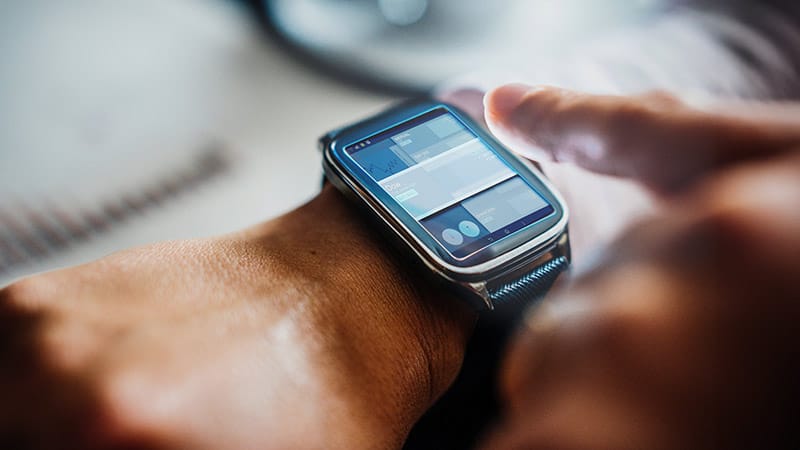
A patient arrives for an appointment carrying months of health information collected before ever walking into the office. Their smartwatch has tracked their heart rhythm, sleep, activity, recovery, and other health metrics. Encounters like this are becoming increasingly common. About 1 in 4 physicians now report receiving weekly patient requests to review wearable health data.Those encounters reflect one of the most important shifts underway in medicine.Collecting health data is no longer the challenge. Turning that information into better care is. That is the next chapter of digital health, and it will require more than better technology.The Next Phase of Digital HealthToday, millions of people generate health information simply by living their daily lives.Wearable technology is helping move healthcare beyond isolated snapshots toward a more continuous understanding of patients’ health. Its promise isn’t simply more data. It’s earlier insights, more informed conversations, and better clinical decisions.To better understand how physicians view this transformation, the American Medical Association (AMA) Center for Digital Health and AI partnered with Medscape on a first-of-its-kind international survey of physicians across six countries.The survey included 2222 physicians and found that 97% already review wearable health data in some capacity. Large majorities also reported that wearable data provide at least some clinical advantage for patient care. Physicians Need Better Systems, Not More DataThe findings reaffirm what many of us have long believed: Physicians are not the primary barrier to broader adoption of wearable technology. Instead, they consistently identified structural barriers — including workflow integration, clinical validation, reimbursement, liability, and confidence in interpreting patient-generated data — as the factors limiting broader adoption. The obstacles are largely structural, not motivational. Innovation has advanced more quickly than the workflows and systems needed to support it.Despite widespread physician engagement with wearable health data, routine integration into clinical practice remains below 6% in every country surveyed. Turning Information Into Clinical CareWearables can generate extraordinary amounts of information. More information, however, does not automatically lead to better care. Data become clinically meaningful only when they are interpreted through the lens of clinical judgment and the needs of an individual patient.Physicians remain essential because that translation requires judgment, experience, and an understanding of the individual patient. The most effective wearable technologies will strengthen that process, not replace it.Helping physicians use these technologies effectively is precisely why the AMA created the Center for Digital Health and AI. Its mission is not simply to encourage innovation, but to help build the evidence, standards, and policy frameworks needed to ensure digital health technologies improve patient care and strengthen the physician-patient relationship.The survey also revealed an important pattern. Across all six countries, physician interest remained consistently high despite differences in healthcare systems. What varied was not physicians’ willingness to use wearable data, but the systems surrounding them. Countries with stronger workflows, reimbursement pathways, and implementation support were better positioned to integrate wearable data into routine care.The lesson is clear: Technology is advancing faster than the systems designed to support it. And until healthcare catches up, physicians have an important responsibility to help patients understand not only what their devices measure but what those measurements actually mean.As a physician, I would advise my patients who wear this advanced technology to recognize health trends over weeks and months rather than obsess over daily fluctuations. Use the data as a conversation starter, not a verdict. Remember that context — stress, illness, medications, and life events — often matters more than any single score. And accept that not every meaningful aspect of health can be quantified.Most of all, I would encourage patients to keep their physician in the loop as health data accumulate and questions, or even anxiety, grow. The promise of wearable technology is not simply that it generates more data. It is that, together, patients and physicians can turn that data into better decisions and better health.Innovation Must Fit Clinical PracticeMedicine has learned hard lessons about technology before. Breakthrough technologies improve care only when they fit naturally into clinical practice. That requires physicians, technology developers, health systems, policymakers, specialty societies, and researchers to work together from the beginning — not after products have already reached the marketplace.Wearable technology will continue to evolve. AI will make these devices more capable. Remote monitoring will become more common. The amount of patient-generated health information will continue to grow.Our success will not be defined by how much information these technologies collect.It will be defined by whether we build the systems, infrastructure, and trust needed to help physicians use that information to improve patient care. That is how more information becomes better medicine.What are the biggest barriers preventing you from using patient wearable data in your practice? Share your experiences in the comments.John Whyte, MD, MPH, is CEO of the American Medical Association.
The Challenge With Health Data Is Using It Well
Full Article
Original Source
Read the full article at Medscape →KhanList aggregates and links to publicly available news content. We do not host full articles from third-party sources. Always verify important information with original sources.