
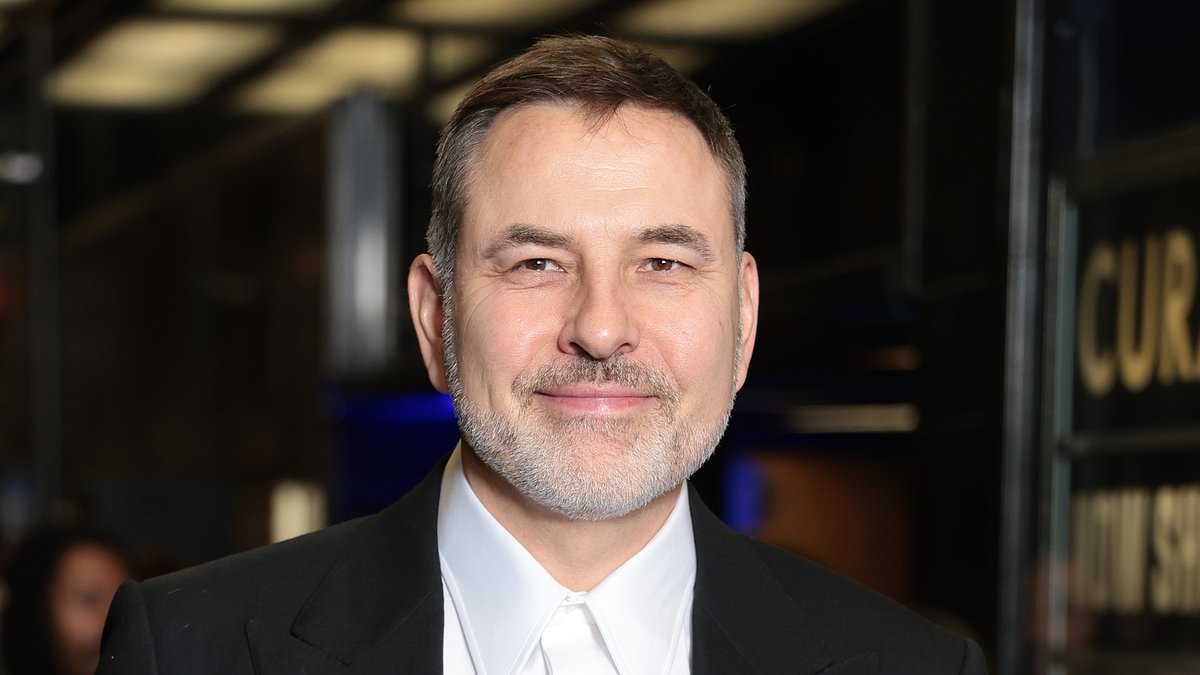
Dozens of household names from footballers to TV stars have used privacy injunctions to hide affairs and sex scandals.David Walliams was unmasked this week as the 'well-known man' who had sought a gagging order to prevent the reporting of allegations against him.A judge refused his application and the comedian has since been publicly accused of targeting girls as young as 15. He strongly denies the allegations.While his attempt failed, scores of celebrities, athletes and public figures have successfully turned to the courts in a bid to keep allegations of infidelity and sexual misconduct out of the spotlight.A total of 111 applications for new privacy injunctions have been made over the last ten years, according to official data.Among those said to be protected by a court order is another well-known male celebrity accused of having 'multiple' victims.Justine Smith, who works for Private Eye magazine, said the unnamed star had been granted the order several months ago and was 'in the public eye'.The vast majority of injunction applications by celebrities are used to cover up affairs by making arguments based on privacy law.Celebrities who still cannot be named in the Press include PJS, a married star who allegedly had a threesome with a couple in a paddling pool full of olive oil.Lower courts initially refused him a privacy injunction because his cheating contradicted his public portrayal of married commitment, only for the Supreme Court to later rule in his favour. David Walliams was unmasked this week as the 'well-known man' who had sought a gagging order to prevent the reporting of allegations against him Other stars who have secured injunctions include a footballer who hushed up claims he cheated on his partner with another celebrity and a married actor who cheated on his wife with Helen Wood - a prostitute who also slept with Wayne Rooney.A high-profile female celebrity described as a 'figure of trust' was granted an injunction in Manchester in 2015 to stop her lover leaking details of her affair with a famous married man to the Press.Others who have managed to keep their dirty laundry secret include a football manager who had an alleged secret lover, a 'world-famous' sportsman accused of having an affair and a well-known married man working in the entertainment industry.In a separate case, a 'high-profile figure' obtained an injunction to stop a woman revealing details of sexual encounters that took place in his home because it would be 'very distressing for his family' to hear of them.Marcus Johnstone, a specialist sexual offences lawyer at PCD Solicitors, said injunctions have been regularly used to suppress negative Press coverage. 'Injunctions are taken out against a party, such as a news outlet or a TV production company, to stop them reporting allegations against an individual,' he told the Mail.'Courts may grant an interim injunction, a temporary order that can be quite wide and puts a block on everything before the court can report on the proceedings.'The court then investigates exactly what's gone on. If a final injunction is given then it will be more specific about what it covers and who's covered by the injunction.'The popularity of privacy injunctions has fluctuated over time. There were two applications for new interim injunctions in the first half of the year, Ministry of Justice figures reveal.There was one hearing regarding a final privacy injunction and one more concerning the continuation or variation of an existing order.The number of proceedings of all types remained relatively low between 2016 and 2023, typically ranging between six and nine every six months, before climbing sharply during 2024 and peaking at 18 in January to June 2025.The first half of 2025 was the busiest period on record, with 11 new applications and six cases to renew or vary an existing injunction.From 2016 to 2026, there have been a total of 111 applications for new interim privacy injunctions. There have been 16 hearings concerning final injunctions and 43 concerning the continuation or variation of an existing order. Ryan Giggs famously obtained a gagging order to suppress reporting of an alleged affair. But because it was secured in England it did not apply to Scotland - allowing Scottish newspapers to name him Another injunction was obtained by a married actor who cheated on his wife with escort Helen WoodMr Johnstone said an injunction usually only binds the specific people or organisations listed in the court order. It can sometimes cover other 'unknown parties', but these people are required to know of its existence.Injunctions do not prevent victims from going to the police, although by suppressing media coverage of alleged offending they reduce the chances of others coming forward.'Even a superinjunction - where you can't even report on the existence of the injunction itself - can't remove the rights of the police to investigate,' Mr Johnstone said.'It can't override the criminal law or an individual's rights to go to the police and report the crime. So people can still come forward, so it shouldn't stop them from speaking out.'The lawyer predicted injunctions would become less popular among celebrities as they are increasingly shown to be ineffective in the modern age.'The use of injunctions 10 to 15 years ago was completely different to now.'Walliams was the worst-kept secret going - it was on social media and everyone outside England and Wales was reporting about it [including in Scotland]. So it makes a mockery of the whole idea of the injunction.'A number of celebrities have secured privacy injunctions, only for their identities to eventually emerge.The most famous case involved Ryan Giggs, who secured a gagging order in April 2011 to suppress reports about his alleged affair with model Imogen Thomas.However, his attempt to silence her fell apart after a sustained Twitter campaign that resulted in Lib Dem MP John Hemming naming him in Parliament.By then Giggs had already been named in Scotland, where injunctions obtained in England and Wales do not automatically apply. One newspaper, the Sunday Herald, carried a photo of him on its front page. It later emerged that Giggs had also had an affair with his brother's wife.Jeremy Clarkson was granted a secrecy order in 2010 to prevent his ex-wife, Alex Hall, from claiming they had an affair after he remarried.After being named on social media, he decided to lift the order himself, declaring: 'Injunctions don't work – it's pointless.'Andrew Marr was the first public figure to voluntarily admit trying to conceal his infidelity through the courts. Chelsea star John Terry also secured an injunction in 2010 to prevent newspapers reporting on an alleged extra-marital affair with Vanessa Perroncel, the ex-girlfriend of his former Chelsea and England teammate Wayne Bridge. Ms Perroncel is pictured with Bridge Ryan Giggs, who secured a gagging order in April 2011 to suppress reports about his alleged extramarital affair with model Imogen Thomas. He's seen with his wife, Stacey Cooke Mr Marr won a High Court injunction in January 2008 to suppress reports of a relationship with a fellow journalist five years earlier.At the time, he believed he had fathered a child with the woman. He also made maintenance payments until he discovered through a DNA test that he was not the girl's father.Chelsea star John Terry also secured an injunction in 2010 to prevent newspapers reporting on an alleged extra-marital affair with Vanessa Perroncel, the ex-girlfriend of his former Chelsea and England teammate Wayne BridgeBut this was later thrown out by a judge, who said he believed Terry was more concerned about the threat to his lucrative sponsorship deals than his family's privacy.The allegations against Walliams, coupled with the recent jailing of comedian Russell Brand, have reignited debate about accountability, secrecy and the use of legal mechanisms to shield high-profile figures from scrutiny.This includes calls to review the use of non-disclosure agreements (NDAs), which are widely used in the entertainment industry to prevent figures from disclosing supposedly private information.Make-up artist Lou Teasdale said it is 'open and standard protocol for girls to sign NDAs and have their phones taken from them before they're left alone with a famous man'.In an Instagram post shared yesterday, the stylist, whose celebrity clients have included members of One Direction, said: 'I'm not accusing any of those I worked with of any wrongdoing.'I'm talking about a culture that exists and is completely legal that treats a celebrity man's privacy as more important than a woman's safety.'How can a man be expected to behave with any accountability when there is an agreement in place beforehand to remove the woman's voice and the device that would keep her safe?'Giving evidence to the Digital, Culture, Media and Sport Committee yesterday, media minister Ian Murray said he was 'deeply saddened and also angry' to see the prevalence of abuse by men in the media industry.NDAs, he added, are 'a major part of the problem.'
The celebrity gagging order: How dozens of household names from footballers to TV stars have secured injunctions to hide affairs and sex scandals
Full Article
Original Source
Read the full article at Dailymail →KhanList aggregates and links to publicly available news content. We do not host full articles from third-party sources. Always verify important information with original sources.