
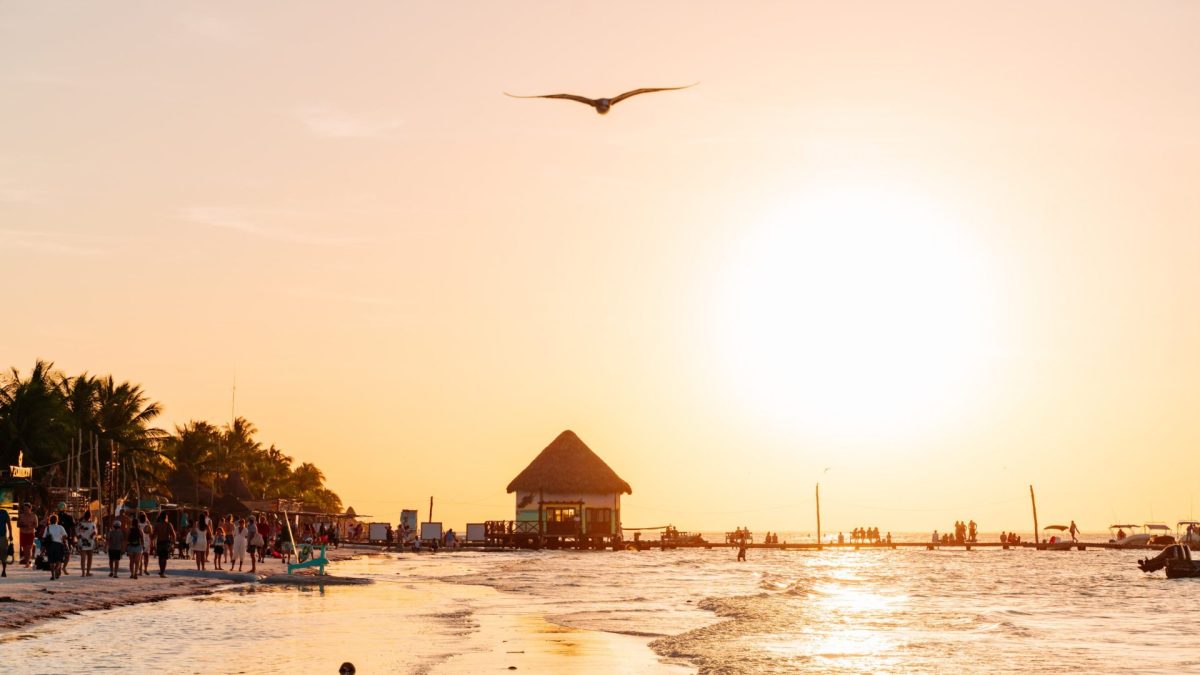
I’m strolling towards the sunset on a walkway next to a white-sand beach that’s lined with coconut trees and open-air bars. People are dotted along the coastline, walking, swimming and sunbathing. There’s a soundtrack of gently lapping water. Just off the northern coast of the Yucatán Peninsula in southeastern Mexico, Holbox island is about 26 miles long and a mile wide. Its population hovers around 3,000, depending on the season. Life here appears simple, with colourful houses, a series of rustic wooden-shack restaurants, boutiques and large murals of people and animals on the sides of buildings. No cruise ships stop here, and there are no high-rises blocking views. There have been concerns about development, but, for now, buildings are two or three storeys high, streets are mostly just sand and no cars are allowed. Instead, residents and visitors rent golf carts or bikes, or they walk (often barefoot). Hammocks, hung in front of hotels, beach clubs and bars, look out to turquoise water. Some guests and residents walk barefoot around Holbox, where hammocks are strung from trees (Photo: zstockphotos/Getty) The island is within the Yum Balam Flora and Fauna Protection Area, which was a community-led initiative created in 1994 to protect mangroves and wildlife (including hawksbill and loggerhead sea turtles and dozens of species of birds). I arrive on the island to a line of golf carts ready to pick up travellers and take them to their accommodation. I jump in with an older French couple who are on a nostalgia trip – they first visited 20 years ago. Holbox gives a winning first impression. I spend several hours laying on the sand and reading my book, before taking a dip. My first proper swimming stop is Yalahau, across the water in the mainland’s mangrove channels. Yalahau features a fresh spring water sinkhole that, legend has it, the Mayans considered the fountain of youth. I visit as part of a three-hour boat excursion (MX $700/£28.90) with My Holbox Tours. Yalahau is a popular swimming spot, and among the first places Suzanne visited on a tour (Photo: Getty) Captain Will plays the Bee Gees as seven of us bump across the water in a speedboat to Punta Mosquito, Passion Island, and Yalahau, all of which are situated within about 20 minutes of Holbox. As we speed through the water, a pelican flies past like it’s racing with the boat. Isla Passion has a small beach and an observation tower with views of the lagoon, in which we spot white egrets and cormorants. Punta Mosquito is a place of blue-green water and white sandbars (thankfully, when we visit, it’s too windy for mosquitos to bother us). Setting off from the northwest of Holbox, the next day I take a sunset kayaking tour among the mangroves. During this three-hour trip, the guide, a young couple and I paddle across the ocean and through the Kuka River, spotting crocodiles just metres away resting on the banks of the channels, as well as herons, pelicans and spoonbills. The sinking sun creates a backdrop of pink and orange hues. “Holbox is a lot of fun,” says Belgian-born Valerie Demeyere, founder of My Holbox Tours, who moved to the island about seven years ago. “It became home. It’s disorganised. Very free. It’s like a village.” Suzanne spotted crocodiles while kayaking among mangroves The island has dozens of bars, a clutch of yoga studios, and plenty of restaurants to try. Among them is Milpa, where, through a bamboo arch entrance, lies a candle-lit restaurant offering a tasting menu of inventive Mexican dishes, such as avocado roll stuffed with soy and beetroot puree. There’s a lively atmosphere in the evenings. Street food taco stands are as popular as upscale restaurants. Punters sway to live salsa, reggae, cumbia and acoustic sets in bars that stay open until the early hours. Playa Punta Cocos, the most western point of the island, is the place to drink margaritas while watching the sunset. The island is also known for its bioluminescence, commonly seen along its northern and western shores. Shorts During my time in Holbox, I meet people who arrived here on holiday, but, enraptured by its peacefulness, returned to live and work. The island is not without issues. For example, it’s prone to flooding with some roads inaccessible due to huge murky puddles that can lie there for days or longer. One couple I meet at Tierra del Mar Hotel accidently submerged their hired golf cart into one; fortunately, some other travellers helped, apparently wading in knee-deep to get them out. It was another example of the island’s low-key, friendly feel, a welcome alternative to the high-end resorts of Tulum. Getting there Fly to Cancún International Airport. Buses from Cancun to Chiquilá (£20, 2hr 35 mins, can be bought via booking platform Busbud). There are two ferry companies running services between Chiquilá and Holbox. There are departures approximately every 30 minutes (journey time 20-30 minutes), from around 6am to 9.30pm daily. A one-way ferry costs about £14. The writer was a guest of My Holbox Tours, Casa Margot, Tierra del Mar Hotel, Milpa and Busbud. Staying there Casa Lumini Holbox is around 15 minutes’ walk from the centre of Holbox. Bedrooms offer floor-to-ceiling views that look out onto a foliage-filled courtyard. Prices start from about £75 a night. Tierra del Mar Hotel is a stylish, adults-only hotel with boho décor, and a swimming pool. Prices start from about £140 a night. Ser Casasandra is a boutique hotel set up by Cassandra Pérez, an artist and hotelier. Expect canopied beds and vintage and artisan-made décor. From around £227 a night.
The car-free winter sun island with turtles, pelicans and white beaches
Full Article
Original Source
Read the full article at Inews →KhanList aggregates and links to publicly available news content. We do not host full articles from third-party sources. Always verify important information with original sources.