
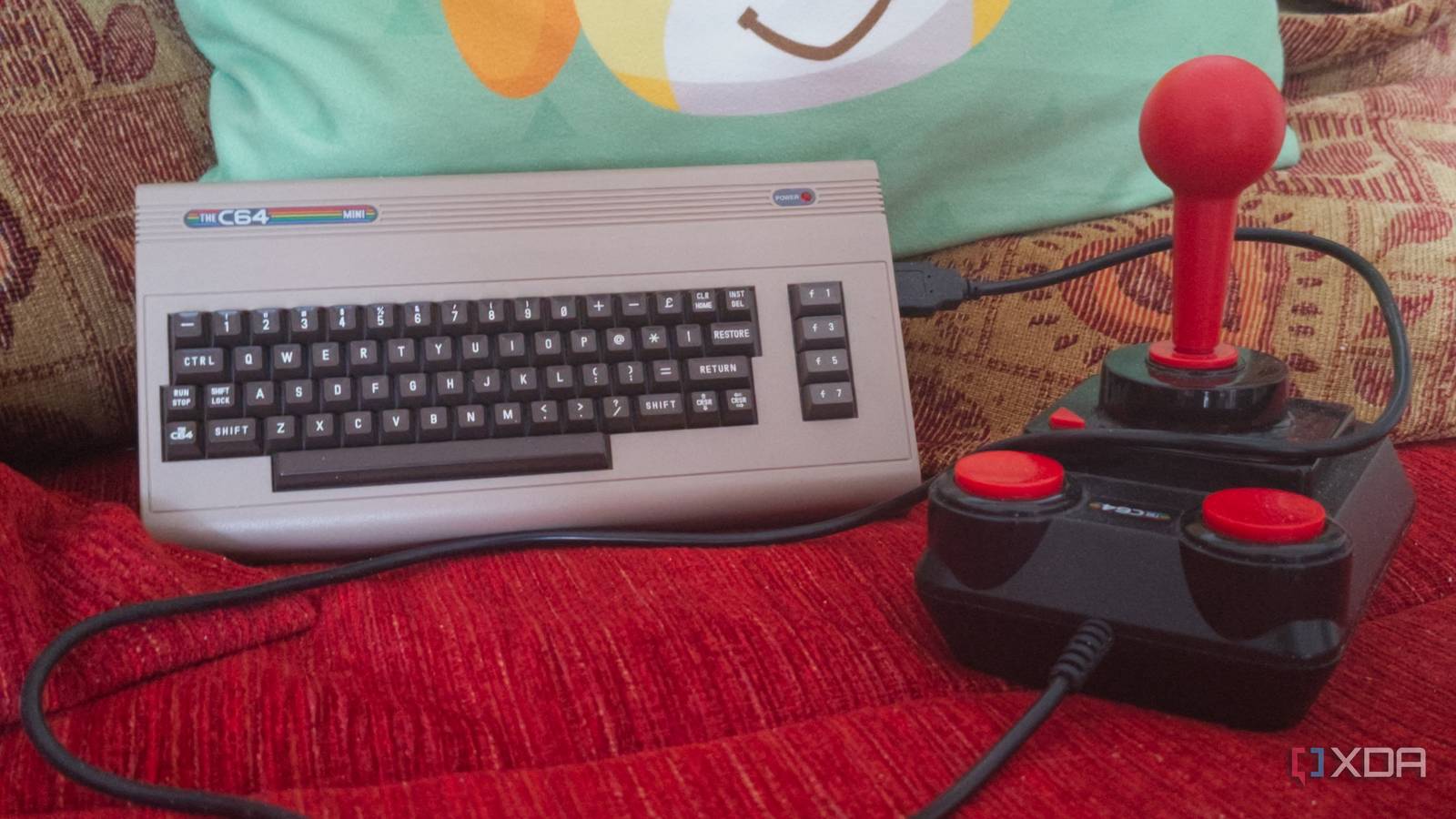
Published Aug 23, 2026, 3:00 PM EDT Simon is a Computer Science BSc graduate who has been writing about technology since 2014, and using Windows machines since 3.1. After working for an indie game studio and acting as the family's go-to technician for all computer issues, he found his passion for writing and decided to use his skill set to write about all things tech. Since beginning his writing career, he has written for many different publications such as WorldStart, Listverse, and MakeTechEasier. However, after finding his home at MakeUseOf in February 2019, he would eventually move on to its sister site, XDA, to bring the latest and greatest in Windows, Linux, and DIY electronics. When one of our D&D group members couldn't make it to the session, we decided to make a night of it anyway. We headed over to a local pub, only to be told that they were about to start a pub quiz and that we were welcome to join. We had never done a pub quiz before, but we thought we'd give it a go. What we didn't expect was to come in first place, which allowed us to pick from a range of prizes. I immediately locked onto a C64 Mini that the host no longer wanted, and we agreed as a team that it'd be a shared console we could pass around as needed. As the current owner of the C64 Mini, I've been enjoying the preloaded games, and it has really opened my eyes to how gaming looked and felt in the 1980s. Games in the 1980s were really creative with their genres There were no pre-set standards at the time One game I immediately gelled with is Skool Daze, and the best way I can describe it is as a school simulator, not too unlike the more modern Bully. Your objective in this game is to find the four-digit code to open the safe that contains your report card, and you get the numbers by causing mischief and hitting shields on the wall with your slingshot. However, you do have a timetable, and you do need to obey it. You'll be given classes by one of the four teachers at the school, and if you don't show up or cause havoc, you'll be given lines to write. These lines act as your health; as soon as you hit 10,000 lines or more, a teacher will suspend you from school, which is the game-over state. Unfortunately, keeping your lines down is harder than it sounds. If you sit in someone else's seat in class, they'll toss you out of it, giving you lines for being on the floor. If a student hits a teacher with a slingshot, and they come to when you're the only one nearby, they'll assume you did it and give you lines. There's even a snitch kid who will tell you if you get into trouble while the teacher isn't there. It was really fun, and it reminded me that there were no preset ideas about which genres worked and which didn't back in the 1980s. This was the frontier that set the DNA for the games we play today, so developers would make whatever they thought would be fun and hope people would resonate with it. You'd only get an in-game tutorial if you were lucky Otherwise, you'd better have the manual on-hand I've never coded a Commodore 64 game before, but I can't imagine you had a ton of real estate to work with. At least, you probably didn't have enough to code a full-blown tutorial to teach people how to play the game. Perhaps you could add an info screen on the main menu, but most of the time, you just get dropped right into the game when you hit play. Of course, this was back when games came with manuals, little booklets that taught you everything you needed to know to play it. The idea was that the manual handled the teaching, leaving developers room in the game's data to add more fun stuff. However, it was a lot of fun to just boot up a game without reading the manual and trying to work out what on earth you're doing with zero help. West Bank was a fun one to do this with. At its core, it's a reaction-based game. People will appear in one of three doors, and you have to quickly deduce if they're someone you need to shoot, spare, or shoot a set number of times. Go too slow, and the bandits will be quicker on the draw than you; go too fast, and the somewhat bandit-like civilian takes a bullet. However, no matter how long I played, I couldn't advance past the first level. That's when I took a look at the manual and discovered that I was only tending three of the ten counters that you needed to fill before moving on to level two. Now the game wasn't just about reflexes; I also had to navigate the counters and set them up properly to maximize income. Was it West Bank's fault for not teaching that to me in-game? Absolutely not. Again, this was back when every little bit of data was precious, so developers wouldn't add to the game what they could just print in the manual. But it was a stark contrast to today's games, where players can hit "start game" and learn everything they need without opening a book or a PDF. Game developers just added whatever the hell they wanted As long as it was fun, there was no harm done Somewhat tied to my genre exploration, I realized that developers back in the day really just threw whatever they wanted into their game. Some people kept things sensible and understandable, using graphics that matched the game's tone and feel. And then there was Monty on the Run, where you played as a mole running through a house as he tries to escape from... something. At its core, it's a simple 2D platformer game; there were no genre-bending discoveries made here. But what I loved was the sheer nonchalance the developers had when adding enemies. As Monty, you had to navigate past floating mugs, tea kettles spouting steam, smiley faces, and what looked like a cross between a jellyfish and a mushroom that floated up and down. It was a fun break from today's realism games; it really felt like the developers just made a weird-looking enemy sprite and had fun peppering them around the game, with no concern for how they got there or whether they suited the stage they were on. Gaming in the 80s was a really unique time What started as a pub quiz ended up giving me a lot of insight into how gaming developed into what it is today. Honestly, I wish modern-day developers had the same creativity and carefree attitude that these titles had; even indie developers often wrap themselves up in the need for realism and cinematic sequences when arcade-style games from 40 years ago still hold up today.
The C64 Mini showed me how fearless and wild '80s game development really was
Full Article
Original Source
Read the full article at Xda-developers →KhanList aggregates and links to publicly available news content. We do not host full articles from third-party sources. Always verify important information with original sources.