
If it had been predicted that in 2026 I would shift from Dubai to Greater Noida in Uttar Pradesh I would have laughed at the very idea.But here I am and loving it.Chatting with armies of delivery people, cab and auto drivers and shopkeepers of the sundry sort gives one enough grist for daring to project an election scenario.Let us begin with a confession: predicting Indian elections is like forecasting the weather by sniffing the air. I would say Yogi Adityanath starts the next Uttar Pradesh election as the man to beat. Not because he is invincible. Nobody is, except perhaps the Indian voter’s capacity to surprise. But because he has assembled the kind of political machine that runs on three fuels: narrative, welfare and organisation. And in UP, that is a formidable trio. Add the cherry on top of safety from criminal gangs that have been cut to size and the combination becomes a vote bank upside.Indeed, Yogi has turned law and order into a prime-time serial, and he is script writer, producer and lead actor. The bulldozer is no longer a machine; it is visible grammatical. It says: mess with the system, and the system will mess with you. In a state where the ordinary citizen’s complaint is often “nobody listens,” the image of a government that arrives with a crowd, a camera and a demolition crew is, to many voters, not authoritarian—it is efficient. Yogi's "anti-gang" brand is real but selective. It has crushed big criminal names and created a fear-based compliance that many voters like. But the same machinery can empower new strongmen, protect allies, and target opponents. The gangs didn't all disappear; some changed uniforms. And in an election, that is both Yogi's strength—he looks tough—and his vulnerability—voters eventually ask who the bulldozer is really working for.Second, Hindutva plus welfare. This is the BJP’s classic double-engine, and Yogi drives it with a heavy foot. Ayodhya, Kashi, Mathura—the cultural calendar is now a government calendar. Add free ration, Ujjwala cylinders, PMAY houses, toilets, cash transfers and the sheer visibility of beneficiary schemes, and you have a coalition that is not just ideological but transactional. The female voter may not read the manifesto, but she knows the ration shop. She knows the needs of the house. She knows the cylinder. That is not small change; that is the balance sheet of incumbency.Third, the opposition. Or, more accurately, the absence of a credible alternative chief minister. The Samajwadi Party has a cadre and a core vote, but it also carries the burden of Yadav-family politics and a perception problem in non-Yadav OBC and upper-caste circles.Also why risk undoing the good things Yogi has accomplished by rocking the boat.The Congress is a guest who keeps arriving at the wrong party. The BSP is a mystery wrapped in an enigma, wearing a blue scarf. When the question is “Who else?”, the BJP’s answer—“Look at the other guy”—often works. In a state of 24 crore people there are a huge number who find comfort in the status quo.The dark horse is the Aazad Samaj Party (Kanshi Ram)—often abbreviated as ASP(KR). It is a Dalit rights activist entity birthed by lawyer Chandrashekhar Azad alongside Vinay Ratan Singh. Built out of the grassroots activist group Bhim Army, the party focuses on Ambedkarite ideology, social justice, and the political empowerment of Bahujan communities. In the next 60 days with 403 seats up for grabs perhaps it can find enough traction to splinter a majority.Fourth, the machinery. How functional is it for the average Joe? The BJP in UP is not a party; it is a parallel government with far better discipline. Booth-level managers, WhatsApp networks, welfare monitors, media cells, and a cadre that can fill a maidan at short notice. Yogi may be the face, but the organisation is the spine. And when you combine a strong face with a strong spine, you get a candidate who can absorb anti-incumbency like a sponge absorbs water...effectively and endlessly.Now, the downsides. Because no political story is complete without the little cloud on the horizon that looks suspiciously like a thunderstorm in the making.The biggest issue is jobs. More the lack of them. Unemployment is the elephant in the room. A government that sells law and order must also deliver a functioning employment exchange, and that gap is a chasm in credibility.Second, the bulldozer has diminishing returns. What works as shock and awe in the beginning can curdle into fatigue. If every problem is met with a demolition, voters eventually ask: where is the construction? Where are the schools, the hospitals, the buses, the clean drinking water? Not the fancy stuff but for the citizen of the state. Law and order as theatre is powerful; law and order as substitute for governance is a rattrap.Third, caste arithmetic has an intrinsic role even today. Yogi is a Thakur, and the BJP’s coalition is a delicate arrangement of non-Yadav OBCs, Dalits, upper castes and women. Any over-centralisation, any perception of one community dominating, any internal rivalry and the arithmetic starts to wobble. The party has many ambitious leaders who would like a bigger chair. Brand Yogi can overshadow Brand BJP, and that is not always comfortable at a High Command level.Polarisation cuts both ways. It consolidates the base, but it also consolidates the opposition’s base. Muslim voters may not love the SP or Congress, but they will vote strategically. And in a close election, strategic minority consolidation plus genral discontent plus price rise can shave off just enough seats to make the race closer than predicted.Then there is the welfare delivery gap. The schemes may exist; leakages definitely do. Beneficiaries are grateful, but they are also angry when the promised house is half-built, the ration is late, or the hospital has no doctor. Governance is a hundred small promises, and Yogi’s government is better at the big headline where the small print is obliterated.So why still bet on Yogi? Because elections are not referendums on perfection; they are comparisons. And in UP, the comparison currently favours the man with the microphone, the machinery and the mythology. He has the Modi tailwind, the welfare wallet, the media megaphone and an opposition that is still looking for a captain and a road map. The downsides are real, but they are potholes, not roadblocks. And in Indian politics, the incumbent with a strong narrative usually wins the pothole contest—unless the pothole becomes the story. That is the only thing keeping the Yogi camp awake.- Ends
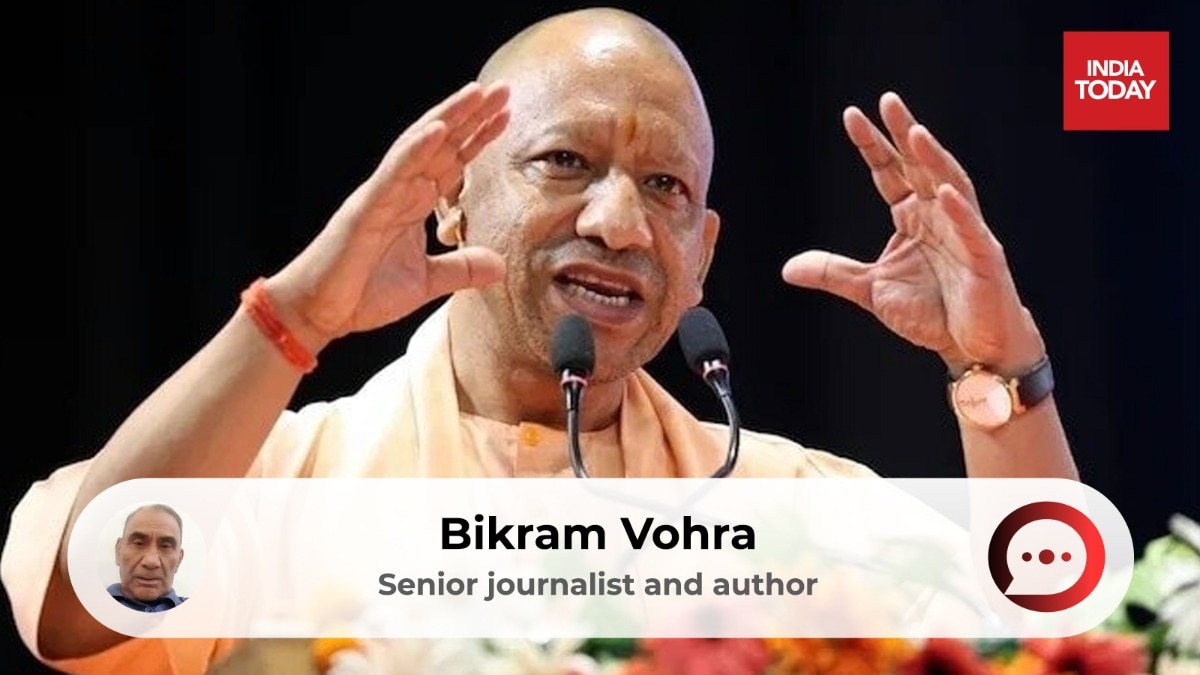
The bulldozer and the balance sheet: Is Yogi Adityanath an election shoo-in ?
Full Article
Original Source
Read the full article at Indiatoday →KhanList aggregates and links to publicly available news content. We do not host full articles from third-party sources. Always verify important information with original sources.