
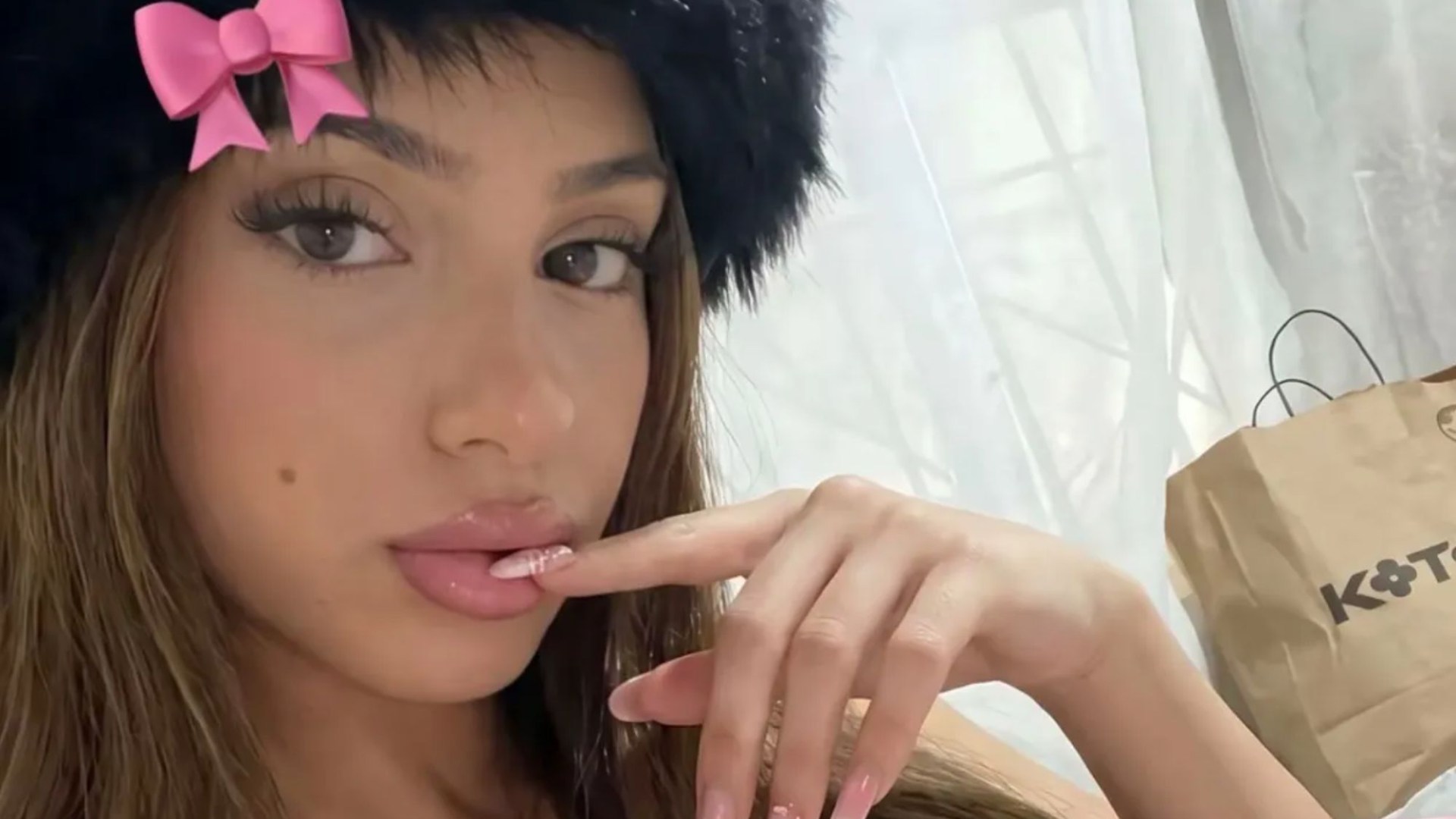
SEDUCTIVELY dancing in front of the camera in a string-vest top, Inaya appears to be a normal 20-something influencer and has millions of likes on her posts. But unaware to some of the California university student’s 13,600 TikTok followers, who have paid to talk to her and see her X-rated content, she is actually a fake – an AI creation by delivery driver Zaine, 21, from Leicester, who netted £30,000 in a month from her ‘work’. Inaya has more than 13,600 TikTok followers and millions of views on her videos Credit: Supplied Yet some may be unaware that Inaya is an AI influencer – and earning her creator a fortune Credit: Supplied He’s among a growing number of so-called “AI pimps” who are tapping into the global AI influencer market, which is estimated to be worth £8.7billion, and forging highly-lucrative side hustles from lonely men online and brand deals. Accounts like Inaya’s follow on from the success of pink-haired fake model Aitana Lopez, whose creator rakes in £9,000 a month from placing her in supplements adverts, promoting brands like Amazon and flogging lingerie snaps to her 403,000 followers. Sign up for The Sun newsletter Thank you! Similarly Katie Price’s former manager Clarissa Mansbridge earns £3,300 a month doing the same with blonde bombshell Mia Metaverse, who also ‘models’ for clothing brands like Hello Molly and performs fake ‘unboxing’ videos. And in the US, naughty snap flogging Emily Hart, a pro-Trump, MAGA-supporting nurse, who lured in 10,000 followers in her first month and up to 10million views per post, was unmasked as medical student Sam, 22, from India. Mia Metaverse is another AI influencer, who was created by Katie Price’s former manager Credit: Instagram/Mia Metaverse Computer generated Aitana Lopez has brand deals with supplements companies Credit: Instagram/@fit_aitana/theclueless.ai Monetising avatar influencers, especially for sexual content, is happening at an “industrial-scale” according to experts – it’s due to some AI tools charging between £3.70 and £22.17 per month to create lifelike content and avatars. It’s a tempting proposition for young and tech savvy Brits – especially when there are more than one million NEETS – those not in employment, education or training – which is at a 10-year high. East Midlands based Zaine, who says he has made £30,000 in a month from avatar Inaya, insists he labels all content “AI generated” but “plenty of people still think she’s real”. He tells us: “I don’t really see the difference between AI influencers and real influencers, we’re both just creating content and trying to monetise online. Most read in The Sun “While I’m out delivering parcels my AI Influencer is making money on auto pilot. “She’s like a normal influencer really. Doing regular posts on social media and mostly on TikTok, replying to fans. “Things like reels work really well so I do a lot of them, and her fans get a bit obsessed with her life I suppose. “People DM (direct message) her all the time thinking she’s real, asking her out on dates and even asking to be her girlfriend. “She gets hundreds of date requests, there are weird people out there so she does get weird requests but I just ignore those ones because at the end of the day it’s up to me what she chooses to engage with.” Inaya has more than 463,000 likes on her TikTok videos, despite first posting in June. Only a slight blurriness in her hairline and flawless skin betrays her as not a real person. In her more PG clips, she has recreated viral online dances, posted about the World Cup and Manchester City FC, and posed in an array of outfits, sometimes they are revealing. But click on the link in her bio and you will find her X-rated content. They include a video of a graphic sex act selling for £538 and a “full naked set” of snaps for £317. She captions the latter: “Careful you might get addicted.” The cheapest is a photo for £7.30, which is titled “angel face , devil body”. Fans can also pay to talk to her through platforms. Zaine reveals his creation Inaya, who claims to be “figuring it out” and a University of Southern California student on Instagram, was based on celebrities men find attractive. He says: “I did make her from scratch but I looked at the sort of celebs that are popular on social media and that blokes tend to like. “So Dua Lipa was one and I think [Love Island star] Chloe Burrows when I first started making her. Inaya is around 20 and is good looking and she likes fashion and modelling. Inaya earned her creator Zaine, from Leicester, £30,000 in a single month Credit: Supplied Zaine is capitalising on the AI influencer side hustle, which is extremely lucrative Credit: Supplied “The tech is so good now she does just look like a real human. I do have to label her AI but still a lot of her fans can’t notice the difference.” Zaine is far from alone in capitalising on the fortunes to be made from the AI influencer world. There has been a “sharp rise” in AI influencers, especially in those producing X-rated content, because it’s achieved “cheaply in minutes”, according to Ruth Azar-Knupffer, co-founder of VerifyLabs.AI. She tells us: “When the cost of manufacturing a person falls to almost nothing and the revenue from that person is real, you get exactly what we’re seeing: industrial-scale output. “Adult content has always been the proving ground for new media technology, because it’s the fastest route from a novelty to a paying customer. “What’s different now is that the operator no longer needs a human at all. That removes the last practical constraint on volume and, more troublingly, it removes the person whose consent used to be required.” Good Morning Britain’s AI and cyber expert Jake More adds: “AI generated influencers can now even be sexualised and monetised at a scale where everything except the money is artificial.” The benefactors include Zaine but also Katie Price’s former manager Clarissa, creator of Mia Metaverse, a blonde-haired, blue-eyed British AI model, who shares aspirational lifestyle content online. Posts show her arriving on a private jet, wearing Louis Vuitton bags, sipping Champagne and appearing on a mocked-up Vogue magazine cover. Clarissa channelled her knowledge from 15 years managing celebrities and “people the world cannot look away from” to create a celebrity influencer of her own. “I had spent my career building other people’s stories, it was time to build my own,” she said. Mia has brand deals and also sells saucy snaps. Clarissa previously told the New York Post that people like her are “creating a blueprint for the next generation of digital entrepreneurs”. Mia Metaverse has AI generated photos of herself at The Oscars Credit: Instagram/Mia Metaverse Former celebrity manager Clarissa Mansbridge created Mia Credit: Fanvue “Mia generates value around the clock,” Clarissa says, highlighting how AI never sleeps unlike humans. “It’s [created] financial independence for me and my son’s future.” Dubbed ‘Spain’s hottest woman’ Aitana Lopez, created by Rubén Cruz, has 403,000 Instagram followers who relish her phony snaps in bikinis, at Coachella Music Festival and her enviable luxury holidays Remarkably, she became the face of sports supplements brand Big and has collaborated with Amazon. She also sold naughty pics. Her ‘work’ earned a total of £9,000-a-month. Medical student Sam, who was behind MAGA influencer Emily Hart, says she became so popular because he posted content that Donald Trump’s fanbase would love. “Every day I’d write something pro-Christian, pro-Second Amendment, pro-life, anti-abortion, anti-woke, and anti-immigration… it blew up.” he told Wired. Before Emily’s account was banned, she had up to 10 million views on individual reels. She also sold bikini and X-rated snaps and MAGA-themed t-shirts. Sam claimed to make “a few thousand dollars a month” from just 30 to 50 minutes of work a day creating content. Meanwhile Zaine claims to earn so much money now that his friends joke that he must be “a drug dealer”. He has bought designer gear, endless rounds of drinks for pals and will pay for a lads’ holiday abroad. Initially he was earning £300 a week from Inaya. Then one evening, a fan forked out £700 for photos of her and it snowballed from there. “Now I’m doing thousands per month, I feel like I’ve mastered how to do it and I’m loving seeing the money build up,” Zaine says. Despite his sizable earnings, he is yet to quit his day job as a delivery driver in case the money dries up. He adds: “I’d love to do it full time in the future, and create more AI models as that’s the way to scale it. I’ve seen other people do this online.” Aitana shares snaps from Coachella and enviable locations around the world – but they are all fake Credit: Instagram/@fit_aitana Pro-Trump influencer Emily Hart was revealed to be AI, created by a medical student in India Credit: Facebook Zaine, who didn’t go to university and is a former £140-a-day labourer, believes this is a clever side hustle. He says it only takes a “few hours” each week to do. For his non-X-rated content, he uses Prism – a content generation platform that helps people produce photos, video and audio content and has plans ranging from £5.30 to £59 per month. Zaine believes the tool has allowed ordinary people, like him, who don’t have jetset lifestyles or limitless bank balances to profit from the influencer sphere. “I don’t need expensive equipment, I don’t need to travel and I don’t need to put myself online,” he says. “I can manage everything behind the scenes while still working my day job. “AI is making it possible for people like me to earn money from influencing, and that wasn’t really doable before to be honest. “I like it because of how flexible work can be, and it’s a challenge learning how to do this stuff but rewarding once you start making money from it.” 15 ways to spot a fake AI influencer WITH thousands of followers, professional looking pictures and adoring fans interacting with posts, it can be hard to spot an AI influencer from a real one. Good Morning Britain’s AI and Cyber expert Jake Moore says previous tell-tale signs, like an AI having “six fingers or strange lip syncing issues”, are now long gone and tech is clever. “We’re moving away from ‘spot the fake’ to ‘prove it’s real’ as AI people can be created in no time with easily accessible tools,” Jake tells us. “Some of the best fakes tend not to have any obvious visual giveaways so it’s worth looking for inconsistencies over time.” So The Sun has spoken to a range of AI experts about the giveaways and tips to find a fake. Real-world connection “Are they tagged by genuine accounts? Have they been filmed in a live appearance? This is much harder to fake so if not, it could be AI,” says Jake, who’s Global Cybersecurity Advisor at ESET. No embarrassing past You won’t find “a bad-lighting era” snaps or a “regrettable fringe” taken on an old phone, Ruth Azar-Knupffer, co-founder of VerifyLabs.AI tells us. She advises scrolling back to their first post and if it’s as glossy as the most recent “be suspicious, because fakes arrive fully formed”. Tiny details “Avatars don’t have micro-expressions, they can be expressive but in a very streamlined way, and, eye-blinking – they blink too rhythmically,” says Effie Bersoux, founder of GrowthGirls & AI The Academy. Quirky features Joseph Steel, of Visualskies, adds that odd fingers, misshapen earlobes, or earrings and necklaces that “bend, flicker or vanish between frames” are other tells. Billy no mates “Fakes exist only on their own grid,” Ruth says, explaining that you won’t find AI tagged in other creators’ launch parties or in the background of others’ snaps. Current demand Unlike livestreams, which can be face-swapped in real time with free software, you should ask for a photo of a made-up word on their hand or the day’s newspaper, Ruth says. 30-second rule “Endless quick edits and no single long unbroken take is a warning sign”, Ruth says because keeping an AI consistent in video longer than 30 seconds is tricky. Finger watch Fine motor skill tasks like “doing up a clasp, applying make-up, unwrapping something” is where “AI can betray itself”, according to Ruth. Neck giveaway Joseph says the jawline and throat are big tells. He adds: “If the neck muscles don’t move naturally with the speech, or the mouth is slightly out of sync with the audio, you’re likely looking at an AI overlay.” No touching If two ‘influencers’ don’t touch – like handshakes or hugs – while on screen it may be fake, Ruth says, because “the picture degrades” when that happens. Ghost trail Replay their content at a slow speed and there could be a ‘faint trail’ behind them, known as ‘ghosting’, Ruth adds. It’s typically spotted on hairlines, earrings and glasses. Physics problem Lighting may not match or movement could defy how a body works because AI “breaks the rules” – watch out for water, fabric, hair and shadows, Ruth says. Background details Ruth tells us if letters on signs, t-shirts, books or number plates scramble or change between shots in the same room it could be a sign. Flawless skin Real faces have pores, blemishes, spots, flyaway hairs, Rich says. But AI will have “smooth, airbrushed sheen with impossibly symmetrical features”. Payday links “If the only thing being sold is them, there may be no them,” Ruth says. She warns fakes may only a link to a subscription page and no recognisable brand deals or products. Comment now
The brazen ‘AI pimps’ raking in £10ks a month flogging X-rated vids & bikini pics of fake influencers to ‘obsessed’ fans
Full Article
Original Source
Read the full article at Thesun →KhanList aggregates and links to publicly available news content. We do not host full articles from third-party sources. Always verify important information with original sources.