
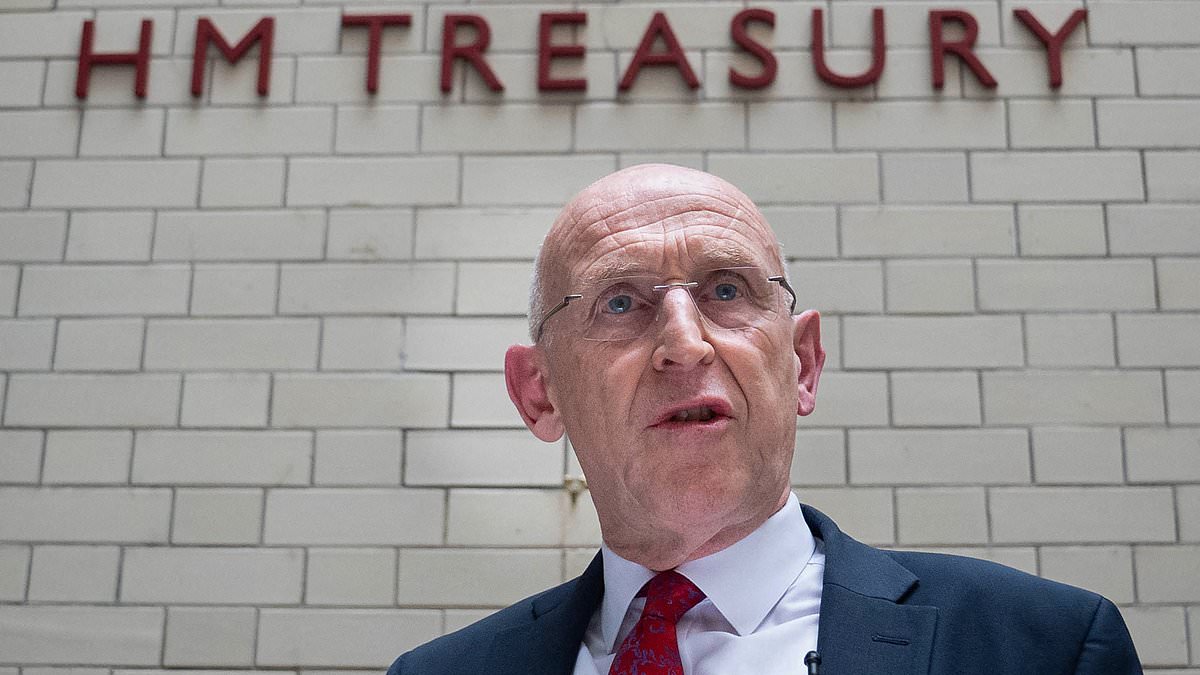
The government bond market is freaking out again, so should you be worried?On the surface the answer is ‘no’. The periodic throwing of toys out of the bond market pram is usually a storm that long-term thinkers can ignore.An inflation panic or other wobble sees yields spike as investors demand a higher interest rate return for buying countries’ debt.The pendulum swings too far, then things calm down and rates ease back.In the long-run, that brief spot of turmoil makes little difference to our personal finances.The main exceptions being if you are unlucky enough to need a mortgage as the storm rages – such as those caught out by the aftermath of the Liz Truss mini-Budget.Although you could also be lucky enough to lock in a temporarily boosted fixed savings rate or better pension annuity income. Perhaps you could even invest directly in gilts, as UK government bonds are known, and snaffle higher rates. But take a deeper look and you’ll find we should all be worried about what’s going on with government bonds because this is making our lives worse in terms of public services and tax. It is also leading to bad government policy, where we make decisions based on managing our debt rather than what's right. And in case you hadn't noticed as this blowout hits, there is a crucial Budget fast approaching. Tough task: New Chancellor John Healey must balance the need to spend more on defence, try to cut the welfare bill, deal with sky-high debt interest costs, and deliver growthThe UK’s government borrowing costs are now at the highest level for 28 years on some benchmark measures.The yield on 30-year gilts rose as high as 5.94 per cent yesterday, the highest level since 1998.The yield on 10-year gilts reached 5.23 per cent, a level that has only been surpassed briefly on three occasions since 1998.It’s tempting to shrug off those numbers as mere episodes in a long-running financial soap opera, but they matter because the UK is borrowing a lot of money each year and spending a huge amount on debt interest.A fortnight ago, a report from the Debt Management Office, which is responsible for issuing UK debt, revealed the UK had £303.7billion of planned gilt sales in the last financial year.This was double the amount in 2016 and the second highest level on record. The DMO said it was exceeded only by its need to finance the UK response to the Covid-19 pandemic in 2020 to 2021.In the last financial year the UK spent around £110billion on debt interest, equivalent to about 3.6 per cent of GDP and 8 per cent of total public spending. The rate the UK must pay investors to buy debt has risen sharply (red line) at the same time as the amount borrowed each year (grey bars) has climbed and was only outstripped in Covid An Office for Budget Responsibility report in July highlighted that debt interest spending has more than doubled as a share of GDP since just before the pandemic and is now the third-largest area of public spending, after only health and welfareAnd that bill is getting even bigger. The OBR forecasts £135billion of debt interest spending this year.What does this mean in the real world?Put simply, if we didn’t need to cover that huge debt interest bill, we could have more money to spend on public services and lower taxes.This bond yield spike also comes at the worst possible time, just ahead of Andy Burnham and John Healey’s first Budget on October 28.The OBR is starting to pull the numbers together for the Budget now and higher borrowing costs spell bad news. The PM and Chancellor have pledged to abide by Rachel Reeves’s fiscal rule, which required the current budget to be in surplus by the end of the Parliament.Economists suggest higher bond yields and inflation have knocked the headroom on this down from £24billion to £13billion. Healey will be under pressure to expand that buffer again, which means either spending cuts or tax rises.He faces a near-impossible task, navigating his way through Labour MPs' refusal to back attempts to get a grip on welfare spending, the need to lift the defence budget, and not breaking manifesto promises on the state pension triple lock and raising income tax, National Insurance, VAT, or corporation tax.The answer his predecessor Rachel Reeves came up with was fiddling around the edges, with stealth tax from threshold freezes, and raids on pensions, savings and investments.But bond market investors don't like this tactic either, they see it as symptomatic of a country that refuses to get real on its finances and keeps introducing measures that hamper growth The infuriating thing about the situation, especially while we are stuck in an era of policy-by-spreadsheet to hit arbitrary fiscal targets based on numbers that will certainly change, is that the UK is paying more than we need to borrow.Our borrowing costs are higher than our G7 developed economy rivals, such as the US, Japan, Germany and considerably above even France and Italy. My colleague Alex Brummer explains this concisely here in an article I highly recommend reading: Why the UK pays more to borrow on bonds than rivals and it's not just a 'moron premium'The UK is not alone in suffering at the moment. Global bond markets are taking a hammering, and a lot of the pressure is being driven by expectations on US rates.It is also not fair to pin this on our new Prime Minister. He’s only been in power since July and our troubles date back years if not decades.But while the UK’s bond market malaise may not be Andy Burnham’s fault, it is now his problem.For all our sakes I hope he can come up with a credible plan to cut spending and boost growth and start solving it, because it’s making us all much poorer. Investing Show
The bond market blowout has come at the worst possible time for the UK
Full Article
Original Source
Read the full article at Dailymail →KhanList aggregates and links to publicly available news content. We do not host full articles from third-party sources. Always verify important information with original sources.