
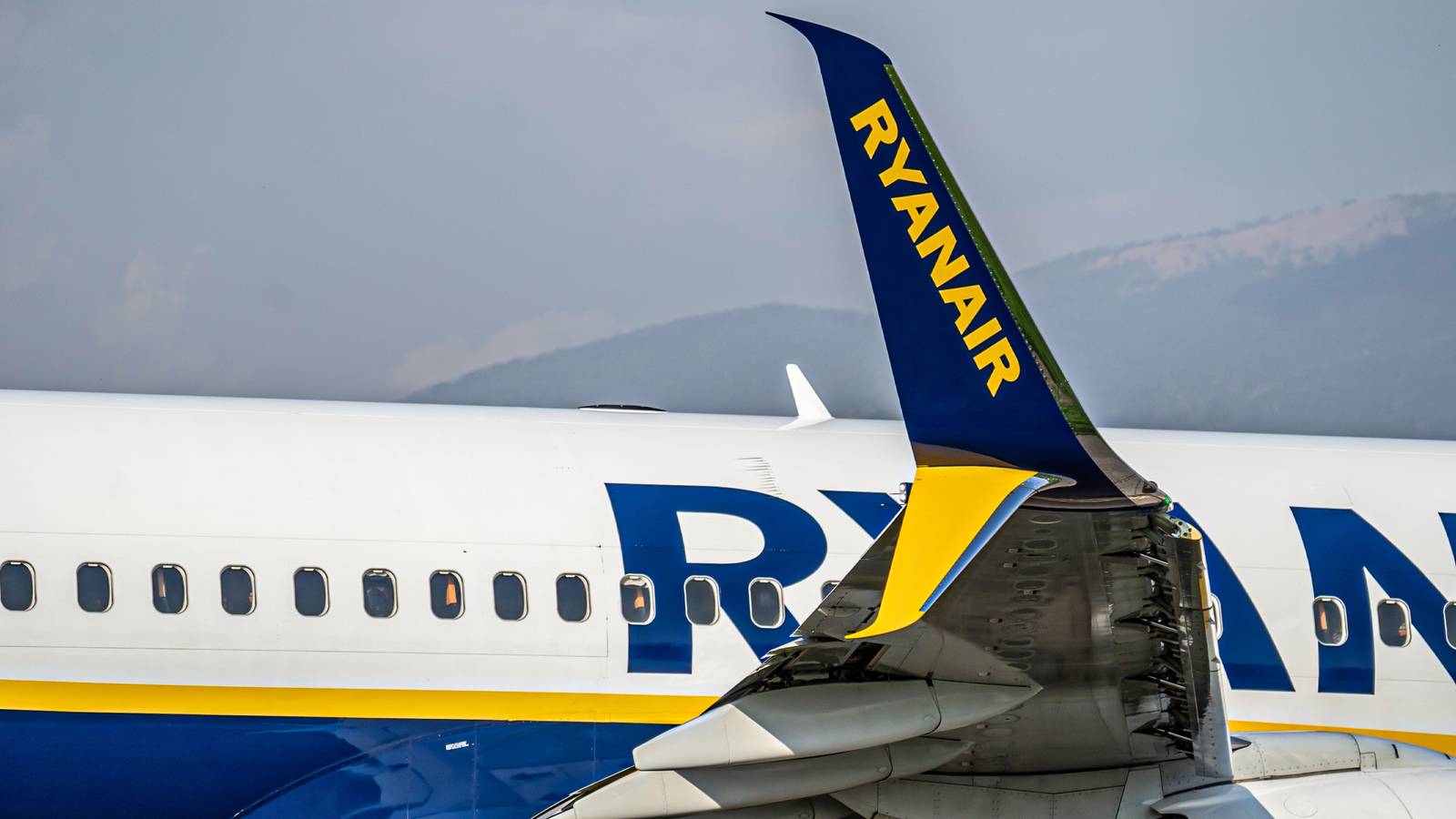
Credit: MC MEDIASTUDIO | Shutterstock, Simple Flying Published Nov 23, 2026, 7:00 AM EST Brandon's passion for aviation started at a young age. He became involved in the flight simulator and VATSIM communities, which sparked his interest in aviation and eventually led him to earn his private pilot license. Outside of work, he continues to build flight hours, explore new airports, and stay involved in the aviation community. Sign in to your Simple Flying account The tall blended winglets on the 737 Next Generation became one of the narrowbody’s most recognizable features, but the design did not originate at Boeing. Aviation Partners developed it for business jets, and the two companies formed a joint venture to bring it to Boeing aircraft. Boeing then announced it as a factory option for the 737-800 in early 2000. The retrofit version reached certification first, however, and the first airline to fly a winglet-equipped 737-800 did so with a retrofit installation. Factory production approval followed weeks later, and the winglets went on to appear across most of the 737 NG family and on many older 737s already in service. The split scimitar that succeeded it took a different path and remained largely an aftermarket upgrade. From Business Jets To The 737 Credit: Kevin Porter | Shutterstock Winglets were not a new idea when the 737 NG entered service. They reduce the drag created by the vortex at each wingtip, where high-pressure air from under the wing spills over to the low-pressure surface above. The 737 Technical Site credits NASA’s Richard Whitcomb with the winglet concept during the 1973 oil crisis, and Boeing began studying blended winglets in the mid-1980s. The version that eventually reached the 737 came from Seattle-based Aviation Partners, which developed blended winglets in the early 1990s and first fitted them to the Gulfstream II. The Boeing Business Jet opened the route to the 737. That aircraft combines a 737-700 fuselage with 737-800 wings, and a 737-800 flew with winglets in June 1998 as a testbed for the BBJ, with the first BBJ flight with winglets following on February 22, 1999. That same year, Aviation Partners Boeing (APB) was formed as a joint venture to offer Blended Winglets for Boeing aircraft, and the winglets became standard on the BBJ. Ownership of the design explains how one part could serve as both a factory option and a retrofit. Boeing said in 2000 that Aviation Partners Boeing owns the design, which allowed the joint venture to supply winglets for the production line and to sell them directly to airlines for aircraft already flying. The BBJ installation was approved through that aftermarket route. APB received the Supplemental Type Certificate (STC) for 737-BBJ Blended Winglets on September 5, 2000, the type of FAA approval used for modifications to an existing aircraft design. Offered From The Factory, Certified As A Retrofit First Credit: MC MEDIASTUDIO | Shutterstock Boeing announced the winglet for airline customers on February 18, 2000. It was available initially as an option on the 162-passenger 737-800, with availability on the 737-700C and 737-900 planned and the 737-600 and 737-700 under review. At that point, Aviation Partners Boeing was still developing a version for aircraft already in service. To prepare for it, Boeing said all subsequent 737-800s would be equipped with structurally enhanced wings, which made later retrofits easier. The retrofit reached approval first. The FAA granted the retrofit STC on March 23, 2001, and Germany’s LBA followed on May 4, 2001, while Boeing’s production approval came on May 9, 2001. Hapag-Lloyd had already flown the first 737-800 with blended winglets on a test flight in Seattle on September 26, 2000, and it became the first airline to operate a 737-800 with retrofit Blended Winglets. Air Berlin was the first to fly a 737-800 with factory-installed Blended Winglets later in 2001. Factory deliveries spread across the family quickly after that. Production deliveries began in May 2001 for the -700, -800, -900, and BBJ, and Kenya Airways received the first 737-700 with blended winglets in September 2001. According to the 737 Technical Site, the winglet eventually became a production option for all NG models except the -600. Date Milestone February 18, 2000 Boeing announces blended winglets as a factory option for the 737-800 September 26, 2000 Hapag-Lloyd 737-800 makes a winglet test flight in Seattle March 23, 2001 FAA approves the 737-800 retrofit May 9, 2001 Boeing receives production approval May 2001 Hapag-Lloyd enters service with retrofit winglets, and factory deliveries begin August 27, 2001 FAA approves the 737-700 retrofit September 2001 Kenya Airways receives the first winglet-equipped 737-700 What The Blended Winglet Changed On The 737-800 Credit: Alaska Airlines Boeing’s case for the winglet came down to three options for an airline. At its 2000 launch, the company said a winglet-equipped 737-800 could burn 3 % to 5 % less fuel, fly farther, or carry up to 6,000 pounds more payload, about 2,720 kg. Each winglet weighs about 120 pounds, or 54 kg, and is made of high-tech carbon graphite, an advanced aluminum alloy, and titanium. Boeing described each unit as eight feet (2.4 meters) long, and the 737 Technical Site says the pair adds about 5 feet of span, from 112 feet, 7 inches to 117 feet, 2 inches, or about 34.3 to 35.7 meters. The effects extend beyond cruise. The 737 Technical Site puts the drag reduction in the 5–7% range and says the winglets allow up to a 3% thrust derate on takeoff. It also credits them with a 6.5% reduction in noise footprint and a 5% reduction in NOx. Claimed fuel savings rose over time as airlines gathered operating data. The site lists figures of up to 4% in 2002, up to 5% in 2004, and up to 6% cruise fuel mileage in a later article, with the largest gains on longer sectors where the aircraft spends more time at cruise. The upgrade was expensive, but airlines could earn it back through fuel savings. The 737 Technical Site gives a price of about $725,000 per set, with installation adding $25,000–80,000. That cost helps explain why operators flying shorter, lower-utilization routes were slower to adopt the winglets than carriers with high-utilization fleets. How The Retrofit Market Took Off Credit: MH.Chuang | Shutterstock Approvals for in-service aircraft followed the 737-800 within months and kept coming for years. The STC for 737-700 Blended Winglets came on August 27, 2001, and the 737-900 STC followed on October 10, 2007. The retrofit also reached the previous generation. APB received the STC for 737-300 Blended Winglets on May 29, 2003, and the 737-500 approval followed on May 24, 2007, so airlines could fit 737 Classics that Boeing never offered winglets on from the factory. Air Plus Comet became the first operator of a 737-300 with winglets in July 2003. Large North American operators drove the early retrofit orders. WestJet ordered up to 94 shipsets of 737-NG Blended Winglets on June 2, 2003, and 10 days later, Southwest ordered 169 shipsets of 737-700 retrofit Blended Winglets. Southwest extended the program to its older aircraft with an order for up to 90 shipsets of 737-300 Blended Winglets on June 20, 2006. On July 24, 2012, it placed the largest single order in APB history, for 268 additional 737-700/-800 Blended Winglet systems. A retrofit involved more than bolting a winglet onto the wingtip. The 737 Technical Site notes that the aircraft required a strengthened wing centre section and internal wing structure, along with systems changes to accommodate the winglet. Installation volume grew rapidly. Aviation Partners Boeing reached its 500th shipset on a Continental 737-800 on October 16, 2004, and its 2,000th on a Continental 737-900 on December 6, 2007, by which time the program had also spread to the 757. The Split Scimitar, And Why The MAX Went Its Own Way Credit: Markus Mainka I Shutterstock The next step for the 737 NG was launched in late 2012. APB’s board approved the launch of the 737-800 Split Scimitar program on December 20, 2012, and United followed with the launch order for 53 737-800 Split Scimitar systems on January 14, 2013. The first test flight took place on July 16, 2013, from Paine Field, and the FAA granted approval on February 6, 2014. The first revenue flight came on February 18, 2014, from Houston George Bush Intercontinental (IAH) to Los Angeles (LAX). The modification replaces the winglet’s tip with a sharply curved cap and adds a downward-pointing ventral strake below it. The full package also includes a trailing-edge wedge, strengthened stringers, and ballast, adding 294 pounds (133 kg) per aircraft. Aviation Partners says it delivers at least 2% drag reduction and a corresponding range increase on longer flights, while the 737 Technical Site puts fuel savings at 1.6% on 1,000 nautical miles (1,852 km) sectors, rising to 2.2% on 3,000 nautical miles (5,556 km). Southwest became a major customer, ordering 85 firm and 600 optional 737-NG Split Scimitar systems on December 27, 2013. Unlike its predecessor, the split scimitar stayed mainly a retrofit. Delta’s final 737-900ERs were delivered with them, and they are standard on all new Boeing Business Jets, but most installations went onto aircraft already flying. Boeing took a different approach for the 737 MAX. It announced the Advanced Technology winglet on May 2, 2012, a split-tip design that adds up to 1.5% fuel-burn improvement over current winglets.
The Boeing 737 NG Fuel Saver That Was First Introduced As A Retrofit, But Became A Factory Option On Later Builds
Full Article
Original Source
Read the full article at Simpleflying →KhanList aggregates and links to publicly available news content. We do not host full articles from third-party sources. Always verify important information with original sources.