
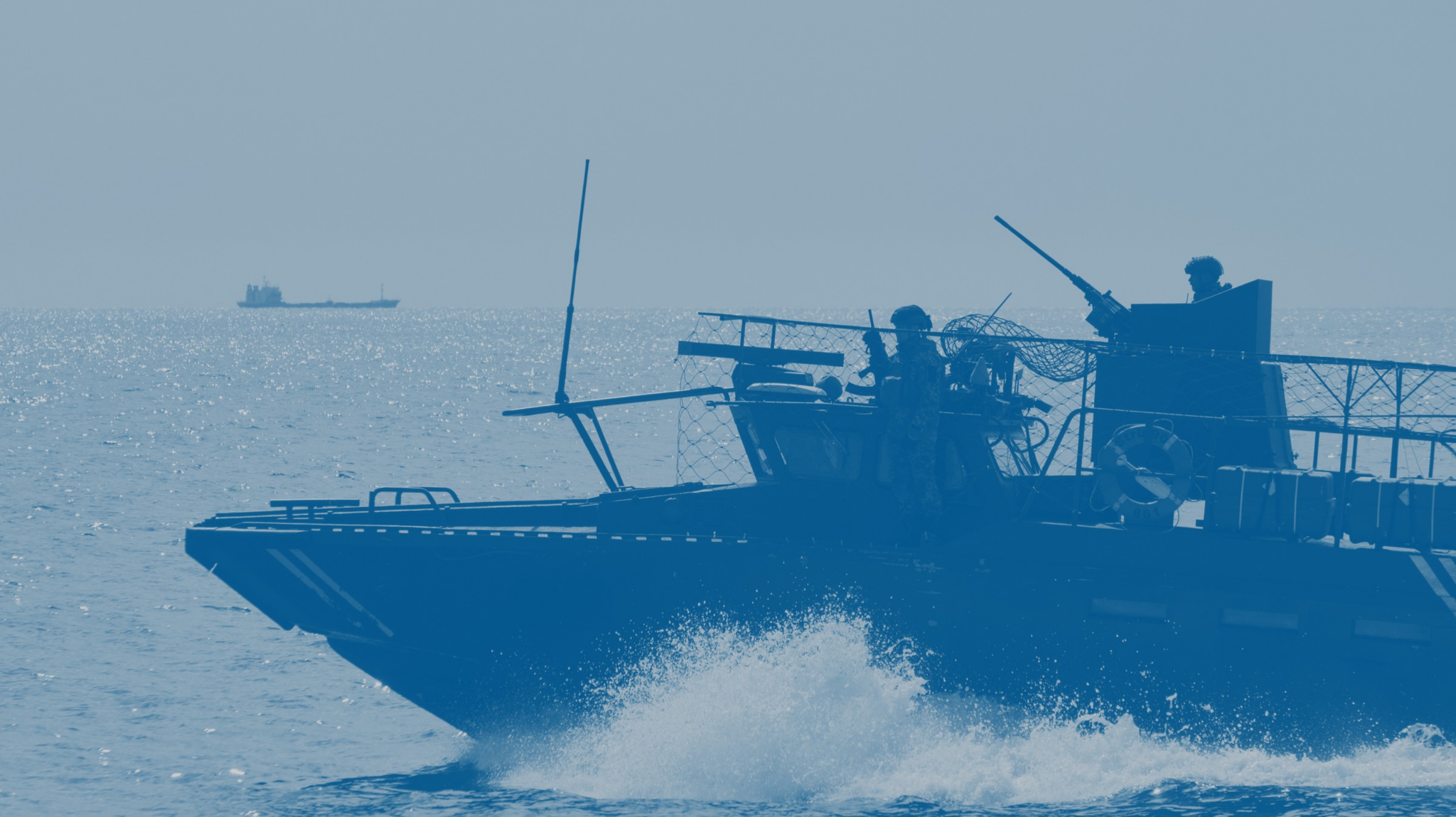
A livestream of the conversation will begin here at 9:30am ET on Monday, November 16. For questions about FDD events, please contact [email protected]. For media inquiries, please contact [email protected]. Ukraine’s unmanned surface vehicle (USV) campaign against Russia’s Black Sea Fleet has become the defining case study in modern asymmetric naval warfare — and a growing body of evidence suggests its lessons extend far beyond the Black Sea. In a new report, The Black Sea Blueprint for Taiwan: Ukraine’s Naval Lessons in Asymmetric Warfare, the Snake Island Institute undertakes the first major effort to translate Ukraine’s operational experience to a starkly different theater: a potential Chinese invasion of Taiwan. Join us for the release of this report, featuring RADM (Ret.) Mark Montgomery, senior director of the Center on Cyber and Technology Innovation; Maryna Hrytsenko, co-founder and executive director at the Serpens Center for International Security; Catarina Buchatskiy, report author, and co-founder and director of Analytics at the Serpens Center for International Security; and Jason Hsu, senior fellow at the Hudson Institute. Introductory remarks will be provided by Johanna Yang, policy analyst at the Center on Cyber and Technology Innovation. Related Analysis RADM (Ret.) Mark Montgomery RADM (Ret.) Mark Montgomery serves as senior director and is a senior fellow at FDD’s Center on Cyber and Technology Innovation and directs CSC 2.0, which implements the recommendations of the congressionally mandated Cyberspace Solarium Commission, where he served as executive director. He served as policy director for the Senate Armed Services Committee and served for 32 years in the U.S. Navy as a nuclear-trained surface warfare officer, retiring in 2017. He is co-author of the book Axis of Aggressors: Countering the Cooperation of China, Russia, Iran, and North Korea. Catarina Buchatskiy Catarina Buchatskiy is the co-founder and director of Analytics at the Serpens Center for International Security, where she leads a team researching modern warfare, defense innovation, and U.S.-Ukraine security cooperation. Catarina served as senior defense innovation director at the Kyiv School of Economics and researched UAV warfare at the Hoover Institution. She also co-founded The Shadows Project, an NGO countering Russian disinformation, and holds a degree in International Security and Military History from Stanford University, focusing on information operations and hybrid warfare. Maryna Hrytsenko Maryna Hrytsenko is the co-founder and executive director at the Serpens Center for International Security. Maryna leads Serpens’ work across analysis and alliance-building between Ukraine and its Western partners. She drives engagement with U.S. and European policymakers, military leaders, defense industry executives, and think tanks, grounded in access to Ukraine’s frontline units and defense-industrial base. She previously served as national security advisor to a member of the Ukrainian Parliament and led the U.S. project at the Reform Support Office of Ukraine’s Ministry of Defense. Jason Hsu Jason Hsu senior fellow at the Hudson Institute, where he focuses on the United States’ technological cooperation with allies and partners. From 2016 to 2020, Jason served as legislator-at-large in Taiwan’s Legislative Yuan where he focused on defense, technology, trade, and foreign policy. Previously, he was an Edward Mason fellow at the Harvard Kennedy School of Government. He was also a visiting scholar at the Paul Tsai China Center at Yale Law School where he led a research team in designing a war game on a Taiwan Strait blockade contingency. Johanna Yang Johanna Yang is a policy analyst at FDD’s Center on Cyber and Technology Innovation. Johanna analyzes issues related to nation-state cyber threats, allied cybersecurity posture, critical infrastructure protection, and U.S. cyber and national security policy. She focuses on cyber cooperation with Ukraine and Taiwan, two frontline democracies facing sustained cyber and military pressure from American adversaries. She previously worked with the House Select Committee on the Strategic Competition between the United States and the Chinese Communist Party, and the House Foreign Affairs Committee. Issues:
The Black Sea Blueprint for Taiwan: Lessons in Asymmetric Naval Warfare
Full Article
Original Source
Read the full article at Fdd →KhanList aggregates and links to publicly available news content. We do not host full articles from third-party sources. Always verify important information with original sources.